
Benefits of baby carriers: 15 ways and safety tips
Baby carriers, slings and wraps can help with closeness, movement and confidence when fit is safe. Here's what helps, what to check and when to ask for advice.
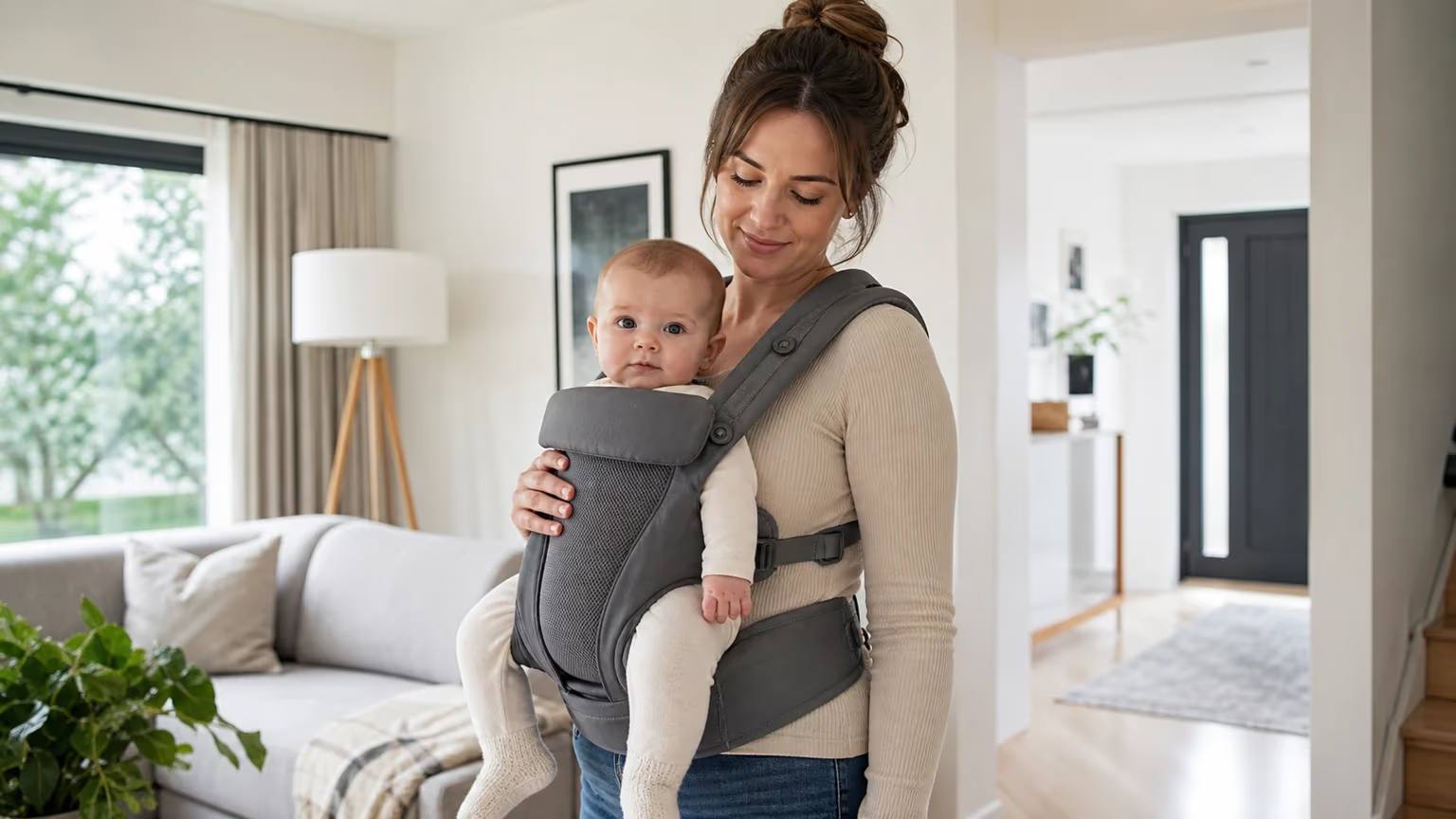
Baby carriers, slings and wraps can help many families keep a baby close while moving around. The main benefits are practical ones: closeness, easier outings, shared care, responsive contact and, for some parents and carers, a little more confidence in everyday life.
They are not automatically safe or suitable in every situation. Benefits depend on a carrier or sling that fits the baby and wearer, keeps the baby's face visible and airway clear, and is used for low-risk activity. If your baby has breathing difficulty, turns blue, grey or very pale, becomes limp, is hard to wake, or seems seriously unwell while or after being carried, call 999.
Before considering the benefits, check the safety basics. Guidance from the NHS, The Lullaby Trust and RoSPA follows TICKS-style advice for safer babywearing:
Benefits start with safe positioning
The baby's head, neck and airway need extra care in the early months. Get individual advice before babywearing if your baby was born prematurely, had a low birth weight, has breathing concerns, feeding difficulties, low muscle tone, hip concerns or another medical condition. A health visitor, GP, midwife, sling library or trained sling consultant can help if the carrier feels painful, unstable, hard to fit or your baby seems unsupported.

15 baby carrier benefits, with the evidence kept in perspective
Some babywearing benefits are everyday practical benefits. Others, such as reflux, crying, breastfeeding, flat head syndrome and postnatal mental health, need softer wording because a carrier is not a medical treatment.
1. Closeness can feel easier
A carrier can keep your baby near your chest while you talk, move and respond to them. Many parents and carers find that closeness reassuring, especially in the early weeks.
This does not mean parents who do not use carriers bond less well. Bonding can happen through feeding, cuddles, eye contact, play, talking and ordinary care too.
2. It can support responsive care
When a baby is close, some carers find it easier to notice small cues: stirring, turning, rooting, tensing, or needing a pause. That can make everyday care feel more responsive.
The carrier does not make anyone a better parent by itself. It is simply one tool that can bring the baby close enough for these cues to be easier to notice when it is fitted safely.
3. Some babies may settle with close carrying
Some babies seem calmer when they are held close and moved gently. There is older, limited research suggesting extra carrying may reduce crying for some young babies, but it should not be treated as a promise.
A carrier should not be used to ignore persistent crying. Speak to a GP, health visitor or NHS 111 if crying is ongoing or comes with fever, poor feeding, vomiting, breathing symptoms, poor weight gain, unusual sleepiness, or if you feel unable to cope.
4. Outings can be simpler
A carrier can make short trips, public transport, stairs, narrow shops and busy pavements easier than a pushchair for some families. It can also help when you need both hands to hold a rail, open a door or manage a bag.
Keep the terrain and your balance in mind. Avoid rushing, running, cycling or any activity where a slip, burn or sudden movement could put your baby at risk.

5. It can help where a pushchair is awkward
Steps, small cafes, school runs, train platforms and uneven paths can all make pushchairs awkward. A carrier or sling can be a practical alternative for short stretches, provided the baby is positioned safely and you are comfortable carrying them.
If you are recovering from birth, have pain, feel unsteady or find the carrier pulls on your back or shoulders, stop and ask for fitting advice.
6. It can free your hands for low-risk tasks
A well-fitted carrier can leave your hands free for calm, low-risk moments such as reading to an older child, folding light laundry or walking slowly around the house.
Hands-free does not mean risk-free. Do not cook, handle hot drinks, use sharp tools, run, cycle, sleep, clean with chemicals, climb, or do risky chores while wearing a baby.
7. Another parent or carer can share everyday care
Carriers can help a co-parent, grandparent or other trusted carer take a turn with closeness, soothing and short walks. This can be especially useful when one parent is feeding, recovering or resting.
Each wearer still needs a safe fit. A carrier that works for one adult may need adjusting for another body shape or carrying position.
8. It may support feeding routines for some families
Using a carrier with appropriate guidance may support breastfeeding or expressed milk feeding for some families, partly because the baby is close and care routines can feel easier.
That is different from feeding in the carrier. UK safety guidance advises against breast or bottle feeding in a sling or carrier. Take your baby out to feed, then reposition them safely before carrying again. Ask a midwife, health visitor, GP or breastfeeding support service for latch, supply, poor weight gain, dehydration or feeding concerns, and use NHS 111 if symptoms feel urgent.
9. Upright holding may be one comfort measure after feeds
The NHS reflux guidance suggests holding a baby upright during and after feeding can be one practical measure for reflux. A safely fitted carrier may make upright holding easier for some carers after a feed.
It is not reflux treatment. Do not rely on a carrier for persistent, severe, projectile, green or bloody vomiting, poor feeding, dehydration, poor weight gain, breathing symptoms or ongoing distress. Speak to a GP, health visitor or NHS 111.
10. It can vary awake positions
A carrier can be one way to vary your baby's position while they are awake and supervised. This may reduce long stretches lying with pressure on one part of the head.
It does not prevent, treat or correct flat head syndrome. Ask a GP or health visitor about persistent head-shape concerns, suspected plagiocephaly, neck tightness or difficulty turning the head.
11. It can support a hip-friendly position when fitted well
A good fit can support the thighs and keep the hips in a comfortable, well-supported position. Some families find a carrier easier than arms alone for keeping the baby's body close and supported.
Do not treat any carrier as proof against hip dysplasia. Known hip concerns, treatment plans or advice from a clinician should override general online guidance.
12. It may be more comfortable than arms alone
Carrying a baby in your arms can get tiring quickly. A well-adjusted carrier spreads some of the weight and may feel more comfortable for short daily use.
Pain, numbness, slipping straps, pressure on a scar, or a baby who feels low or unstable are signs to stop and adjust. A sling library or trained sling consultant can help you check the fit.
13. Short routines can feel less fragmented
A carrier can help with everyday transitions: settling the baby before a walk, moving between rooms, taking an older child to nursery, or getting through a short errand without unpacking a pushchair.
This is a practical convenience, not a sign that every routine should be done while babywearing. Keep checking your baby's face, temperature and posture.
14. It may support confidence and getting out
Some parents and carers feel more confident leaving the house when they can keep the baby close and settled. That can matter when the early weeks feel overwhelming and ordinary outings feel complicated.
Babywearing is not treatment for postnatal depression or anxiety. Speak to a GP, midwife or health visitor if you experience low mood, anxiety, intrusive thoughts, difficulty bonding, thoughts of self-harm or thoughts of harming the baby. Use NHS 111, 999 or your local NHS urgent mental health helpline or crisis service if you need urgent help.
15. It keeps carrying practical for modern family life
Carrying babies close is a long-standing human practice, and modern carriers, wraps and slings can make it more practical for today's homes, streets and family routines.
That history is not a safety guarantee. Modern products still need the right size, clear instructions, careful fitting and regular checks.
Benefits to be careful about
It is easy for baby carrier benefits to sound bigger than the evidence supports. A safer way to think about them is:
- Stronger benefits: closeness, warmth, mobility, shared care, low-risk hands-free convenience and everyday confidence.
- Use cautious wording for: crying, feeding routines, reflux comfort, flat-head position variety, hip support and postnatal wellbeing.
- Do not claim: fewer ear infections, better digestion, increased bone density, guaranteed less crying, reflux treatment, flat-head prevention, hip dysplasia prevention or treatment for postnatal depression.
How to choose and use a carrier, sling or wrap safely
Choose a carrier, sling or wrap that matches your baby's age, weight and stage, and follow the manufacturer's instructions. Check buckles, straps, seams, fabric and fastenings before use, especially with second-hand products.
Each time you put it on, check:
- your baby is high, upright and close enough to kiss
- their face is visible and not pressed into fabric or your body
- their chin is off their chest
- their back is supported
- their hips and thighs are well supported
- they are not too hot under layers, coats or blankets
- the activity you are doing is low-risk
Once you know the safety checks to look for, you can compare baby carriers, slings and wraps by fit, baby age and weight guidance, adjustability, comfort and how confidently you can keep your baby's airway visible and clear.
A sling library or trained sling consultant can be especially useful for newborns, wraps, second-hand carriers, wearers with different body shapes, or any carrier that feels difficult to adjust.
When to ask for help
Call 999 if your baby has breathing difficulty, turns blue, grey or very pale, becomes limp, is hard to wake, or seems seriously unwell while or after being carried.
Speak to a GP, health visitor or NHS 111 if reflux or vomiting is persistent, severe, projectile, green or bloody, or comes with poor feeding, dehydration, poor weight gain, breathing symptoms or ongoing distress.
Ask a health visitor, GP, midwife, sling library or trained sling consultant if the carrier feels painful, unstable or difficult to fit, or if your baby seems unsupported. Get individual advice before babywearing if your baby was born prematurely, had a low birth weight, has breathing concerns, feeding difficulties, low muscle tone, hip concerns or another medical condition.
Ask a GP or health visitor about persistent head-shape concerns, suspected plagiocephaly, neck tightness or limited head and neck movement.
For low mood, anxiety, intrusive thoughts, thoughts of self-harm, thoughts of harming the baby, or feeling unable to cope, seek support from a GP, midwife, health visitor, NHS 111, 999 or your local NHS urgent mental health helpline or crisis service. Individual professional advice should always override general online guidance.
FAQs
References::
- NHS - What you will need for your baby
- NHS - Sudden infant death syndrome (SIDS)
- NHS - Baby and toddler safety
- The Lullaby Trust - How to use a baby sling more safely
- RoSPA - Baby slings
- NCT - Baby slings and carriers: a guide
- NHS - Reflux in babies
- NHS - Postnatal depression
- NHS - Flat head syndrome
- NHS 111 Wales - Plagiocephaly and brachycephaly
- BMJ Paediatrics Open / PMC - Adult-worn sling and baby carrier safety
- PubMed - Increased carrying reduces infant crying
- PubMed - An Infant Carrier Intervention and Breastfeeding Duration
- International Hip Dysplasia Institute - Baby Wearing
- Health Canada - Baby sling and carrier safety


