Are baby walkers safe?
Mobile sit-in baby walkers carry recognised injury risks and are not recommended. Stationary activity centres and push-along walkers work differently.
The safety answer depends on which device you mean. The mobile sit-in type carries a baby in a suspended seat inside a wheeled frame, and current specialist paediatric physiotherapy guidance advises against using it. That recommendation should not be stretched into a verdict on every stationary activity centre or push-along toy.
The strongest reason is injury prevention. Wheels can give a baby speed and reach they would not otherwise have, bringing stairs, open doors, hot drinks, heat sources and trailing wires within range. Accidents can happen while an adult is watching because a mobile walker may move faster than a carer can react.
A walker is not proven to teach or speed up independent walking. Some guidance raises concerns about heavy use, but research into negative developmental effects is limited and conflicting. Wheel-free activity centres and push-along walkers work differently. Ordinary awake floor play offers movement without special equipment; if you are worried about your baby’s movement or development, ask a health visitor, GP or your baby’s clinical team.
What do you mean by a baby walker?
“Baby walker” is an everyday label for devices with quite different mechanisms. Safety evidence follows the mechanism, not simply the name on the product.
Mobile sit-in or seated wheeled walker
This format has a suspended seat inside a frame with small travelling wheels. The baby is carried by the seat and can move the whole frame across the floor.
Stationary activity centre
This has a fixed, wheel-free base, so it does not travel across the floor like a mobile walker. UK type-specific evidence is thin, so “stationary” should not be read as a guarantee that every design, setup or use is safe or beneficial.
Push-along walker
This is an upright trolley or toy that a baby pushes while standing. It does not have a seat that carries the baby, and its readiness and stability questions are different from those of a mobile sit-in walker.

These distinctions prevent two mistakes: assuming that all three formats carry the same evidence, or treating a different mechanism as automatically risk-free.
Why are mobile sit-in walkers not recommended?
Association of Paediatric Chartered Physiotherapists guidance advises against mobile sit-in walkers. The evidence for injury risk is clearer and stronger than the evidence for long-term developmental harm.
Rapid movement and access to hazards
A seated wheeled walker can give a baby mobility and reach before they can manage the hazards that come with it. Recognised risks include:
- falls, including access to stairs, with possible head injury;
- burns or scalds after reaching hot drinks, cookers, radiators or fires;
- trapped arms or legs;
- access through open doors or to trailing wires and other objects that were previously out of reach.
This is a description of possible injury mechanisms, not a prediction that every use will cause an accident.
Why supervision does not remove the risk
Supervision still matters in everyday child safety, but it does not turn a mobile walker into a safe option. The device can move faster than a carer can react, and the specialist walker guidance records that accidents happen even when an adult is watching.
Brief use, both feet touching the floor, an age label or a standards claim does not remove this rapid-movement risk. There is no evidence-based universal time limit that makes mobile-walker use safe.
Does a walker help a baby learn to walk?
There is no evidence that a walker teaches a baby to walk or helps them walk sooner. The NHS guidance on keeping babies active cautions against long periods in walkers and says heavy use may encourage tiptoe standing or delay walking.
That “may” matters. A systematic review of baby walkers and child development found the evidence for negative developmental effects insufficient and conflicting. It does not support saying that a walker definitely delays walking, causes lasting gait, hip, foot or ankle problems, or has no possible developmental effect.
What should you do after a walker accident?
Act according to the injury and what you can observe, not the walker label or how briefly it was used. The following is general information and cannot diagnose an injury or replace assessment by a healthcare professional.
Fall or possible head injury
Follow the current NHS head injury and concussion guidance. Call 999 after a head injury if your baby will not wake or cannot stay awake, has a seizure, has new weakness or another neurological change, has a dent or penetrating wound, has had a serious fall, or shows a concerning change in behaviour. For a baby under 1, the NHS also lists a large bruise, swelling or cut on the head as a 999 reason.
Call NHS 111 after a recent head injury if your baby has vomited, is dizzy or has any symptom that worries you. For a child under 5, call 111 rather than using 111 online. Do not assume that looking well immediately after a fall proves there is no injury.
Burn or scald
Use the NHS burns and scalds guidance. Cool the area immediately under cool running water for 15 to 30 minutes, or until the pain feels better. Remove nearby clothing or jewellery if you can, but do not pull away anything stuck to the skin.
Call 999 or go to A&E for a very large or deep burn, a burn on the face, genitals or bottom, or a chemical or electrical burn. If you are unsure what to do, call NHS 111; for a child under 5, call rather than relying on the online service.
A trapped arm or leg
Mobile walkers can trap a baby's arm or leg, but the NHS guidance this article relies on does not give walker-specific instructions for freeing a trapped limb. Do not pull the limb, force it free or dismantle the walker on the basis of this article.
Call 999 for a life-threatening emergency. If the seriousness or the right urgent route is unclear, call NHS 111 and explain that a baby is trapped or may be injured. Do not be reassured by a lack of visible injury while your baby remains trapped, distressed, in pain or unable to use the limb normally.
What can support movement instead?
A baby does not need special equipment to have useful opportunities to move. Keep the focus on ordinary play rather than trying to make walking happen sooner.
Floor play and ordinary movement opportunities
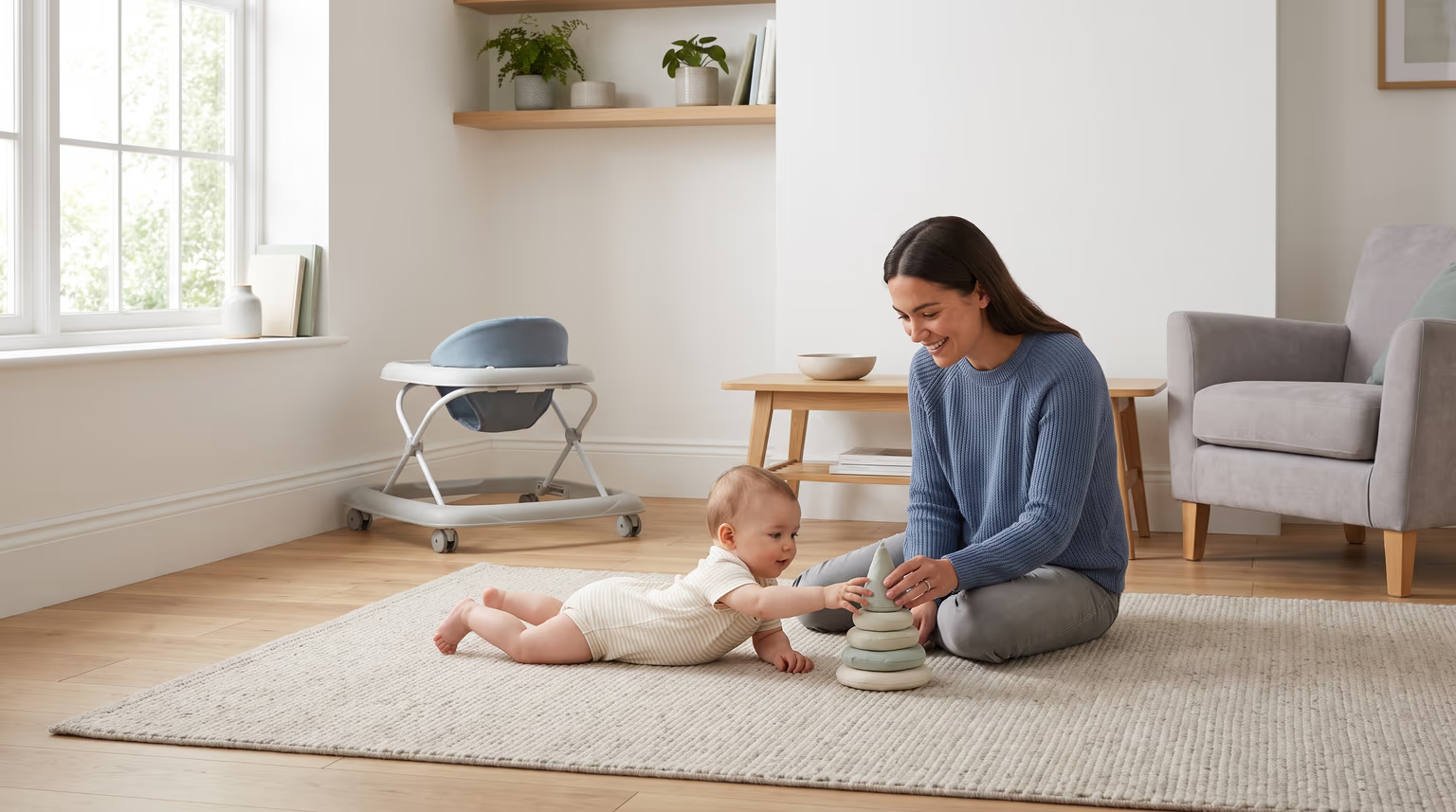
Awake, supervised floor play gives a baby space to move in their own way. Depending on what they already do, ordinary play may include chances to roll, sit, crawl, pull to stand or practise supported standing. These are opportunities, not a required sequence, treatment programme or promise about when walking will happen.

The aim is not to train a milestone. It is to give your baby safe, unhurried room to explore movement while an attentive adult stays nearby.
How a stationary activity centre differs
A stationary activity centre has no travelling wheels, so it avoids the mobile walker's wheeled-travel mechanism. American Academy of Pediatrics guidance describes a wheel-free stationary centre as a relatively safer alternative to a mobile walker.
This comparison comes from international guidance, and “relatively safer” does not mean risk-free. The available UK evidence does not establish a universal age, posture, fit or duration rule, developmental benefit, or suitability for every baby and every setup.
When a push-along walker enters the picture
NHS children's physiotherapy guidance discusses a push-along walker once a baby can stand on their own. That is a readiness boundary, not an exact-age recommendation, milestone test or proof that the toy teaches independent walking.
Choose a stable environment and stay close while your baby learns how the trolley moves. A push-along toy may roll away quickly on a smooth or wooden floor and may be harder to move on carpet, so speed, stability, floor surface and initial adult guidance all matter. This does not make every push-along model suitable or prevent falls.
When to ask about movement or development
Talk to a health visitor, GP or local baby clinic if you are concerned. NHS children's physiotherapy guidance highlights persistent or painful difficulty, stiffness or floppiness, reduced movement, repeated one-sided movement, jerky or unusual movement, or hands that remain persistently fisted. These signs are reasons to ask for assessment, not diagnoses or proof that a walker caused a problem.
For a baby born prematurely, NHS development-review guidance says health professionals may consider developmental age from the original due date until age 2. That context should not be used to dismiss a persistent concern. If your baby has a disability, long-term condition, medical complexity, an existing developmental concern or a physiotherapy plan, follow their clinical team's individual advice rather than generic walker guidance.
Baby walker safety FAQs
References::
- Association of Paediatric Chartered Physiotherapists: Babywalkers
- Royal Hospital for Children Glasgow (Babywalkers: are they necessary?)
- NHS: how to keep your baby or toddler active
- Shropshire Community Health NHS Trust: babies and early years
- Cambridgeshire and Peterborough NHS Foundation Trust: supporting your child's development
- Cambridgeshire and Peterborough Children's Health: activities to support your baby's movement
- NHS: head injury and concussion
- NHS: burns and scalds
- NHS: when to call 999
- NHS: your baby's health and development reviews
- American Academy of Pediatrics (Baby Walkers: A Dangerous Choice)
- Badihian et al. (The Effect of Baby Walker on Child Development: A Systematic Review)