
The 5 best baby walkers for first steps
These are the best baby walkers for parents choosing a stable push-along or activity walker for brief, supervised first-step play at home.
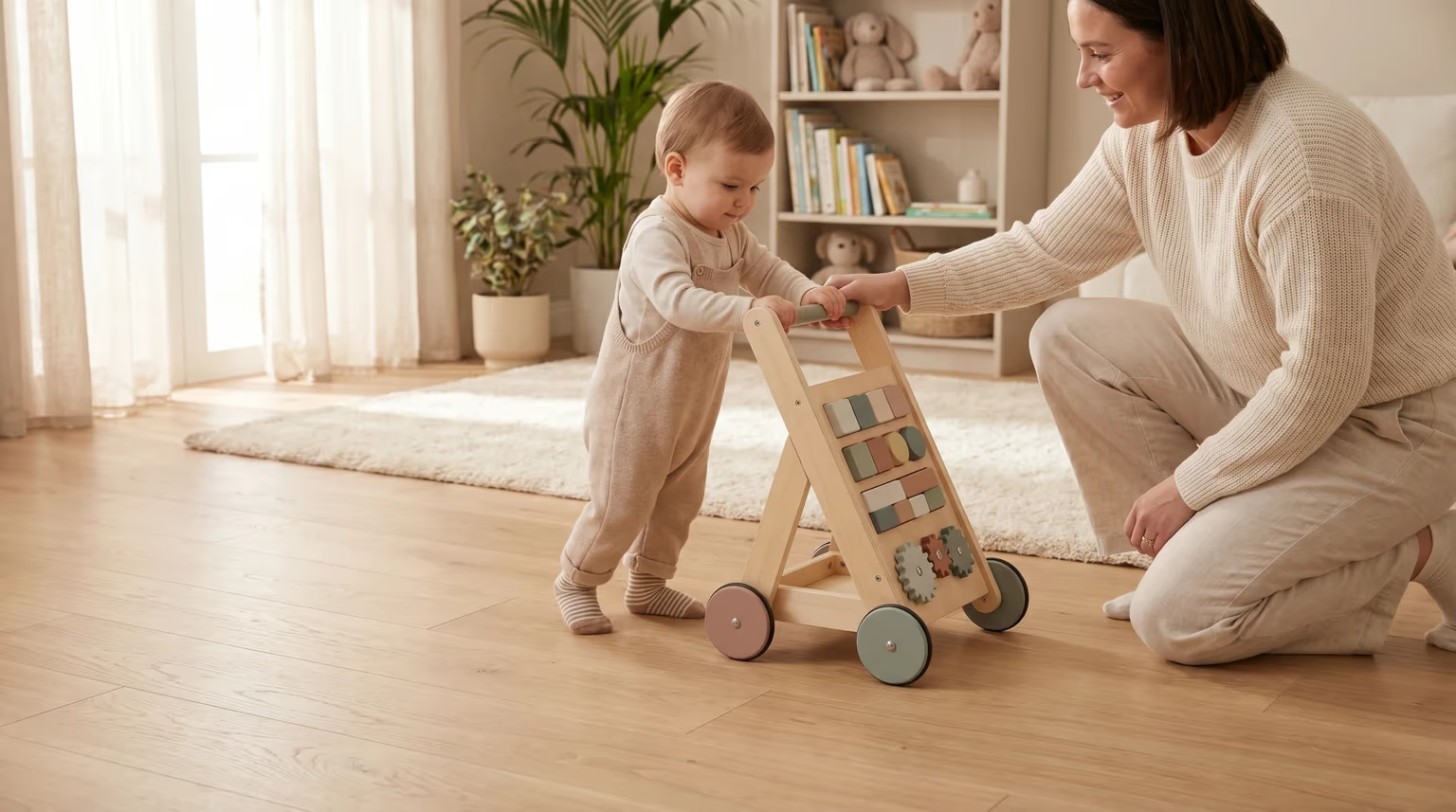
Push-along and activity walkers are standing-behind toys for babies who are already close to standing, cruising or taking first steps. They are best for short, supervised play on a clear floor, rather than as sit-in wheeled walkers.
Walker | |||||
|---|---|---|---|---|---|
| Best for | Best for A popular all-round activity walker | Smaller homes and electronic play | Families wanting a sturdier wooden feel | Longer play value before and after first steps | Non-electronic block play and storage |
| Type | Type Push-along baby activity walker | Push-along baby walker | Wooden baby activity walker | 4-in-1 activity walker and table | Wooden baby walker with blocks |
| Good to know | Good to know Busy detachable panel, lights and sounds | Light, familiar and easy to move around | Bigger footprint, with toy storage | More versatile, less simple as a pure walker | Lower-tech and compact, but more basic |


What to check before choosing a baby walker
The most useful baby walker is not the one with the most buttons. Look first for readiness, stability and control: your baby should already be pulling up, standing with support or cruising, and the walker should feel steady enough for your floor. NHS and children's physiotherapy guidance is clear that walkers are not essential and should not be used for long stretches, so treat one as a short play toy rather than a developmental shortcut. For the evidence and device-type distinctions behind that boundary, read whether baby walkers are safe.
Smooth floors can make a push toy run away, while thick carpet can make it frustrating to move. Check that the handle is easy to grip, the base is wide enough for your space, and the play panel will not make every session louder than you can live with.
Best baby walkers for first steps
These five picks all stay within the push-along or activity-walker scope. The first two are the strongest mainstream plastic options, while the wooden picks suit parents who want a steadier trolley feel, storage or quieter play.
1. VTech First Steps baby activity walker

The VTech First Steps is the easiest baby activity walker to recommend first because it covers the mainstream use case well: a stable push-along frame, an easy-grip handle and a busy detachable activity panel for sitting play before or after walking practice.
Why did we choose this product?
Choose it if you want a familiar, well-reviewed push-along baby walker that feels engaging straight away. The removable panel is useful because younger babies can play on the floor, while babies who are ready to stand get lights, buttons, shapes, gears and music to keep them interested at the handle.
It is also the strongest "one walker for most families" pick in this shortlist. The broad review base and familiar first-choice feel make it a low-risk option if you are not chasing a wooden look or a quieter toy.
Keep in mind
The busy electronic panel is exactly why many babies like it, but it also means more noise and plastic than the wooden options. As with any lighter push-along walker, check how quickly it moves on your floor before letting your baby lean into it.
Features that may help you
•Best for: most families wanting a popular push-along baby activity walker
•Type: plastic push-along walker with removable activity panel
•Useful details: textured wheels, easy-grip handle, lights, sounds, shapes and role-play phone
•Age note: marketed from 6 months+, but use the walker mode only when your baby is ready to stand or cruise
•Tradeoff: noisier and busier than a wooden trolley-style walker
2. Fisher-Price Learn with Me Zebra push-along baby walker

The Fisher-Price Learn with Me Zebra is a compact push-along baby walker for parents who want the same basic idea as the VTech, but in a smaller, simpler frame with a very large review base behind it.
Why did we choose this product?
It is a good fit for smaller living rooms, grandparents' houses or families who want a straightforward plastic walker without storage baskets or a bulky wooden body. Babies can use the front activities while sitting, then move to the easy-grasp handle when they are ready for supported standing.
The zebra panel adds music, phrases, lights and buttons, so it has more toy value than a plain trolley. It is especially worth considering if you want something light enough to move between rooms.
Keep in mind
Because it is lighter and more compact, it may not feel as planted as a heavier wooden walker. Test it on your own flooring first, particularly if you have smooth hard floors where push toys can move faster than expected.
Features that may help you
•Best for: compact electronic play in smaller homes
•Type: push-along baby walker with sit-and-play activities
•Useful details: light-up buttons, songs, phrases and easy-grasp handle
•Age note: listed for babies from 6 months+, with walking use only once ready to stand
•Tradeoff: less of a steady trolley feel than the wooden walkers
3. ROBUD wooden baby activity walker

The ROBUD wooden baby activity walker is the pick for parents who like the steadier feel and toy-storage usefulness of a wooden walker, but still want more activity features than a basic block cart.
Why did we choose this product?
Its holiday-bus style gives the front panel more variety than many wooden walkers, with bead mazes, flip blocks, a wall maze and pretend-driving details. The storage compartment is handy if your baby likes carrying toys around or if you want the walker to double as a tidy-up cart.
It is best suited to families with enough floor space for a larger wooden frame. If your priority is stability, less electronic noise and a toy that looks more at home in a nursery or living room, this is the strongest wooden activity option here.
Keep in mind
The bigger wooden body is less convenient to tuck away after every play session. Check the wheel movement on your floor, and supervise closely until you know whether it rolls smoothly or needs a little extra resistance.
Features that may help you
•Best for: wooden activity play with storage
•Type: wooden baby activity walker
•Useful details: bead maze, flip blocks, wall maze, pretend bus details and storage space
•Age note: marketed from around 10 months+, but readiness matters more than the number
•Tradeoff: larger footprint than compact plastic walkers
4. Baby Einstein Musical Mix 'N Roll 4-in-1 activity walker

The Baby Einstein Musical Mix 'N Roll is the most versatile activity walker here. It works as a floor toy station, push-behind walker, music table and creative table, so it is better for longer play value than for parents who only want a simple first-step trolley.
Why did we choose this product?
Choose this if you want one toy that can stay useful across several stages. The walker and table modes lock in place, the activity set includes music and language features, and the volume control is a welcome detail in a busy home.
It is also a nice option for babies who like cause-and-effect play but are not ready to spend much time pushing yet. The floor and table modes mean the toy does not sit unused while you wait for that cruising stage.
Keep in mind
It is more of a multi-mode activity toy than the cleanest pure baby walker. If you want the simplest, most stable push-along shape, the VTech, ROBUD or Magic Toy Shop picks are easier to understand at a glance.
Features that may help you
•Best for: families wanting activity-table value as well as walker mode
•Type: 4-in-1 baby activity walker and table
•Useful details: floor toy station, push-behind walker, music table, creative table and volume control
•Age note: listed from 6 months+, with push mode for babies ready to stand and cruise
•Tradeoff: less simple than a dedicated push-along walker
5. The Magic Toy Shop wooden baby walker with blocks

The Magic Toy Shop wooden baby walker with blocks is the best simple wooden option in the final five. It is a traditional push cart with a low-tech play idea: push the walker, then use the included blocks for stacking and sorting.
Why did we choose this product?
This is the one to choose if you want a quieter wooden baby walker without songs, lights or a busy front panel. The 20 blocks give it real play value when your baby is not walking with it, and the cart body doubles as simple storage.
It also has a smaller, tidier role than the ROBUD. For parents who want an affordable-feeling wooden block-cart walker rather than a full activity centre, it keeps the decision refreshingly uncomplicated.
Keep in mind
It has less built-in activity variety than the ROBUD and no electronic feedback like the VTech or Fisher-Price. Its simplicity is the point, but babies who need lots of buttons and sounds may lose interest faster.
Features that may help you
•Best for: simple wooden walking practice and block play
•Type: wooden baby walker with 20 blocks
•Useful details: storage cart, colourful shapes and compact wooden frame
•Size and weight: 30 x 27 x 40 cm; 1.65 kg
•Tradeoff: fewer activities than a full activity walker
How to use a baby walker safely at home
Use a baby walker only when you can stay close, watch the floor and stop the toy if it moves too quickly. NHS guidance advises limiting time in walkers, bouncers and seats to no more than 20 minutes at a time, and local NHS children's therapy guidance gives the same kind of caution for push and pull toys.
Before each session, clear toys from the path, keep hot drinks and kitchen hazards away, and block stairs. If your baby is starting to cruise, it is also the right moment to think about baby gates and stair gates for the parts of the home they can suddenly reach.
- Stay within arm's reach, especially on smooth wooden or laminate floors.
- Use the walker on a flat, clear route, not near steps, doors or rugs that can catch the wheels.
- Stop when your baby looks tired, frustrated or starts leaning heavily into the handle.
- Do not use a walker to prop up a baby who is not ready to stand with support.
Push-along, activity and sit-in walkers: what is the difference?
A push-along baby walker is a toy your baby stands behind and pushes. An activity walker adds buttons, gears, music, shape sorting or a removable play panel. A wooden trolley or block walker is usually simpler, sometimes heavier, and may feel steadier, though it still needs close supervision.
Sit-in wheeled baby walkers are different. UK sources including the Association of Paediatric Chartered Physiotherapists, Child Accident Prevention Trust and NHS-hosted guidance caution against them because of injury risk and because they do not help babies learn to walk. That is why this list does not include sit-in walkers as recommended picks.
For babies who are not ready to stand or cruise, floor play, tummy time, crawling practice and supported play beside stable furniture are better first steps. If you are worried about delayed standing or walking, speak to your health visitor rather than buying a walker to force the stage.


