
How many nappies does a newborn use a day?
Expect around 10–12 nappy changes a day at first. Work out a week’s supply, avoid overbuying one size and understand which wet-nappy counts matter.
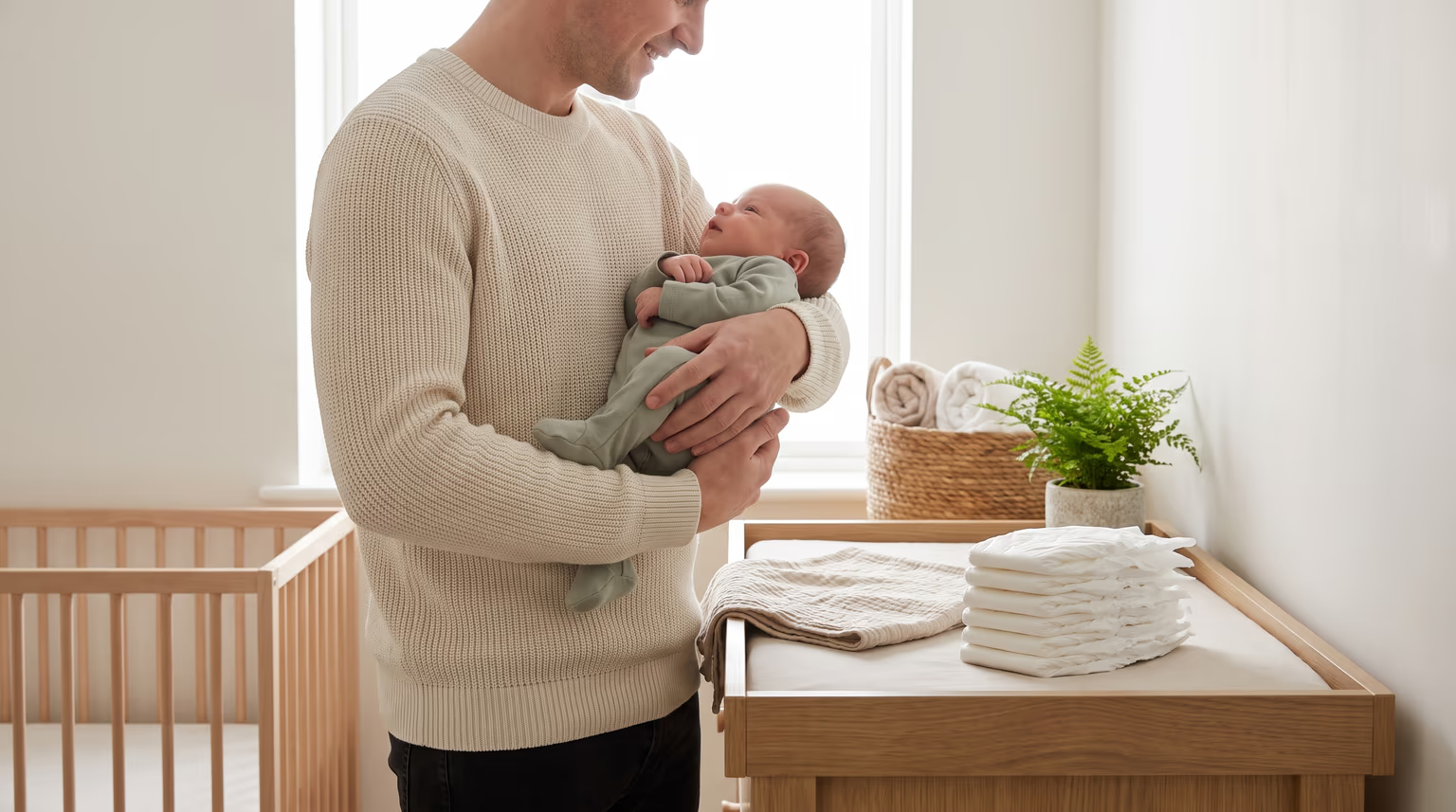
A newborn can get through a surprising pile of nappies. NHS guidance suggests around 10–12 changes a day in the early days, counting both daytime and overnight changes.
Use that range to plan a disposable-nappy supply, then adjust to your baby's actual use. Counting wet and dirty nappies serves a different purpose: it helps you and your midwife assess feeding, especially during the first week.
Work out a week's supply and the number of packs
Multiply the daily allowance by the number of days you want to cover. At 10–12 changes a day, the shopping estimates are:
Period | Calculation | Nappies |
|---|---|---|
| 7 days | 10–12 × 7 | 70–84 |
| 30 days | 10–12 × 30 | 300–360 |
These totals help with budgeting and restocking. A 30-day estimate is useful for seeing the likely scale of the expense, but you can buy it in smaller batches as your baby grows.
To convert nappies into packs, use daily changes × days to cover ÷ nappies per pack, then round up to a whole pack.
For example, suppose a pack contains 28 nappies and you plan for 12 changes a day over a week. That is 12 × 7 = 84 nappies, then 84 ÷ 28 = 3 packs. Check the count on the pack you are buying: it can differ between pack sizes and nappy sizes.
Once you know your baby's usual use, you can also estimate how long a pack will last: divide the number of nappies in it by the number you use each day.
Keep the first purchase small and check the fit
A few days' supply may be enough to start if you can easily buy more. A week's supply may be more practical if shopping or delivery is difficult. Leave room to change size or try another shape before committing to a large box.
Nappies should sit snugly around the waist and legs without being too tight. NHS advice suggests checking that two fingers fit between the waistband and your baby's tummy. Follow the weight range on the pack, then check the fit on your baby; “newborn” or “size 1” is only a starting point.

Before buying another large pack, check how many nappies remain, whether the current size still fits and when you can next restock. Our nappy comparison can help you explore different ranges once you know what you need.
If you use reusable nappies, your stock also needs to cover washing and drying time. The disposable totals above describe how many changes to allow for, rather than how many reusable nappies to buy.
Change wet or dirty nappies promptly
Change a nappy as soon as possible after a wee or poo. Frequent changes help protect delicate skin; keep following those cues overnight too, rather than stretching a nappy to make your supply last.
Have the clean nappy, wipes or cotton wool and water, and spare clothes ready before you start. A changing mat or towel on the floor is a practical place to change your baby. If you use a raised changing table, stay beside them throughout and never turn away or leave them unattended.

For sore skin, read our guide to nappy rash care and when to see a GP.
Understand wet and dirty nappies in the first week
Wet-nappy counts start lower in the first days and build as feeding becomes established. In its breastfeeding guidance, the NHS says a baby may have only two or three wet nappies in total during the first 48 hours.
The later checks depend on age and feeding:
- Breastfed babies: from day 5, expect at least six heavy, wet nappies in 24 hours. From day 4, there should be at least two soft, yellow poos a day during the first few weeks.
- Formula-fed babies: from a few days after birth, expect around six wet nappies a day. During the first week, poo should change from dark, sticky meconium to pale yellow or yellowish brown, with at least one poo a day.
A nappy may contain both wee and poo, so these counts overlap. They are feeding checks to consider alongside weight gain, feeding behaviour and alertness, rather than numbers to add together when shopping.
If your baby's output is below the pattern expected for their age, or you are worried about how much milk they are getting, ask your midwife or health visitor for help promptly. A breastfeeding specialist can also help with feeding at the breast.
Speak to your GP or health visitor about pale poo, blood in poo or a marked change in your baby’s stools.
When nappy output needs medical advice
Get urgent medical advice if your baby has fewer wet nappies than usual, seems unusually drowsy or has a sunken soft spot on their head. These can be signs of dehydration.
Contact your GP; if you cannot reach them, call 111 in England, Scotland or Wales. In Northern Ireland, contact your GP or the GP out-of-hours service when the surgery is closed. For a newborn, telephone rather than using 111 online.
Go to A&E now if your baby has had no wee for 12 hours. Do not wait for that point if wet nappies have already reduced or you are worried about feeding.


