
Nappy rash: care and when to see a GP
Frequent nappy changes, gentle cleaning and barrier cream help sore skin. Get advice if the rash persists, spreads or your baby is very uncomfortable.
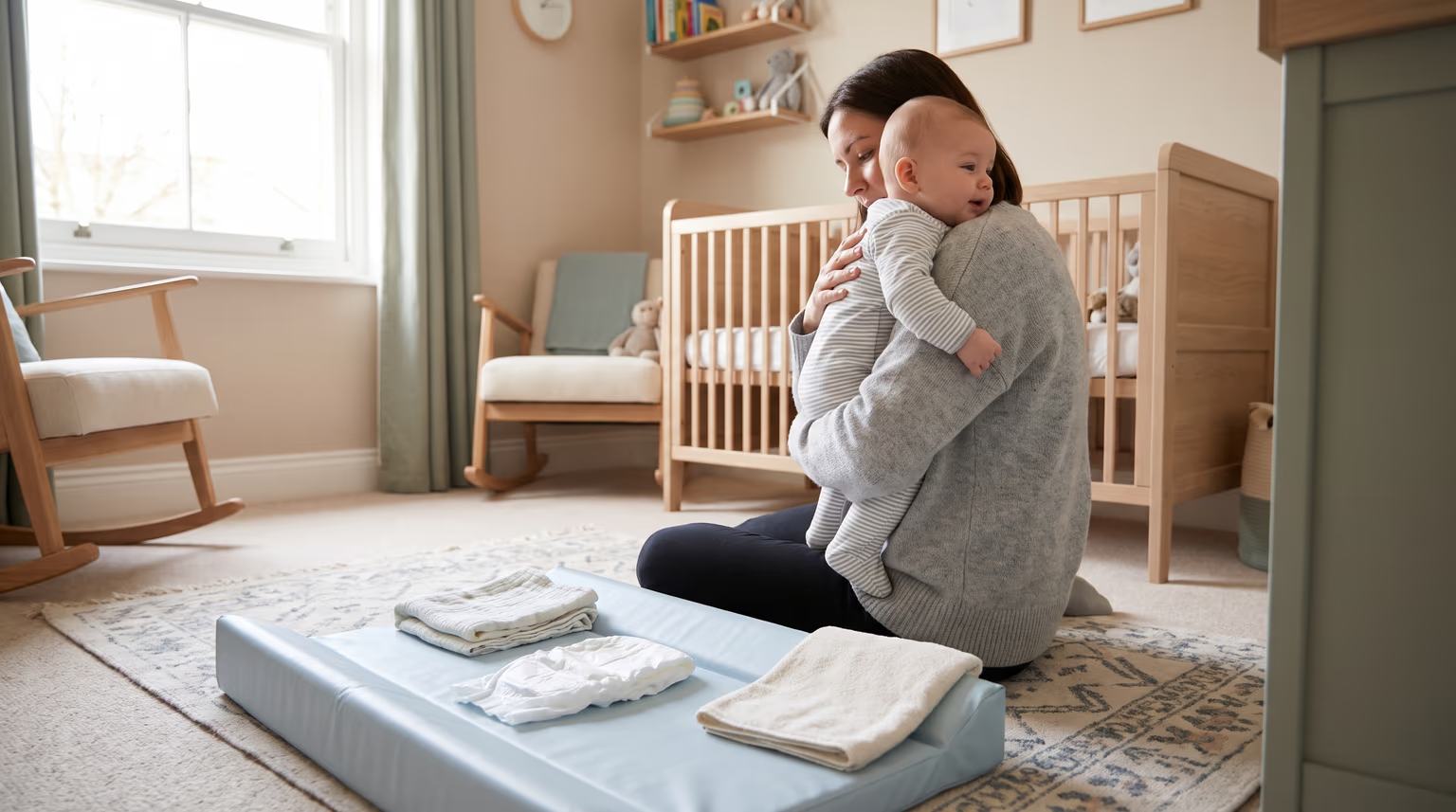
Most nappy rash can be managed at home when your baby is otherwise well. The aim is to keep wee and poo away from sore skin: change nappies promptly, clean gently, pat dry and use a thin layer of barrier cream.
A pharmacist can help you choose a suitable cream. If the rash keeps getting worse, spreads beyond the nappy area or makes your baby very uncomfortable, contact your health visitor or GP rather than trying more products.
Why nappy rash happens
The skin inside a nappy can become irritated by contact with wee or poo, rubbing and trapped warmth. Soaps, fragranced wipes and some washing products can also irritate it. Diarrhoea means more frequent contact with poo and can make the skin sore.
The area may look raw, dry or spotty, and nappy changes may hurt. Colour changes can be less obvious on brown and black skin, so notice soreness and your baby's discomfort as well.
Sometimes a persistent rash needs treatment for an infection such as thrush. A rash that is not settling needs assessment, rather than choosing an antifungal or steroid cream from its appearance.
Gentle care at each nappy change
Keep a clean nappy, water or wipes, a drying cloth and cream within reach before you begin. Wash your hands before and after changing. A changing mat on the floor is the safest place; never leave your baby unattended on a raised changing surface.
- Change wet or dirty nappies promptly. Use an absorbent nappy that fits comfortably without rubbing or being fastened too tightly.
- Clean the whole nappy area gently, including skin folds, with water and cotton wool or fragrance-free, alcohol-free wipes. Clean girls from front to back. For boys, clean around the penis and testicles without pulling back the foreskin.
- Pat the skin dry with a soft, clean cloth. Avoid scrubbing sore areas or repeatedly washing them.
- Give your baby some time without a nappy when the room is warm enough, staying with them on the changing mat.
- Apply a thin layer of a suitable barrier cream to protect the skin at each change. Ask a pharmacist which product to use and follow its directions.

Keep washing simple
Avoid soap, baby lotion, bubble bath, talcum powder and antiseptic creams or lotions on the rash. Over-washing can dry out delicate skin, so extra baths are not a way to speed healing.
If a clinician prescribes a medicated cream, follow their instructions for how much to apply, how often and for how long. Check with the pharmacist how to use it alongside your barrier cream.
Preventing another flare-up
Keep up prompt changes and gentle cleaning after the skin improves. With reusable nappies, use a dry liner and replace it often. Check the fit as your baby grows and avoid plastic covers over the nappy. These steps reduce moisture and rubbing without needing a complicated skincare routine.
When to ask a pharmacist, health visitor or GP
A pharmacist is a useful first stop for choosing barrier care or relieving discomfort when your baby is otherwise well. Tell them your baby's age and which creams you have already used.
With appropriate care, mild to moderate nappy rash usually starts healing within 3 to 4 days. If you are not seeing improvement by then, ask your health visitor or GP for advice. Seek help sooner if the rash worsens, spreads or your baby is very uncomfortable.
A GP can assess whether another treatment is needed. For example, a fungal infection may need an antifungal cream, while a bacterial infection may need antibiotics. A prescribed steroid cream may sometimes help inflammation. These treatments have different purposes, so follow the advice for your baby's rash rather than adding several creams yourself.

When your baby needs urgent help
Go to A&E now if your baby is under 3 months old with a temperature of 38°C or above, or aged 3 to 6 months with a temperature of 39°C or above. The NHS advises immediate assessment at these ages and temperatures.
For a rash with a high temperature outside those young-baby thresholds, get urgent medical advice now. Also seek urgent advice if your baby is feeding much less, has fewer wet nappies, or seems unwell and you are worried. If there has been no wee for 12 hours, go to A&E now.
Contact your GP or call 111 in England, Scotland or Wales. In Northern Ireland, phone your GP or the local GP out-of-hours service if the surgery is closed. Telephone first; for children under 5, call rather than use 111 online. Do not wait for another cream application to work when your baby seems unwell.


