The 5 best child safety locks for cupboards and drawers
The best child safety locks help secure low cupboards, drawers, awkward lids and sharp furniture edges. Choose by surface, fixing type and how visible you want the lock to be.
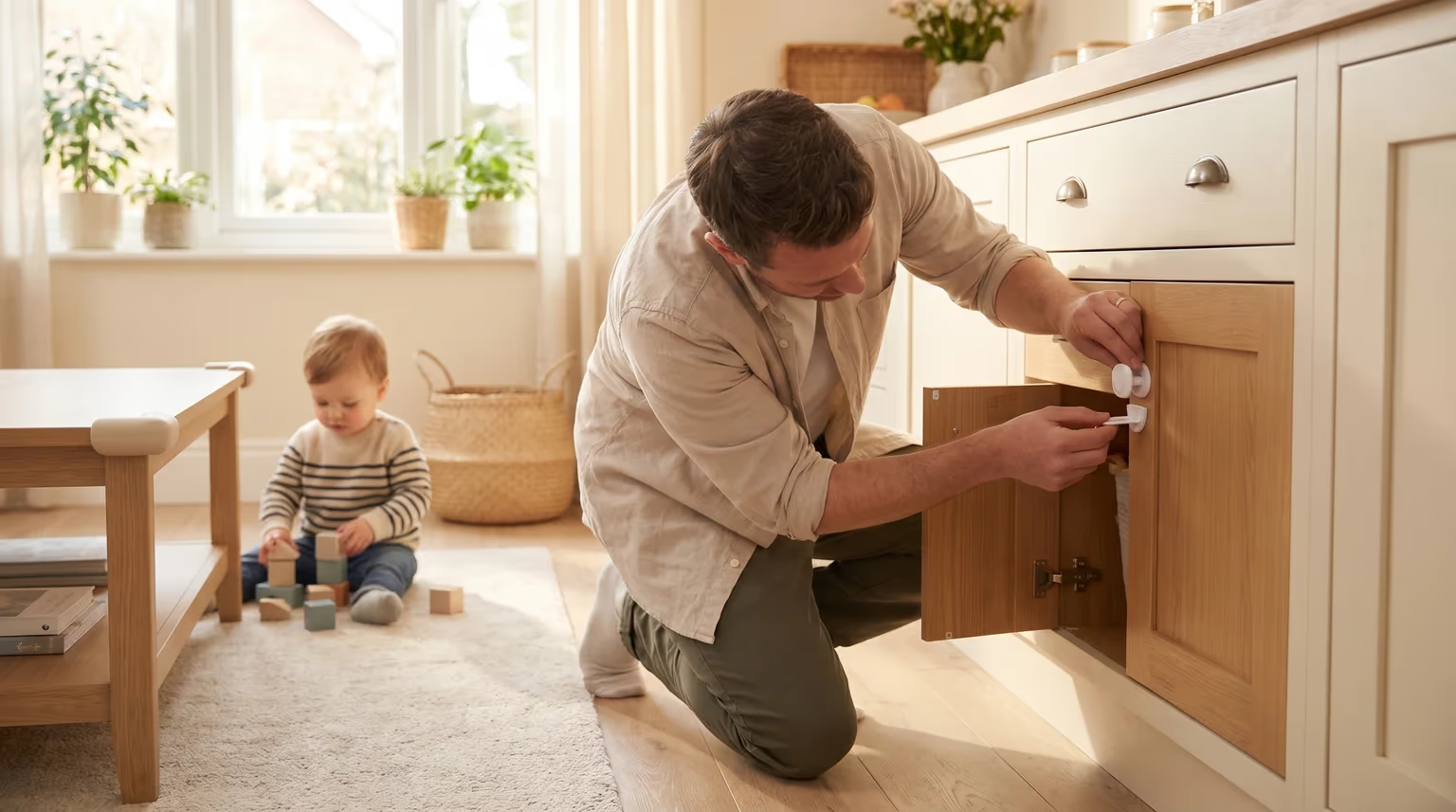
Once a baby starts crawling or a toddler discovers handles, low cupboards, drawers, bins, fridge-style doors and table corners can all become daily stress points. The right child safety lock depends less on buying the biggest kit and more on the surface, the hazard and whether you can drill.
Locks and guards are a useful back-up layer for medicines, cleaning products, sharp items, hot-appliance areas and furniture edges, but they do not replace high storage, supervision or safe appliance habits. Ordinary plug-in socket covers are not part of these recommendations; the UK socket-cover question is handled in the FAQ.
Product | |||||
|---|---|---|---|---|---|
| Best for | Best for Best overall | Hidden magnetic pick | Awkward doors and lids | Classic screw-fit catch | Sharp furniture edges |
| Fixing type | Fixing type Adhesive external lock | Adhesive internal magnetic lock | Adjustable adhesive strap | Screw-fit internal catch | Adhesive corner and edge guard |
| Works best on | Works best on Cupboards and drawers | Cupboards and drawers with flat internal surfaces | Bins, lids and mixed flat surfaces | Cupboards and drawers where drilling is acceptable | Tables and low furniture edges |
| Watch out for | Watch out for Needs a clean, suitable surface | Keep the magnetic key out of reach | Check heat, shape and surface limits | Less renter-friendly | Check fit and adhesion over time |


Which type of child safety lock do you need?
For most homes, start with the place your child can actually reach rather than with a full babyproofing kit. A few well-fitted locks in the right spots usually beat a drawer full of unused extras.
- Adhesive cupboard locks are quick to fit and suit many rented homes, but the surface must be clean, dry and strong enough for the pad.
- Hidden magnetic locks keep the outside of the cupboard neat and can be harder for toddlers to copy, but the magnetic key needs its own safe routine.
- Screw-fit catches are a good fit when you can drill and want a simple mechanical latch inside the door or drawer.
- Safety straps work better on awkward lids, bins and fridge-style fronts, as long as the product instructions suit the surface and location.
- Corner and edge protectors are not cupboard locks, but they solve a different small childproofing job around low tables and sharp furniture.
Child safety locks can help when high storage is not possible, especially for cleaning products, medicines and sharp kitchen items. For a wider room-by-room view, the guide to making your home baby proof is the better next step.
Here are the five options that make the most sense for common baby proofing jobs.
1. BooBoo Baby child safety cupboard locks

BooBoo Baby is the easiest first recommendation for most cupboard and drawer jobs. It is a visible adhesive lock rather than a hidden catch, but that also makes it quick to fit and easy to understand when you are trying to secure several low doors at once.
Why did we choose this product?
Choose it if you want a broad, no-drill child safety cupboard lock with strong everyday appeal. It suits kitchen and bathroom cupboards, drawers and similar flat-fronted storage, and it has the clearest all-round fit for parents starting their baby proofing with the places a toddler will test first.
Keep in mind
The main limitation is the adhesive. It needs a clean, dry, suitable surface, and it may not be the best choice for textured, greasy, delicate or uneven furniture. Fit one first, check the opening angle, and avoid treating adhesive as a substitute for keeping hazardous items higher up where you can.
Features that may help you
•Best overall adhesive child safety lock for cupboards and drawers
•No-drill fitting for flat, suitable surfaces
•Good first pick for kitchen, bathroom and utility cupboards
•Visible design makes it easy for adults to check at a glance
•Check adhesion regularly once your child starts pulling
2. BABYGO magnetic cupboard locks

BABYGO is the cleaner-looking option if you dislike visible straps or clips on the outside of cupboards. The locks sit inside the door or drawer and release with a magnetic key, so they are best for parents who want a neater finish and are happy with the key routine.
Why did we choose this product?
The appeal is that the cupboard still looks normal from the outside. That can be useful in kitchens, sideboards and living-room storage where a visible lock would look messy or tempt a toddler to fiddle with the mechanism. It is also a strong choice when you want several locks in the same style.
Keep in mind
Magnetic locks need careful positioning inside the cupboard, and they are less convenient if the key keeps disappearing. Keep the key well away from children but somewhere adults can reach quickly, and check door thickness and internal clearance before fitting the full set.
Features that may help you
•Best hidden magnetic cupboard lock set
•Fits inside the cupboard or drawer for a cleaner look
•Good for parents who want a no-drill but less visible solution
•Magnetic key needs a safe, consistent storage spot
•Check internal clearance before fitting every lock
3. Cheeky Monkey multi-purpose safety straps

Cheeky Monkey safety straps are the flexible pick for places where a normal cupboard lock does not sit neatly. They are useful for bins, lids, fridge-style fronts and awkward doors, provided the surface and position match the product instructions.
Why did we choose this product?
Pick these when the problem is shape rather than a standard cupboard. The adjustable strap gives you more reach across curved edges, offset doors or lid-style openings, so it can cover childproofing jobs that internal catches and magnetic locks do not handle well.
Keep in mind
Do not assume a strap is suitable for every appliance or hot area. Check the instructions, keep it away from heat unless the maker clearly allows that use, and avoid fitting it to surfaces that may peel, warp or leave residue when removed.
Features that may help you
•Best multi-purpose safety straps for awkward doors and lids
•Adjustable shape suits more than standard cupboard fronts
•Useful for bins, lids and some fridge-style surfaces
•Adhesive pads need clean, suitable contact points
•Avoid heat-adjacent fitting unless instructions allow it
4. Dreambaby screw-fit cupboard and drawer catches

Dreambaby catches are the classic screw-fit route: less sleek than hidden magnetic locks, but reassuringly simple if you can drill into the cupboard or drawer. They make sense for parents who prefer a mechanical catch over an adhesive-only lock.
Why did we choose this product?
Choose this style when you are securing furniture you own, or when a screw-fit catch is allowed and suits the material. It is a familiar option for cupboards and drawers that see a lot of use, and it avoids relying on external adhesive pads.
Keep in mind
It is not the most renter-friendly option, and poor alignment can make the catch annoying for adults as well as less effective. Measure before drilling, check what the screw will bite into, and be cautious with thin panels or furniture that may split.
Features that may help you
•Best classic screw-fit cupboard and drawer catch
•Good for cupboards where drilling is acceptable
•Simple internal mechanism
•More permanent than adhesive-only options
•Fit carefully to avoid poor alignment
5. CalMyotis corner and edge protectors

CalMyotis is the related guard pick rather than another cupboard lock. It is worth choosing for sharp table corners and low furniture edges once a baby is cruising or a toddler is running.
Why did we choose this product?
Choose it for coffee tables, low units and exposed furniture edges where a cupboard lock would not help. The clear design is less visually heavy than chunky foam, but it is still a guard rather than a lock, so it is best for softening bumps on furniture rather than securing storage hazards.
Keep in mind
Corner and edge protectors need the right fit and continued checks. Adhesive can lift over time, corners vary in shape, and a determined toddler may still pull at loose pieces. Treat them as softening protection for bumps, not as a reason to ignore furniture placement.
Features that may help you
•Best guard for sharp furniture corners and edges
•Useful for low tables and exposed furniture edges
•Clear design is less visually bulky than foam
•Adhesive fit needs checking over time
•Not a substitute for moving risky furniture where possible
How to fit child safety locks safely
Adhesive locks are only as good as the surface underneath them. Clean and dry the area first, test the alignment before pressing anything down, and follow the maker's instructions about pressure and cure time. Painted, textured, damp or greasy surfaces can all make a lock easier to peel away.
With magnetic locks, keep the key somewhere adults can reach quickly but children cannot. It is also worth fitting one lock first and living with it for a day before doing every cupboard, because shelf lips, drawer runners and door thickness can affect how smoothly the latch catches.
For screw-fit catches, check what is behind the fixing point and measure carefully before drilling. After fitting any lock or guard, recheck it regularly for loose screws, lifting adhesive, cracked plastic, missing small parts or any new gap a child can grip.
Buy from a reputable seller, keep the instructions, and do not ignore warnings about surfaces, age suitability or heat exposure. These small details matter more than a lock that looks strong in a product photo.
What child safety locks cannot do
Even a good lock is a delay, not a guarantee. Medicines, laundry capsules, cleaning products, button batteries and sharp items should still be high up, out of sight or in a locked place wherever possible. Child-resistant packaging is useful, but it is not the same as child-proof storage.
Kitchen and utility areas need the same realistic thinking. Keep appliance cords, hot items and plug-in devices out of reach, turn off unused appliances where appropriate, and avoid relying on a strap near heat unless the product instructions clearly allow that use.
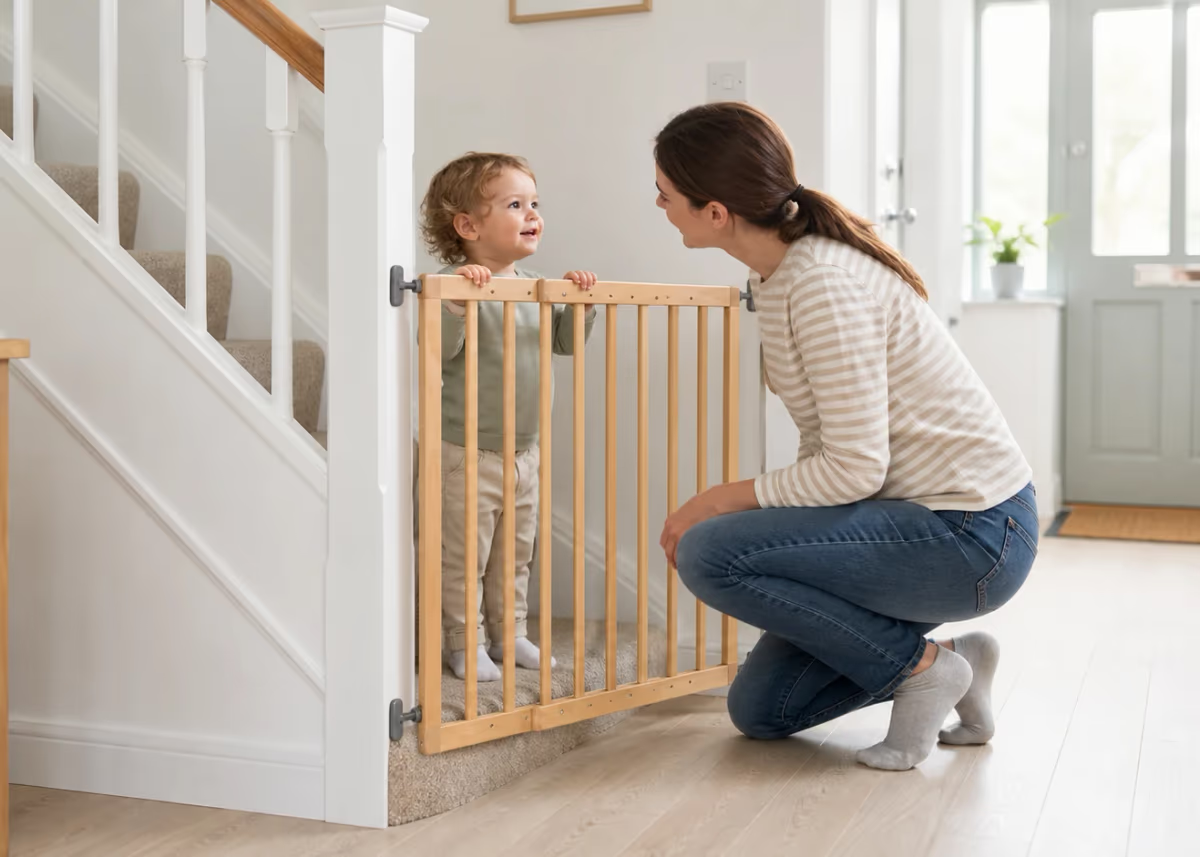
If your next problem is access to stairs, fireplaces, kitchens or unsafe rooms, look at baby gates and stair gates separately. Gates solve a different job from cupboard locks, and mixing the two too early can lead to buying the wrong product for the actual hazard.
FAQs
References::
- NHS - Baby and toddler safety
- RoSPA - Preventing accidents to children
- RoSPA - Safe at Home: Tips for Under 5s
- Child Accident Prevention Trust - Electrical safety
- Child Accident Prevention Trust - FAQs
- Electrical Safety First - Advice for parents
- Barnardo's - Safety inside the home
- Herefordshire and Worcestershire Health and Care NHS Trust - Keeping your child safe in the home