
Baby bath bucket safety: benefits and cautions for newborns
A purpose-built baby bath bucket can be practical for some families, but it is not an ordinary household bucket and it does not remove drowning, scald or supervision risks.
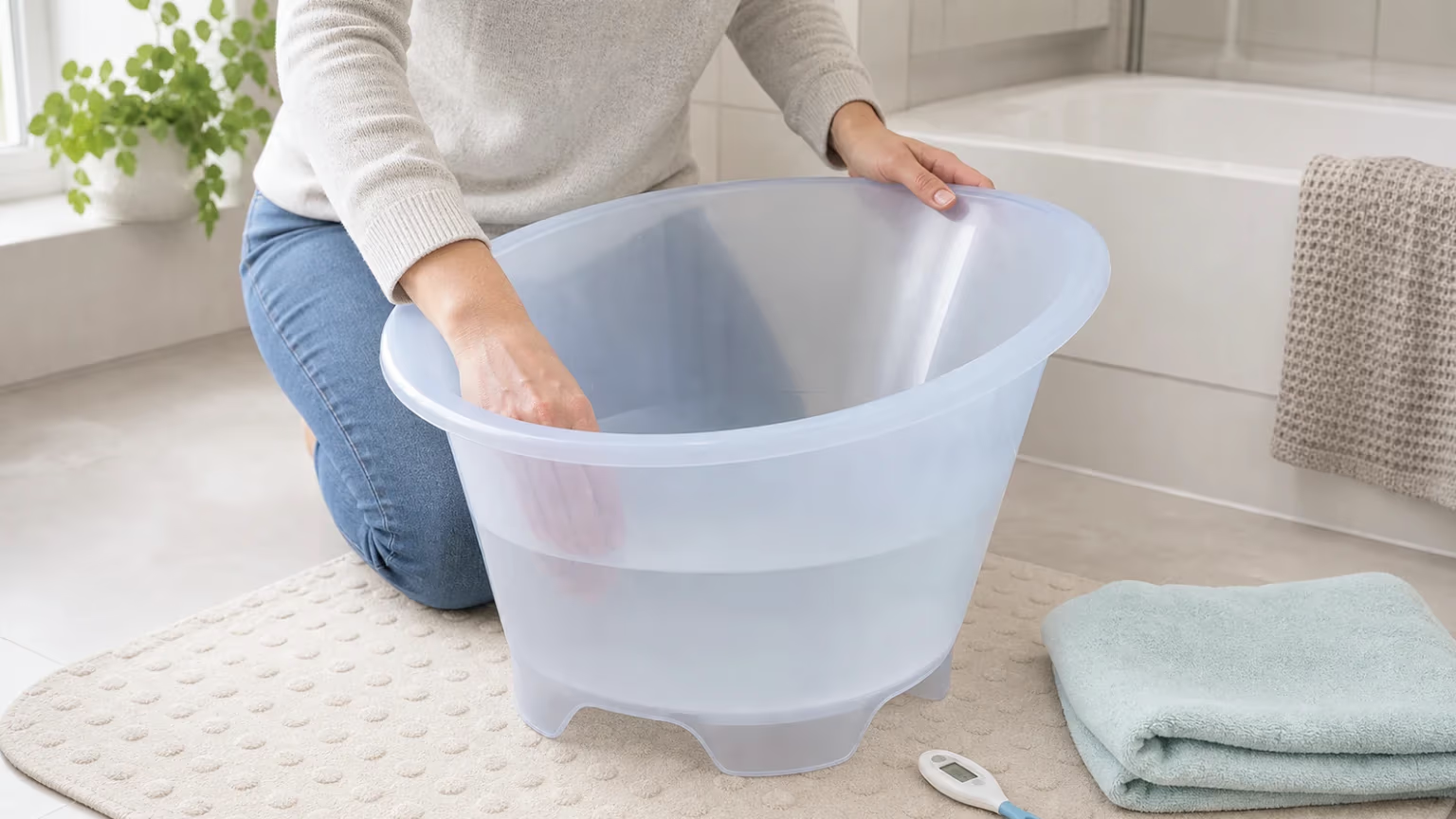
A baby bath bucket is a purpose-built upright or bucket-style baby bath, not an ordinary household bucket. It may suit some families if the product is designed for the baby's age, size and stage, and if the adult bathing the baby can follow the manufacturer's instructions every time.
Safety comes first. A baby can drown in very little water, so a baby bath bucket still needs constant, close adult supervision, warm rather than hot water, the correct fill line, the baby's head and face clear of water, and a stable setup that is not lifted or moved with the baby inside.
It is also not a treatment for colic, reflux, stomach aches, anxiety, sleep problems or persistent crying. Some babies may find a snug, supported bath calming, but that is different from a medical benefit.
What is a baby bath bucket and is it safe for a newborn?
A baby bath bucket, bucket-style baby bath or upright baby bath is a dedicated baby bath shaped so the baby sits in a more upright, enclosed position than they would in a traditional flat baby bath. Tummy Tub is one recognised example, and some other baby baths use similar compact upright designs.
The important word is "baby". A purpose-built baby bath should come with age or weight guidance, a fill line or water-level instructions, warnings, and directions for where and how to use it. An ordinary household bucket does not give you those baby-bath safeguards and should not be treated as a substitute.
The NHS guidance on bathing your baby does not recommend one particular bath shape. It focuses on simple routines: prepare everything first, use warm water, support the baby's head and shoulders, keep the head clear of water, and never leave the baby alone.
Is a baby bath bucket safe for a newborn?
A baby bath bucket may be an option for a newborn only if the product says it is suitable from birth or for your baby's current age, weight and development, and you feel able to support your baby securely. Newborns need careful head, neck and body support, and they do not need a daily bath.
If your baby slips down, seems hard to support, becomes distressed, looks cold or too hot, or you feel unsure, stop the bath and use another safe bathing method. A small standard baby bath, top-and-tail washing, or practical advice from a midwife or health visitor may be more suitable for some families.
When to ask before using one
Ask a midwife, health visitor, GP, neonatal team or relevant specialist before using a bucket-style baby bath if your baby was premature, is very small, has breathing concerns, skin problems, poor temperature regulation, umbilical cord concerns, medical equipment, or special bathing instructions.
Premature and medically fragile babies may need individual advice about temperature, handling, timing and skincare. A bucket-style bath should not be presented as a special benefit for them unless their own care team recommends it.
How to use a baby bath bucket safely
Stay within arm's reach
The Child Accident Prevention Trust warns that bath time needs close supervision, and its drowning guidance explains that babies and small children can drown in only a few centimetres of water. High sides, a snug shape, a backrest, a support bump or a fill line are not safety devices.
Keep one adult focused on the bath. Do not leave the baby with an older child, do not step away to answer the door or phone, and do not rely on a bath support to hold the baby safely. If you have to leave, take the baby with you.
Use warm, not hot, water
Put cold water in first, then add hot water, mix well, and check the temperature before your baby goes in. For the full guidance, see what temperature a baby bath should be. The NHS and CAPT both recommend checking with your elbow; a simple bath thermometer can help with consistency, but it does not replace mixing the water well or checking it yourself.
If you want a tool for this routine, you can compare a baby bath thermometer after you understand the basics. The main safety step is still for an adult to check the water before every bath.

Follow the fill line and keep the face clear
Use the amount of water specified in the product instructions or by its fill line. Do not copy advice that says water should always cover a baby's shoulders, because that is not general guidance for using every baby bath bucket at home.
The safer rule is simple: follow the product instructions, keep your baby's head and face clear of water, and support your baby throughout. If the instructions are missing or unclear, contact the manufacturer or retailer before using the bath.
Keep the setup stable
Use the bath only where and how the manufacturer allows. For many products, that means setting it up on a stable, low surface or at floor level, but always follow the instructions for your exact model.
Do not lift, move or carry a baby bath bucket with your baby inside. Stop using it if it is cracked, damaged, unstable, missing parts, missing instructions, subject to a recall, or if it is being used outside its stated age, weight or development range.
Before each bath
- Put towels, clean clothes, a nappy and any washcloths within reach before you start.
- Check the product is stable and undamaged.
- Fill only to the marked level, following the instructions.
- Mix the water and check it with your elbow or thermometer.
- Keep one adult within arm's reach for the whole bath.
- Stop if your baby seems distressed, cold, too hot, unusually sleepy, slippery or hard to support.
Benefits and what to check before choosing one
Once the safety basics are clear, a purpose-built baby bath bucket can have practical advantages for some families.
The compact shape may be useful in a small bathroom. Some models use less water than a larger bath, depending on the fill line. The upright position may make eye contact easier, and the enclosed shape may feel snug or soothing for some babies. Some parents also find a small, dedicated baby bath easier to prepare than filling a full-size bath.
These are possible comfort and convenience benefits, not guarantees. A baby bath bucket should not be used to treat colic, reflux, stomach pain, anxiety, sleep issues or crying, and it is not automatically easier or safer for every parent or baby.
Why an ordinary household bucket is different
If you have searched for "bathing baby in a bucket", the distinction matters. This article is about a purpose-built baby bath bucket, not using a regular bucket at home.
An ordinary bucket is not designed around baby bathing. It may not have a suitable shape, stable base, fill line, warnings, age guidance, support instructions, or product-safety information for bathing a baby. Babies can drown in very little water, and a container that happens to hold water is not the same as a baby bath.
Use a purpose-built product only if the instructions are clear and the setup feels manageable. If the setup does not feel manageable, choose another baby-bathing method.

What to check before buying or using one
Before buying or using a baby bath bucket, check the product information rather than relying on marketplace claims or social media demonstrations.
Look for:
- age, weight and development guidance;
- a clear fill line or water-level instructions;
- warnings about supervision, placement and moving the bath;
- instructions for supporting the baby;
- damage, cracks, loose parts or missing parts;
- recall notices or product-safety alerts;
- clear manufacturer or retailer contact details;
- model-specific evidence for any material or compliance claims.
Be careful with blanket claims such as BPA-free, phthalate-free, non-toxic, certified or compliant. Those details need product-specific documentation. They should not be used as reassurance that bath time is risk-free.
Once you are clear on the safety basics, a buying guide can help you compare purpose-built baby baths by support, size, cleaning, storage and bath setup. Keep that comparison separate from the health and safety rules in this article.
Health claims and when to get help
When to stop the bath or get help
Stop the bath and reassess if your baby seems too hot, cold, distressed, unusually sleepy, uncomfortable, hard to support, or if something does not feel right.
Call 999 after any submersion incident with breathing difficulty, blue, grey or pale colour, limpness, loss of consciousness, unresponsiveness, abnormal breathing, or if your baby is not waking normally. Call 999 or go to A&E for severe burns or scalds, serious injury, or if your baby seems seriously unwell after a bath incident.
Use NHS 111 for urgent advice if a child under 5 has a burn or scald and you are unsure what to do, or if symptoms after a bath incident are worrying but not immediately life-threatening. Contact a GP, NHS 111, urgent care or 999 depending on severity for repeated vomiting, unusual drowsiness, abnormal movements, poor feeding, persistent inconsolable crying, colour change or ongoing distress.
For product questions, contact the manufacturer or retailer before use if the instructions, fill line, age or weight guidance, recall status, damage, or material and compliance claims are unclear.
Can it help with colic, reflux or sleep?
There is no reliable support from health authorities for using a baby bath bucket as a treatment for colic, reflux, stomach aches, anxiety, sleep problems or persistent crying.
A warm bath can be part of a calm routine for some families, and some babies may appear to like the snug upright shape. But if your baby has persistent crying, poor feeding, repeated vomiting, breathing concerns, unusual drowsiness, colour change, a burn, an injury, or you are worried, contact your GP, NHS 111 or 999, depending on how urgent it is.
Baby bath bucket FAQs
References::
- NHS - Bathing your baby
- NHS Inform - Bathing your baby
- Child Accident Prevention Trust - Safe baby bath time
- Child Accident Prevention Trust - Child drowning prevention
- Child Accident Prevention Trust - Burns and scalds
- RoSPA - Bathtime
- RoSPA - Preventing accidents to children
- NHS - Is your baby or toddler seriously ill?
- NHS - Burns and scalds
- NHS - First aid
- BSI Knowledge - BS EN 17072:2018
- GOV.UK - Product safety report: COO11 Baby Bath Chair Support
- Bliss - Being a parent on the neonatal unit
- HealthyChildren/AAP - Bathing Your Baby
- CPSC - Infant Bath Tubs Business Guidance


