
Is a humidifier good for a baby?
A cool-mist humidifier may ease discomfort from dry air, but it is optional. Check room moisture, keep the tank clean and know when your baby needs medical help.
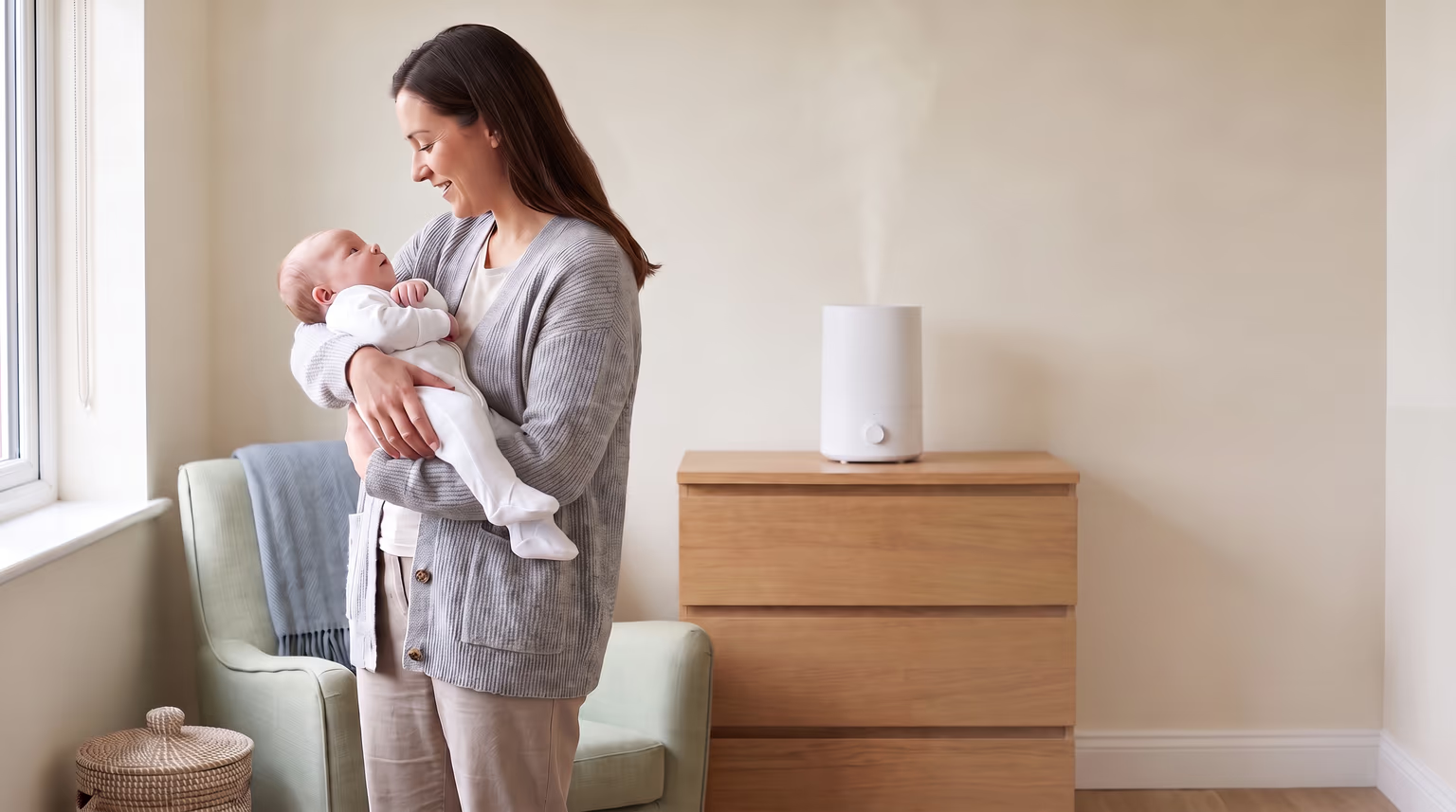
A baby with a blocked nose does not automatically need a humidifier. A cool-mist model may offer some comfort, but it does not treat the infection behind a cold or bronchiolitis. Its useful role is adding moisture when the air is dry.
Before trying one, check the room and the cleaning routine it needs. A damp bedroom needs less moisture, while a tank left full between uses needs emptying and cleaning. If either is a problem, leave the humidifier off until it is sorted.
Check the room's humidity and watch for damp
A hygrometer measures moisture in the air. Check it before switching on the humidifier, then while the appliance is running. This is more useful than judging the room by how warm it feels or assuming a blocked nose means the air is dry.
The US Environmental Protection Agency advises keeping indoor relative humidity no higher than 50% when humidifying. This is a general limit for using the appliance, not a target you need to reach for your baby.
Turn the output down or stop if windows develop condensation or nearby walls, curtains or bedding feel damp, even if the display is below that limit. Do not point the mist at fabric or a wall.

If the room already has damp or mould, avoid adding more moisture. Persistent problems need the cause investigated, such as a leak, inadequate ventilation or a building defect. If you rent, report them to your landlord. Children are particularly vulnerable to the health effects of damp and mould, and these problems should not simply be put down to how a family uses the room.
Water and cleaning: a routine you can keep up
Water left in a tank can allow bacteria to multiply. Some cool-mist devices can then send material from the tank into the air. Changing the water and cleaning the tank are separate jobs, and both matter.
Empty, dry and refill each day
For a portable humidifier:
- Switch off and unplug it before handling the tank.
- Empty the remaining water instead of topping it up.
- Wipe the accessible water-contact surfaces dry, following the appliance instructions.
- Refill with fresh water when you are ready to use it.
Empty it when you finish using it, too, rather than leaving water sitting there until the next night.

Choose water that limits mineral deposits
For ultrasonic and impeller models, low-mineral water, such as distilled water, helps reduce scale and the fine white dust some units release. Check the water instructions for your model. Bottled spring or mineral water is not the same as distilled water and may still leave deposits.
Distilled water does not replace cleaning. If you see scale or a film inside the tank, clean it before using the appliance again.
Clean the tank, rinse it and maintain the filters
Follow the manufacturer's method for removing deposits, cleaning and disinfecting. The EPA advises cleaning portable humidifiers every third day; follow any more frequent cleaning instructions for your model. Use the specified products and method rather than improvising a chemical mixture.
Rinse thoroughly after using a cleaning agent so it does not remain in the water that becomes mist. Clean or replace filters as instructed, and dry the parts fully before storing the appliance.
Choose cool mist and keep the sleep space clear
Around babies and young children, choose cool mist to avoid hot-water and steam scalds. Keep bowls of hot water for steam inhalation out of the routine as well: accidental spills can cause serious burns.
Place the humidifier on a stable surface suitable for the model, outside the cot and beyond your child's reach. Keep its cable out of reach too. Follow the manufacturer's clearances, and check that mist cannot wet the mattress, bedding or nearby furnishings.
A blocked nose does not change safer sleep. Put your baby on their back on a firm, flat mattress in a clear cot or Moses basket. Keep their separate sleep space in your room for at least the first six months. Do not raise the mattress or add pillows, wedges or rolled towels to prop them up.
For help with a stuffy nose, ask a pharmacist, GP or health visitor about saline nose drops suitable for your baby.
When your baby needs medical help
Watch your baby's breathing, feeding and alertness rather than waiting to see what the humidifier does.
Call 999 for emergency signs
Call 999 if your baby:
- is struggling to breathe, grunting or pulling their tummy in under the ribs
- has pauses in breathing
- has blue or grey lips, tongue or skin; on brown or black skin, colour changes may be easier to see on the palms, soles, lips or gums
- is floppy and difficult to wake, or cannot stay awake
You do not need to see every sign before calling.
Get urgent advice for feeding, fever or worsening illness
Seek urgent medical advice if your baby is feeding much less than usual, has had a dry nappy for 12 hours or shows other dehydration signs, is becoming more unwell, or is unusually tired or irritable. Contact a clinician if you are worried, even if your concern does not fit a checklist.
For fever, seek urgent advice if your baby is under 3 months with a temperature of 38°C or higher, or 3 to 6 months with 39°C or higher. Also seek advice if you think a baby in either age group has a high temperature, even without a reading.
Use the service for where you live:
- England: ask for an urgent GP appointment or call NHS 111. For a baby, telephone rather than use 111 online.
- Scotland: contact your GP, or phone NHS 24 on 111 if the problem cannot wait until the practice opens.
- Wales: contact your GP or call NHS 111 Wales on 111.
- Northern Ireland: contact your GP or the local GP out-of-hours service when the surgery is closed.
If your baby was born very prematurely, has a heart or lung condition, or has a weakened immune system, follow their clinical team's individual advice. If breathing symptoms appear or worsen while the humidifier is running, stop using it and seek medical advice; use 999 for the emergency signs above.