
What is the ideal room temperature for a baby?
Aim for 16–20°C where your baby sleeps. Check their chest or neck, choose light layers and know when warmth or coldness needs medical help.
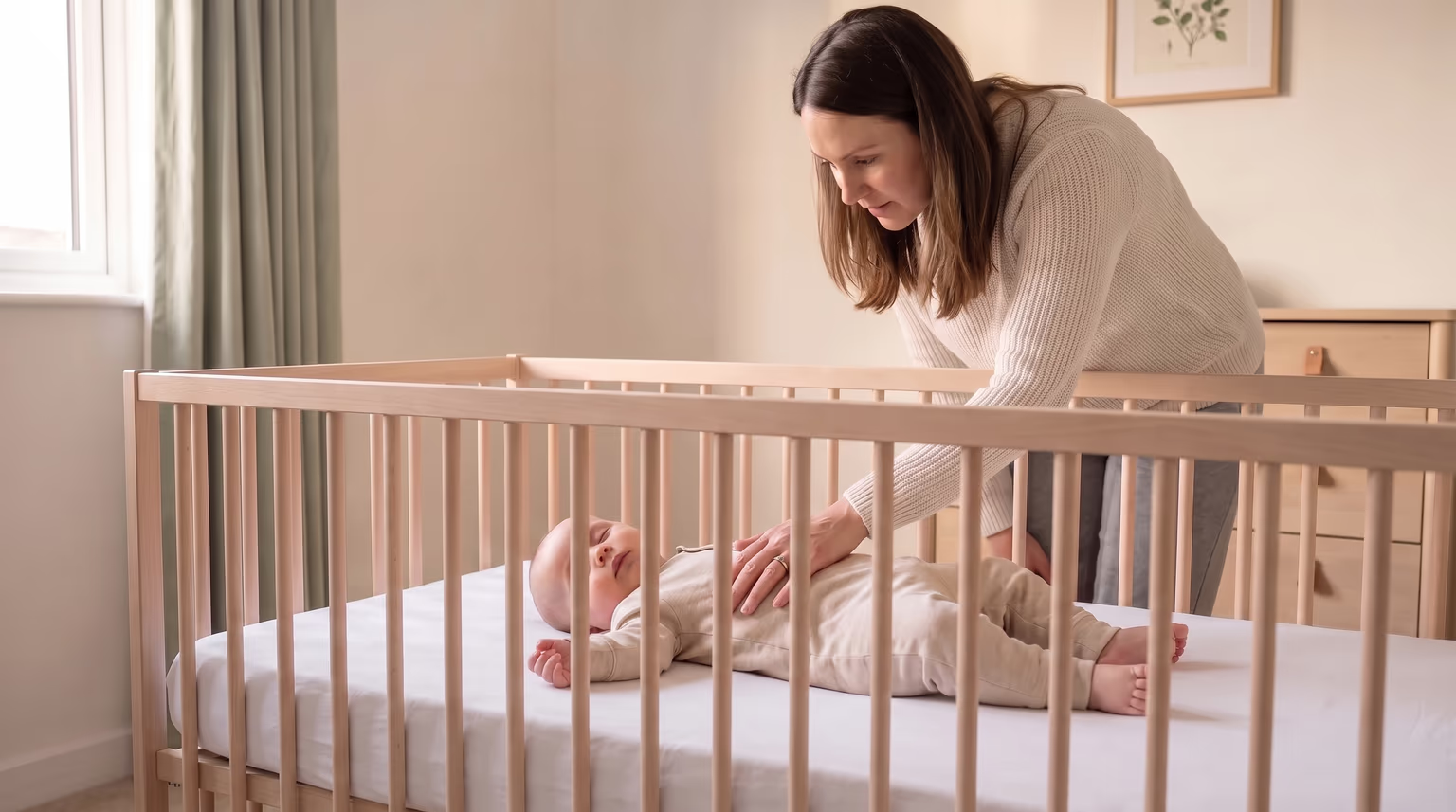
Aim for 16–20°C in the room where your baby sleeps, for naps as well as overnight. The Lullaby Trust's room-temperature guidance recommends this range with light bedding or a lightweight, well-fitting sleeping bag. Use a room thermometer to check the room rather than guessing by how warm it feels to you.
Check your baby's chest or the back of their neck too. If the skin is hot or sweaty, remove a layer of clothing or bedding. Hands and feet commonly feel cooler, so they are not a reason on their own to add more clothes. Overheating increases the risk of sudden infant death syndrome (SIDS).
What should your baby wear at 16–20°C?
A sleepsuit with a suitable sleeping bag is one option. A sleepsuit with a lightweight blanket is another. Choose either a sleeping bag or light bedding: do not put a blanket over a sleeping bag.
For a bag, follow the manufacturer's guidance on its TOG and clothing underneath. TOG describes insulation: a higher number means a warmer product. Check the room itself rather than choosing only by the season. A heated bedroom in winter may need lighter clothing than an unheated room in spring.
There is no single outfit or TOG chart that suits every baby and product. Fabrics and the air trapped between layers change the warmth. Use the instructions for the bag you own, then check your baby and adjust clothing if needed. Do not use two sleeping bags together or add their TOG numbers.
For size limits and the checks around the neck and armholes, see our baby sleeping bag safety, fit and TOG guide.

Keep the sleep setup simple
Put your baby on their back on a firm, flat mattress in their own clear cot or Moses basket, in your room for at least the first six months. Keep their head uncovered indoors, and leave pillows, duvets, bumpers and toys out of the sleep space.
If you use a blanket, put your baby's feet at the foot of the cot and tuck it in securely, no higher than their shoulders. A folded blanket creates an extra layer. For the age-related bedding question, read when a baby can sleep with a pillow or duvet.
What if the room is warmer than 20°C?
Reduce clothing and bedding as the room gets warmer. On very hot nights, a short-sleeved vest or just a nappy can be enough. Keep checking your baby's chest or neck, including after changing layers.
To stop the room building up heat:
- Close curtains or blinds during the day to reduce heat from sunshine.
- Open the bedroom door and a window when it is safe to do so.
- If you use a fan to circulate air, keep it from blowing directly at your baby.
- Keep the cot out of direct sunlight and away from heaters or radiators.
Sometimes a hot room will stay above the recommended range despite these steps. Concentrate on lighter clothing, less bedding and checking your baby, rather than trying to keep them in their usual winter outfit.
What if the room drops below 16°C?
If the room is slightly below the recommended range and your baby otherwise seems well, check their chest before adding warmth. If it feels cold, adjust the clothing or bedding and check again.
- With a sleeping bag: add a clothing layer underneath, or choose a warmer bag according to its instructions. Keep extra blankets off the bag.
- With sheets and blankets: an extra lightweight clothing layer or a lightweight blanket can help. Keep blankets firmly tucked in and below the shoulders.
Avoid thick, fleecy or padded bedding, and keep hats off indoors. Never use a hot-water bottle or electric blanket, or put the cot beside a radiator, heater or fire. Do not bring your baby under an adult duvet to warm them.

If keeping your home warm is difficult, the Lullaby Trust's cold-weather advice includes places to seek help with energy bills and baby essentials. Follow any individual sleep or clothing advice from your baby's clinical team.
When feeling hot or cold needs medical help
If your baby seems unwell, do not assume the room temperature explains it. Use a digital thermometer in the armpit, following its instructions. A body temperature of 38°C or above is a fever. Keep clothing appropriate for the surroundings: do not strip or sponge your baby down to treat a fever, or wrap them in extra layers.
Get immediate help for these temperature readings
A reading of 38°C or above under 3 months, 39°C or above at 3–6 months, or below 36°C needs immediate medical help.
In England, the NHS's baby-specific urgent-help guidance says to call 999 or go to A&E for these readings.
Elsewhere, get help immediately using the route for your nation:
- Wales: phone NHS 111 or your GP.
- Scotland: contact your GP, or NHS 24 on 111 when the practice is closed. Call 999 or go to A&E if your baby is under 3 months, has a temperature of 38°C or above or 36°C or below, and has not had a vaccination in the past 2 days.
- Northern Ireland: contact your GP or the GP out-of-hours service.
Our baby fever guide explains the national routes and what to do after recent vaccination. Do not wait to see whether changing layers solves the problem.
Call 999 for emergency signs
Call 999 if your baby is struggling to breathe, is hard to wake or unresponsive, has a seizure, has blue, grey, unusually pale or blotchy skin, or has a rash that does not fade when pressed. Get immediate help if your baby seems seriously unwell; you do not need several signs to appear together.
Get advice for other illness concerns
Seek urgent advice if you suspect a high temperature in a baby under 6 months even without a reading, or if your baby is feeding poorly, has fewer wet nappies, has a fever lasting 5 days or more, or is not their usual self and you are worried.
Phone NHS 111 in England or Wales. In Scotland, contact your GP, or NHS 24 on 111 when the practice is closed. In Northern Ireland, contact your GP or the GP out-of-hours service. Use 999 for the emergency signs above.


