
Baby fever: when to call 111, your GP or 999
A fever needs prompt help in a young baby. Check the age thresholds, emergency signs and the service to contact in your part of the UK.
If your baby is struggling to breathe, cannot be woken, has a seizure or has a rash that stays visible when pressed, call 999 now. Do not wait for a thermometer reading. If there is no emergency sign, your baby's age is the next thing to check.
Age thresholds and the right service to contact
A fever is 38°C or above, but the threshold for seeking help is not the same at every age. For a baby older than 6 months, the number alone cannot tell you how serious the illness is: breathing, alertness, feeding and wet nappies also matter.
The routes below are for the part of the UK where you are. Emergency signs override the routine GP or advice-line route at any age.
England
For a baby under 3 months with 38°C or above, or 3 to 6 months with 39°C or above, call 999 or go to A&E. This follows the NHS's baby-specific urgent-help page, reviewed in August 2026. Its general fever page still directs these readings to 111; we follow the more cautious, baby-specific route here.
For other urgent concerns, or if you think a baby under 6 months has a high temperature but do not have a reading, call NHS 111. Tell the adviser about any recent vaccination; do not assume that it explains the fever.
Wales
At either young-baby threshold above, call NHS 111 Wales or your GP surgery now. NHS 111 Wales gives the same advice if you think a baby under 6 months has a high temperature, even without a reading. Call 999 for emergency signs.
Scotland
NHS Inform says phone 999 if your baby is under 3 months with 38°C or above and has not had a vaccination in the past 2 days. For a baby over 3 months with 39°C or above, contact your GP practice; phone NHS 24 on 111 if the practice is closed.
The vaccination exception is specific to that temperature-based instruction. It does not cancel emergency signs such as breathing difficulty, a seizure or difficulty waking. If your baby was vaccinated within the past 2 days and you are worried, contact your GP or health visitor; if unavailable, call NHS 24 on 111. Tell them your baby's age, temperature and when the vaccination was given. You can ask for help straight away; you do not need to wait for 48 hours to pass.
Northern Ireland
For a baby under 3 months with 38°C or above, or 3 to 6 months with 39°C or above, contact your GP urgently. If you cannot contact your GP, call your local GP out-of-hours service. These are the routes given by nidirect for fever; use them rather than NHS 111. Call 999 in an emergency.
Emergency signs and other reasons to seek help
Call 999 for these warning signs
Get emergency help if your baby has any of these signs, whether or not they have a fever:
- Breathing problems: very fast breathing, grunting, sucking in under the ribs, pauses in breathing or struggling for breath.
- Difficulty waking or responding: they are hard to wake, cannot stay awake, seem floppy or do not respond as they normally would.
- A marked colour change: blue, grey, unusually pale or blotchy skin, lips or tongue. On brown or black skin, check the palms and soles too.
- A rash that does not fade under pressure, a stiff neck or unusual sensitivity to light.
- A seizure (fit), including a first seizure, or swelling of the lips, tongue or throat with difficulty swallowing or breathing.
- An unusual cry or behaviour: a weak, high-pitched or continuous cry, or extreme agitation that does not settle.
- Unusually cold hands and feet with a fever, or skin that feels cold or clammy.
You do not need to see several signs together. If you think something is seriously wrong, get help immediately.
A very low temperature or no wet nappies also needs prompt action. In England, the NHS urgent-help page says call 999 or go to A&E for a temperature below 36°C or no urine for 12 hours. In Scotland, NHS Inform puts a temperature of 36°C or below in a baby under 3 months in its 999 advice, unless they have had a vaccination in the past 2 days. Elsewhere, or if unsure, contact your local urgent service immediately; call 999 if your baby has an emergency sign. Seek advice for reduced wet nappies before they reach 12 hours without urine.
Contact the urgent service if feeding, nappies or behaviour change
Use NHS 111 in England, NHS 111 Wales or your GP in Wales, your GP or NHS 24 out of hours in Scotland, and your GP or GP out-of-hours service in Northern Ireland if:
- feeds are much smaller than usual, your baby refuses feeds, or they keep vomiting;
- nappies are less wet, the mouth seems dry, the eyes look sunken or there are no tears when crying;
- there is a rash with the fever, or your baby is unusually quiet, listless or different from normal;
- the fever has lasted 5 days or longer, or suitable medicine is not helping and you need advice;
- you are worried, including when the temperature is below the age threshold.
A baby who is hard to wake, floppy or not responding normally needs the emergency route above. Do not wait for the fifth day if your baby is getting worse. If you have already spoken to a professional, seek help again when your baby is less well or you are more worried.
Taking your baby's temperature
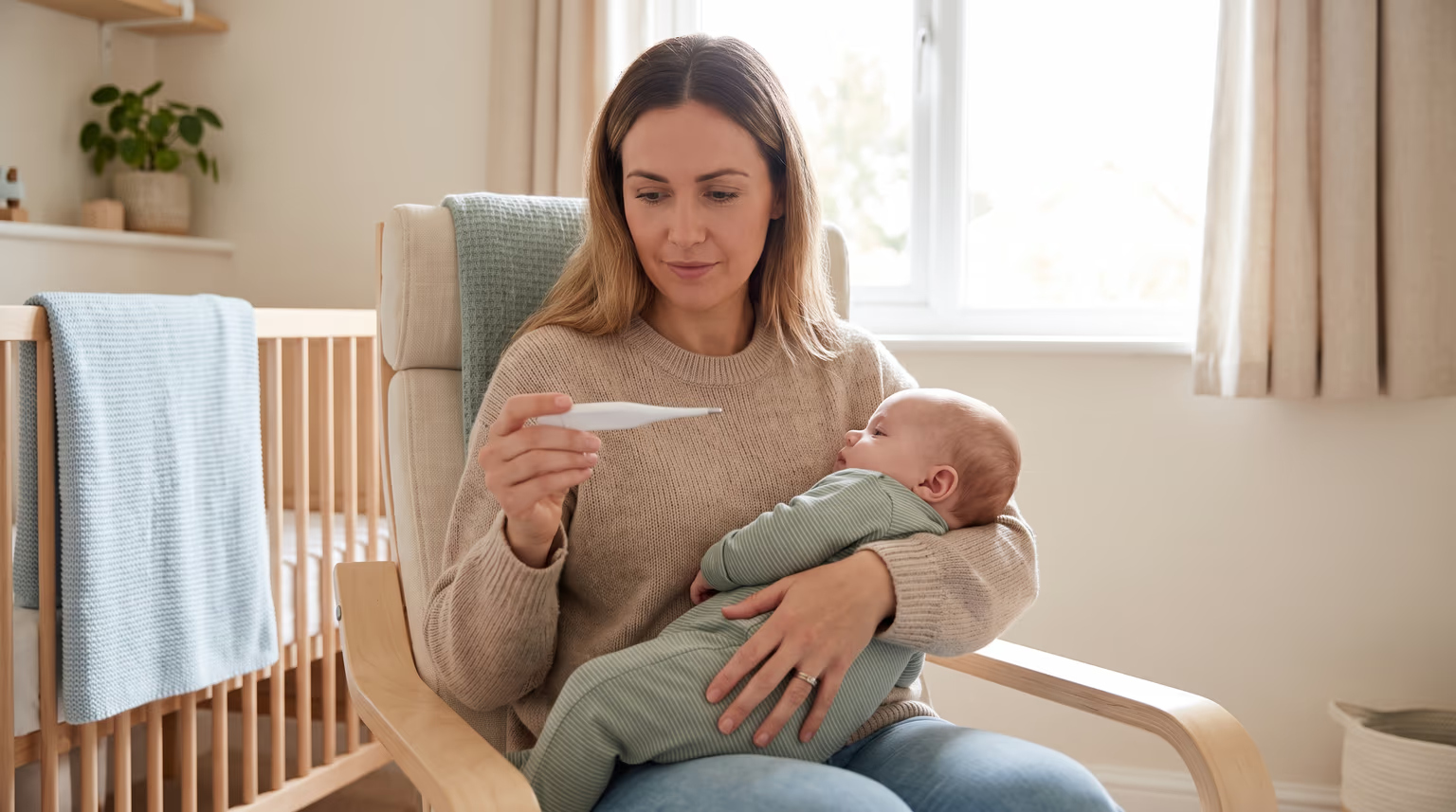
If your baby needs urgent help, make the call first. Otherwise, use a digital thermometer in the armpit, following its instructions:
- Hold your baby comfortably and put the tip against the skin at the top of the armpit.
- Hold their arm gently against their body for the time stated in the leaflet.
- Read the display and tell the adviser the temperature and how you measured it.

A recent bath or being wrapped in a blanket can temporarily raise the reading. If your baby is otherwise well and does not meet an urgent threshold, wait a few minutes and check again without letting them become cold or shivery. Do not delay care to keep rechecking a worrying reading or an unwell baby.
While you arrange or wait for help
Offer breastfeeds or usual formula feeds little and often if your baby is able to take them. Watch feeding and wet nappies, and check on your baby regularly, including at night. Keep clothing comfortable: do not strip them, sponge them down or wrap them in extra layers to change the temperature.
If your baby is distressed and you are considering medicine, check the packaging and leaflet for suitability, or ask a pharmacist or GP. Follow the advice you were given after vaccinations. A fall in temperature after medicine does not tell you whether an illness is serious, so keep the care decision based on age and symptoms. Do not use medicine to postpone an urgent assessment.
Making the call
When 111 is the right route, phone for a baby. In England, 111 online is for ages 5 and over. Stay with your baby if possible and say where you are, your baby's age, what has changed and any temperature reading. Mention recent vaccinations and any medicine already given. You do not need to prepare a written record before calling.

If you are waiting for a callback and symptoms change or get worse, call the service again. Call 999 if an emergency sign develops. Follow advice to attend for an examination; a young baby may need to be seen in person.


