
The 5 best baby thermometers for fever checks in 2026
These are the best baby thermometers for checking fever at home, from simple underarm digital picks to faster ear and forehead options.
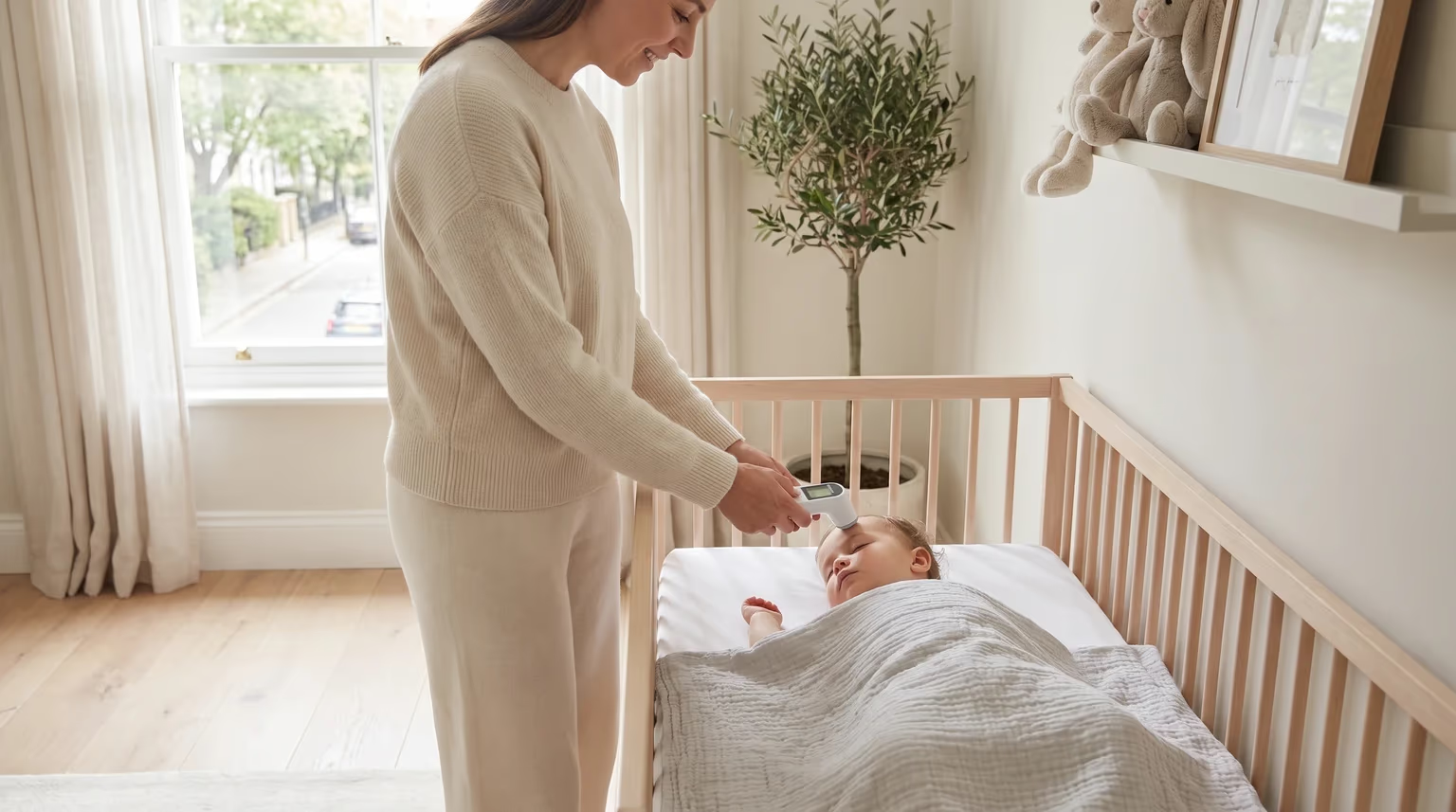
This shortlist is for body-temperature checks when a baby or toddler seems unwell, not for bath water or nursery-room readings. If you actually meant bath water, see our guide to baby bath thermometers; for fever checks, the main choice is between a simple underarm contact thermometer and faster ear, forehead, or hybrid infrared designs.
Feature | |||||
|---|---|---|---|---|---|
| Best for | Best for Simple underarm checks | Fast premium ear readings | One device for several modes | Lower-cost contact checks | No-touch forehead checks |
| Type | Type Digital stick | Ear infrared | Forehead and ear hybrid | Digital stick | Forehead infrared |
| Reading style | Reading style Contact, held in place | In-ear with hygiene caps | Ear, forehead or no-touch | Contact, held in place | Contact or no-touch forehead |
| Keep in mind | Keep in mind Less convenient with a wriggly baby | Placement and probe covers matter | More instructions to follow | Basic design, fewer extras | Distance and technique matter |


How to choose a baby thermometer for fever checks
For babies and young children, NHS guidance points parents towards a digital thermometer used under the arm as the straightforward home method. That is why the top pick here is a digital stick thermometer rather than the flashiest infrared model: it is the easiest type to understand, clean and repeat when you are worried.
Ear thermometers can be very quick, but they need the right position in the ear and clean probe covers or sensors. Forehead and no-touch models are convenient when a child is asleep or wriggly, but you still need to follow the distance, room-temperature and sensor-care instructions. NHS and NICE guidance are also good reminders not to treat every thermometer route as equally suitable for every age.
When comparing baby thermometers, look first at:
- Age fit: especially for newborns and under-5s.
- Reading method: underarm, ear, forehead, no-touch or hybrid.
- Speed: useful at night, but not worth much if placement is fiddly.
- Hygiene: washable tips, probe covers and easy sensor care matter.
- Display clarity: colour-coded fever guidance can help when you are tired.
The best baby thermometers in 2026
These five picks cover the main buying choices: simple underarm contact checks, premium ear readings, flexible hybrid use, a lower-cost digital backup and a recognised no-touch forehead option.
1. Braun Age Precision PRT2000 digital stick thermometer

This is the best starting point for most parents who want a baby thermometer for straightforward underarm checks without adding extra modes to think about. The Braun Age Precision PRT2000 is a digital stick thermometer with a flexible tip, an LCD display and age-based colour guidance, so it feels more reassuring than a very basic contact thermometer.
Why did we choose this product?
Choose it if you want a well reviewed, popular thermometer for underarm checks and do not need instant no-touch readings. It is especially sensible for younger babies because the method is easy to repeat and easy to explain to another carer.
Keep in mind
It still needs contact time, so it is not as effortless with a wriggly or sleeping child as an infrared model. Although the thermometer can be used in more than one way, underarm checks are the clearest route to keep front and centre for babies and under-5s.
Features that may help you
•Best for: simple underarm baby checks
•Type: digital stick thermometer with flexible tip
•Display: LCD with age-based colour guidance
•Useful extras: memory recall, beep, storage cap and battery included
•Main tradeoff: slower and more hands-on than ear or forehead models
2. Braun ThermoScan 7 ear thermometer

The Braun ThermoScan 7 is the premium ear thermometer pick for parents who want quick readings from a familiar healthcare brand. It uses Braun's Age Precision setting, a colour-coded display and an ExacTemp positioning indicator to make ear checks less guessy.
Why did we choose this product?
It is worth choosing if speed matters and you are comfortable using disposable hygiene caps and positioning the probe carefully. It is a very popular, well reviewed pick, but its real advantage is convenience rather than simplicity.
Keep in mind
Ear thermometers are more technique-sensitive for babies than a digital underarm stick. Keep the lens and caps clean, follow the age guidance in the manual, and do not force an ear reading if your baby is too small, upset or difficult to position.
Features that may help you
•Best for: fast premium ear readings
•Type: infrared ear thermometer
•Display: colour-coded Age Precision guidance
•Useful extras: positioning indicator, storage cradle, batteries and hygiene caps
•Main tradeoff: probe covers and careful placement are part of every check
3. OxiPro TH1 forehead and ear thermometer

The OxiPro TH1 is the flexible pick if you do not want separate forehead, ear and no-touch thermometers in the cupboard. It can handle ear checks, child forehead checks, adult forehead checks and surface mode, with a large digital display and colour-coded results.
Why did we choose this product?
Choose it if your household wants one thermometer for several kinds of checks and you are willing to learn the modes properly. It is a strong middle-ground option for parents who like the convenience of infrared readings but do not want to be locked into only ear or only forehead use.
Keep in mind
The extra modes are useful only if you use the right one at the right time. Read the instructions before you need it in the middle of the night, and avoid relying on surface or bath checks as if they were the same as a body-temperature reading.
Features that may help you
•Best for: families who want one flexible thermometer
•Type: forehead, ear and no-touch infrared thermometer
•Display: digital screen with colour-coded results
•Useful extras: included batteries, pouch and quick-start guidance
•Main tradeoff: more modes mean more instruction-following
4. Berrcom digital stick thermometer

The Berrcom digital stick thermometer is the budget-friendly contact option: basic, compact and easy to keep as a backup. It gives parents another underarm-style choice without paying for age settings, probe covers or infrared modes.
Why did we choose this product?
It makes sense if you want a simple thermometer for the change bag, grandparents' house or medicine drawer. The clear display, fever alarm, memory recall and washable tip cover the practical basics, and the straightforward design is well liked for backup use.
Keep in mind
This is not the most comfortable choice for a restless baby because it takes longer than the premium infrared picks and has fewer guidance features. It is best treated as a straightforward contact thermometer, not a do-everything fever gadget.
Features that may help you
•Best for: lower-cost contact checks and backup use
•Type: digital stick thermometer
•Display: LCD with beeper and memory recall
•Useful extras: waterproof tip, auto shut-off and storage case
•Main tradeoff: fewer comfort and guidance features than Braun's stick option
5. Braun Sensian 7 forehead thermometer

The Braun Sensian 7 is the recognised-brand forehead option for parents who want quick checks with minimal disturbance. It can be used in touch or no-touch mode, has age-adjustable fever guidance and includes positioning help so you are less likely to hold it at the wrong distance.
Why did we choose this product?
Choose it if you mainly want quiet forehead readings for a sleeping or poorly toddler and prefer Braun's guidance features over a generic infrared thermometer. Silent mode, PositionCheck and a colour-coded display make it easier to use when the room is dim and everyone is tired.
Keep in mind
Forehead readings are convenient but sensitive to technique. Let the thermometer and child settle in the same room where the manual asks for it, keep the sensor clean, and be consistent about whether you are using touch or no-touch mode.
Features that may help you
•Best for: quick no-touch forehead checks
•Type: forehead infrared thermometer
•Display: colour-coded Age Precision guidance
•Useful extras: PositionCheck, silent mode, protective cap and batteries
•Main tradeoff: distance, room conditions and technique affect confidence
How to use a baby thermometer safely at home
Whichever baby thermometer you choose, the technique matters. Follow the instructions for the exact model, make sure the child and device have had time to settle at room temperature where the manual asks for it, and recheck after a few minutes if a recent bath, heavy clothing, a warm room or movement may have affected the reading.
The NHS says a high temperature in a child is generally 38C or above, and its fever guidance for children gives clear thresholds for when to seek help, especially for babies under 6 months. For guidance after taking a reading, see when to call NHS 111 or seek medical help for a baby's fever. Keep that medical guidance separate from product convenience: a faster thermometer is helpful, but it does not replace getting advice when your baby is very young, unusually drowsy, struggling to breathe, dehydrated, or you are worried.
For cleaning, keep it simple and consistent. Wipe contact tips as the manual says, use fresh ear probe covers where required, keep infrared sensors free from marks, and avoid old mercury-glass thermometers. Store the thermometer where you can find it quickly, but out of reach of children.
What else helps when your baby is poorly?
A thermometer gives you the reading, but comfort still matters. Keep fluids going where age-appropriate, avoid over-wrapping, and make the room calm enough for rest. If dry air or congestion is part of the problem, a good baby humidifier can be useful room-comfort kit, but it is not a substitute for checking your baby's actual temperature.


