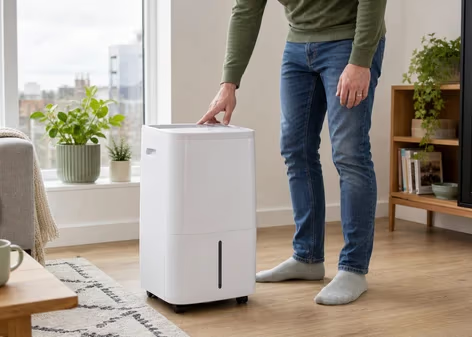
The 5 best dehumidifiers for homes in 2026
Looking for the best dehumidifier for damp rooms, condensation or indoor laundry? These five picks cover family homes, quiet bedrooms, running costs and small spaces.
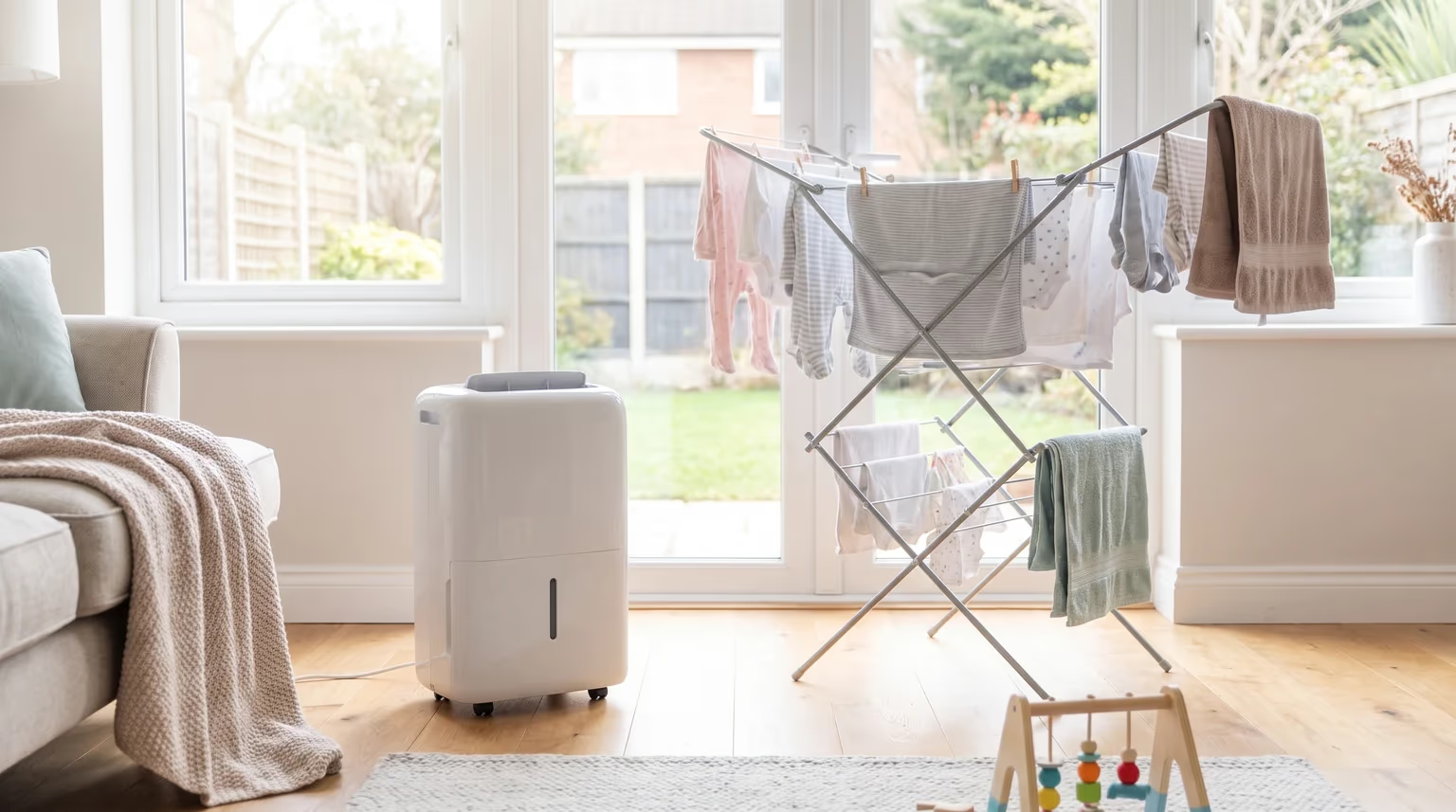
The right dehumidifier depends on the job. A proper 10L to 25L compressor model is usually the better choice for damp bedrooms, bathrooms, condensation and laundry, while a mini unit only makes sense for cupboards, wardrobes or very small rooms. Use any dehumidifier alongside ventilation, heating and good moisture habits, especially in homes with babies or young children.
Criteria | |||||
|---|---|---|---|---|---|
| Best for | Best for Most family homes | Laundry and larger damp rooms | Quiet bedrooms | Value-conscious 12L pick | Cupboards and tiny rooms |
| Type and capacity | Type and capacity 12L compressor | 25L compressor | 10L compressor | 12L compressor | 1,200 ml mini electric |
| Room/use case | Room/use case Bedrooms, bathrooms and everyday condensation | Laundry, busy bathrooms and bigger damp rooms | Bedrooms and quieter daily use | Condensation, laundry and general home use | Wardrobes, cupboards or very small rooms |
| Tank/drainage | Tank/drainage Large-tank home model | Drain hose for longer runs | Smaller bedroom-friendly format | Simple 12L setup | Small tank with auto shut-off |
| Noise/energy cue | Noise/energy cue Sleep mode for night use | Stronger extraction, not the silent option | Quiet-focused model | Lower-energy use | Low-power mini unit |


How to choose the right dehumidifier for a UK home
Start with the moisture problem, then choose the size. For everyday condensation in a bedroom, bathroom or small family living space, a 10L or 12L compressor dehumidifier is usually a useful middle ground. For heavy indoor laundry, a very damp room or repeated window condensation, a 20L to 25L model gives you more extraction capacity and often better drainage options.
The small details matter too. Look for a tank you can empty easily, auto shut-off, a humidistat or humidity display, laundry mode if you dry clothes indoors, and a noise level you can live with near bedrooms. If you want a deeper feature-by-feature breakdown, our guide to choosing a dehumidifier for your home covers capacity, tank size and running costs in more detail.
For homes with babies or toddlers, placement is part of the buying decision. Choose a stable spot, keep the cable out of reach, avoid splash zones, and leave the clearances recommended in the manual so the unit can breathe properly.
The best dehumidifiers for 2026
These five picks keep the list focused: three mainstream compressor models, one larger laundry-friendly option, and one mini dehumidifier for very small spaces.
1. Pro Breeze 12L/day dehumidifier

The Pro Breeze 12L/day dehumidifier is the most straightforward first choice if you want one sensible unit for a typical home. It has enough capacity for everyday condensation, bedrooms, bathrooms and laundry support without jumping straight to a much larger appliance.
Why did we choose this product?
Choose it if you want a proper compressor dehumidifier rather than a mini moisture collector. The 12L/day capacity, humidity sensor, sleep mode and timer make it practical for daily use, and its strong review base is more reassuring than that of the older compact picks that used to dominate this article.
Keep in mind
It is the all-rounder, not the highest-capacity option. If you dry laundry indoors most days or have a larger damp room, the AEOCKY 25L will give you more headroom.
Features that may help you
•12L/day compressor dehumidifier
•Automatic humidity sensor and display
•Sleep mode for night-time use
•24-hour timer
•Laundry drying mode
•Best fit: everyday damp, condensation and family-home use
2. AEOCKY 25L Smart Compressor Dehumidifier

The AEOCKY 25L Smart Compressor Dehumidifier is the pick for homes with more than occasional condensation on the windows. It suits indoor laundry, busy bathrooms, larger damp rooms and households that want the option of continuous drainage.
Why did we choose this product?
Its main strength is capacity. The 25L/day rating, drain hose, humidity sensing and automatic modes give it more flexibility than a standard 10L or 12L model, and buyers consistently praise its extraction performance, help with drying laundry and clear controls.
Keep in mind
It is not the quietest choice when running hard, and a larger compressor unit is more awkward to move around than a small bedroom model. Let it stand as instructed after delivery before first use, and check the manual before setting up continuous drainage.
Features that may help you
•25L/day compressor dehumidifier
•Humidity sensing and automatic modes
•Drain hose for continuous drainage
•Useful for drying clothes indoors
•Better suited to larger damp rooms than mini units
•Best fit: laundry, bigger bedrooms and busy family homes
3. Meaco MeacoDry ABC 10L

The Meaco MeacoDry ABC 10L is the shortlist's quiet-bedroom pick. It gives you a proper compressor dehumidifier in a smaller format, so it makes sense for bedrooms, including a nursery or child's bedroom where it can be placed safely, particularly when noise matters more than maximum extraction.
Why did we choose this product?
Meaco is a recognisable dehumidifier brand, and this 10L model has one of the largest visible review bases in the shortlist. It is a better choice for a small room than a 500ml or 600ml mini unit if your real problem is condensation rather than just a slightly damp cupboard.
Keep in mind
The lower capacity is deliberate. It is not the model I would choose first for frequent laundry drying or a larger damp room; its main strengths here are quiet-bedroom fit, 10L capacity and review strength.
Features that may help you
•10L compressor dehumidifier
•Quiet-focused bedroom role
•Large visible review base
•Colour options may be available
•Better for bedrooms than heavy laundry
•Best fit: quieter daily moisture control
4. Devola 12L/day low-energy dehumidifier

The Devola 12L/day low-energy dehumidifier is the practical value pick: a proper 12L compressor model for readers who want help with condensation and laundry without paying for the largest or most feature-heavy unit in the list.
Why did we choose this product?
It gives the shortlist a second mainstream 12L option for condensation, laundry and everyday home use. The value comes from the mix of useful capacity, lower-energy positioning and straightforward controls, rather than a single headline price claim.
Keep in mind
Treat running-cost and award claims cautiously unless they are freshly verified. If you need the strongest extraction for laundry, choose the AEOCKY 25L instead.
Features that may help you
•12L/day compressor dehumidifier
•Lower-energy positioning
•Laundry drying use case
•Dust filter listed
•Sensible alternative to larger 20L to 25L units
•Best fit: value-conscious everyday dehumidifying
5. EasyAcc 1200ml mini dehumidifier

The EasyAcc 1200ml mini dehumidifier is the one compact pick that still earns a place. It is for wardrobes, cupboards, box rooms, caravans and very small bathrooms where a full-size compressor model would feel excessive.
Why did we choose this product?
Choose it for portability and low-power small-space use. It has a 1,200 ml tank and auto shut-off, and is positioned as a low-noise option, making it practical for cupboards, wardrobes and other very small spaces.
Keep in mind
This is not a serious damp, mould-risk or laundry solution. If the room regularly has condensation on the windows, is used for drying clothes or has a musty smell that keeps returning, step up to a 10L or 12L compressor dehumidifier.
Features that may help you
•1,200 ml water tank
•Portable mini format
•Auto shut-off
•Low-noise small-space positioning
•Colour LED light feature
•Best fit: cupboards, wardrobes and very small rooms
How a dehumidifier helps with damp, condensation and laundry
Damp, mould and ventilation
Condensation is usually a sign that moisture is building up faster than the home can clear it. Everyday life adds moisture through showering, cooking, washing up, breathing and drying laundry, so a dehumidifier works best as part of a wider routine: use extractor fans, keep vents clear, heat rooms sensibly, and allow air to move behind furniture.
GOV.UK guidance treats damp and mould as a real health concern, especially for children, pregnant women and people with respiratory conditions. That does not mean a dehumidifier is a medical treatment. It means excess moisture should be managed promptly, and the cause of damp or mould should not be ignored.
Drying laundry indoors
Indoor laundry can put a lot of moisture into the air. If you cannot dry clothes outside, spin them well, keep the drying area ventilated, and run the dehumidifier in the same room with the door mostly closed if the manual allows it. A larger compressor model with laundry mode is usually more useful here than a mini dehumidifier.
Running and placing a dehumidifier safely
Running costs and energy use
Running cost depends on wattage, run time and your electricity unit rate. A more powerful unit may use more electricity while it is running, but it can also finish a moisture-heavy job faster than an underpowered one. For regular laundry or damp rooms, it is often better to buy the right capacity than to run a small model all day and get little result.
Child-safe placement
Treat a dehumidifier like any other electrical appliance in a family home. Keep it upright on a stable surface, keep the plug and cable out of children's reach, do not run it where it can be splashed, and empty the water tank before it becomes tempting for little hands. The same sort of room-by-room checks you would use when baby-proofing your home apply here too.
Emptying, drainage and maintenance
A dehumidifier is easier to live with when the tank is simple to remove and the filter is easy to clean. If you plan to use continuous drainage, check that the hose route is secure, slopes correctly, and cannot be pulled by a child. Registering the appliance for safety notices is also sensible, especially for a product you may use daily through winter.
Frequently asked questions
References::
- GOV.UK: Understanding and addressing the health risks of damp and mould in the home
- GOV.UK: Existing home ventilation guide
- Centre for Sustainable Energy: Condensation, damp and mould
- Centre for Sustainable Energy: How much electricity am I using?
- Electrical Safety First: Dehumidifiers
- GOV.UK: Consumer products - staying safe