The 5 best high-back booster seats for 2026
Choosing a high-back booster seat for an older child? These picks cover belt fit, ISOFIX, comfort, folding, and value for the 100-150 cm stage.
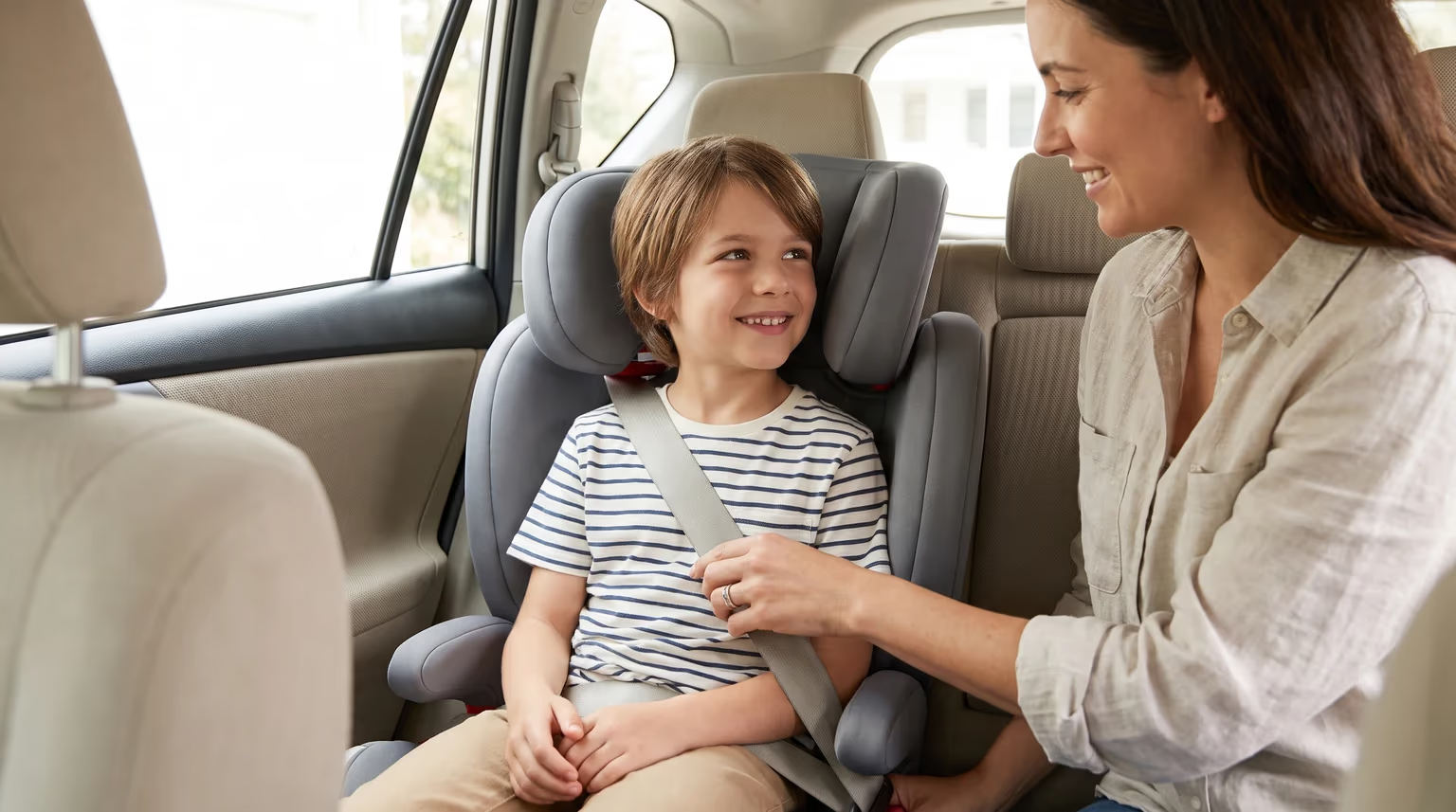
High-back booster seats are for the stage after a harnessed toddler seat, when your child is ready to use the vehicle seat belt with a belt-positioning booster. For most current boosters, that means the older-child 100-150 cm / age 4+ stage, often still described in shops as Group 2/3.
The seat still has to suit your child and your car. ISOFIX can help keep the booster attached to the vehicle, but the adult seat belt is what restrains your child, so belt routing and headrest height matter more than any single feature.
Feature | |||||
|---|---|---|---|---|---|
| Best for | Best for Overall value | Foldable use | Premium ISOFIX | Sturdy value | Sleep comfort |
| Height range | Height range 100-150 cm | 100-150 cm | 100-150 cm | 100-150 cm | 100-150 cm |
| Installation | Installation Seat belt | ISOFIX plus seat belt | ISOFIX plus seat belt | ISOFIX or seat belt | With or without ISOFIX |
| Useful feature | Useful feature Cupholders and light build | Compact fold | Easy buckle access | Roomy reinforced shell | Tilt-adjustable headrest |
| Good to know | Good to know Simple rather than plush | Best if storage matters | Costs more than basic picks | Check belt buckle access | Comfort role over compactness |


Quick checks before you choose
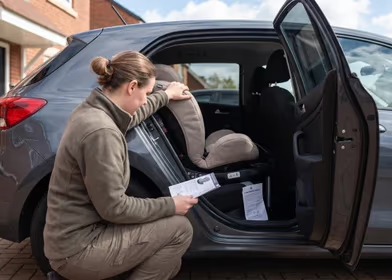
Before comparing models, check that the seat's approved range fits your child now, that the headrest can sit at the right height, and that your car's belt buckle is easy for an adult or older child to reach. For a broader safety refresher, these car seat safety checks are worth reading alongside the product manual.
Child fit and seat belt position
UK law normally requires children to use a child car seat until they are 12 years old or 135 cm tall, whichever comes first, and height-based seats need to be suitable for the child's height. A high-back booster should help the lap belt sit low over the pelvis and the diagonal belt cross the shoulder and chest, not the stomach, neck, face, under the arm, or behind the back.
ISOFIX or seat belt installation
On a high-back booster, ISOFIX mostly anchors the booster to the car. The child is still held by the adult seat belt, so a well-routed belt and a stable fit in your actual vehicle are essential. If you move the seat between cars, a lighter belted model can be easier; if the booster stays in one car, ISOFIX can feel neater and more settled.
Why high-back, not backless
Backless booster cushions can be legal in some situations, but they do not offer the same back, head and side support as a high-back booster. For everyday use, especially with younger booster-age children, a high-back design is usually the more reassuring place to start because it helps guide the shoulder belt and support the child's head and sides.
The best high-back booster seats for 2026
These five picks stay inside the same older-child booster-seat brief, but each has a distinct role: simple value, folding convenience, premium ISOFIX comfort, sturdy value, or sleep support.
1. Graco Junior Maxi i-Size high-back booster seat

The Graco Junior Maxi i-Size is the easiest first recommendation because it covers the core 100-150 cm brief without making the seat feel overcomplicated. It is light, simple to fit with the vehicle seat belt, and well suited to parents who want a dependable everyday high-back booster seat at a sensible price point.
Why did we choose this product?
Choose it if you want a straightforward booster that most families can understand quickly: adjustable headrest, open-loop belt guides, soft padding and two retractable cupholders. It is also well reviewed for comfort, value and easy fitting, so it makes sense as the everyday value pick for most families.
Keep in mind
It is a belted seat rather than an ISOFIX booster, so it will not anchor itself to the car when empty. It is also more practical than plush; if you want a more premium padded feel or ISOFIX connection, look at the Maxi-Cosi RodiFix M or CBX Solution XI-Fix.
Features that may help you
•Best for: everyday value and simple fitting
•Approved range: 100-150 cm
•Installation: vehicle seat belt
•Weight: about 3.5 kg
•Useful details: 10-position headrest, open-loop belt guides, soft seat pad and retractable cupholders
2. Maxi-Cosi Tanza i-Size high-back booster seat

The Maxi-Cosi Tanza i-Size is the one to shortlist if the seat needs to be stored, moved, or used in a second car without becoming a bulky permanent fixture. It keeps the same 100-150 cm booster-stage fit but adds a compact folding design that makes it more practical for families who swap seats around.
Why did we choose this product?
The fold is the headline feature, but it is not the only reason to choose it. Tanza also brings ISOFIX connectors, G-CELL side-impact protection, 10 headrest positions and a removable machine-washable cover, so it feels like a real everyday seat rather than just a travel compromise.
Keep in mind
It is heavier than the Graco and not everyone will need the fold, especially if the booster will live in one car. A few parents also note that buckle access can depend on the car's rear-seat layout, so check the belt buckle position if your back seat is tight.
Features that may help you
•Best for: folding, storage and second-car use
•Approved range: 100-150 cm
•Installation: ISOFIX plus vehicle seat belt
•Weight: about 6.75 kg
•Useful details: compact fold, 10-position headrest, G-CELL side-impact protection and washable cover
3. Maxi-Cosi RodiFix M i-Size high-back booster seat

The Maxi-Cosi RodiFix M i-Size is the premium-feeling pick for parents who want ISOFIX, a calmer buckle area and stronger comfort credentials without moving into an oversized seat. It is especially appealing for daily use when an older child is starting to buckle themselves in with supervision.
Why did we choose this product?
Its no-armrest design makes access to the seat belt buckle easier than on many high-back boosters, and the adjustable headrest, padded backrest and G-CELL side-impact protection give it a more polished feel than the simpler budget options. Parent feedback is particularly positive around comfort, sturdy installation and the move from a younger-child seat.
Keep in mind
It costs more than the basic picks and is not foldable like the Tanza. Assembly and vehicle fit still deserve a careful check, especially because a few buyers report frustration when connecting the back and base.
Features that may help you
•Best for: premium ISOFIX feel and easier buckling
•Approved range: 100-150 cm
•Installation: ISOFIX plus vehicle seat belt
•Weight: about 5 kg
•Useful details: G-CELL side-impact protection, adjustable headrest, padded backrest and open buckle area
4. Kinderkraft JUNIORFIX2 i-Size high-back booster seat

The Kinderkraft JUNIORFIX2 i-Size is a good fit if you want a sturdy ISOFIX high-back booster seat with a roomy shell and value-led pricing. It feels less sleek than the Maxi-Cosi options, but it gives the list a practical, robust choice for families who want ISOFIX without paying premium-brand money.
Why did we choose this product?
It covers 100-150 cm, can be fitted with ISOFIX or the car seat belt, and has 10 headrest positions plus reinforced side protection. The wide, soft seat is useful for older children who dislike narrow boosters, and the removable cover helps with the inevitable snack crumbs and muddy school-run days.
Keep in mind
The wider build can make belt-buckle access awkward in some cars, and the shoulder belt guide may not suit every rear-seat belt angle. If your car has a tight buckle position, test the routing carefully before committing.
Features that may help you
•Best for: sturdy ISOFIX value
•Approved range: 100-150 cm
•Installation: ISOFIX or vehicle seat belt
•Weight: about 6.3 kg
•Useful details: 10-position headrest, reinforced side protection, wide seat and removable cover
5. CBX by CYBEX Solution XI-Fix high-back booster seat

The CBX by CYBEX Solution XI-Fix is the comfort pick for children who often sleep in the car. Its tilt-adjustable headrest is the standout feature, helping keep the head better supported when a child nods off on longer journeys.
Why did we choose this product?
It suits cars with or without ISOFIX, has linear side-impact protection and an 11-position height-adjustable headrest, and parent feedback is strong for comfort, easy installation and build quality. It is a sensible choice if long trips matter more than compact storage.
Keep in mind
It is the heaviest pick here and less convenient to move between cars than the Graco or Tanza. It is also comfort-led rather than especially compact, so smaller rear seats may need a fit check.
Features that may help you
•Best for: sleep comfort and longer journeys
•Approved range: 100-150 cm
•Installation: with or without ISOFIX, plus vehicle seat belt
•Weight: about 7 kg
•Useful details: tilt-adjustable headrest, 11 height positions, linear side-impact protection and adjustable backrest
i-Size, R129 and Group 2/3 explained
The naming around older-child car seats is messy because UK parents still see both old and new labelling. The practical question is simpler: does the seat fit your child's height and weight, is it approved for that use, and can it be fitted correctly in your car?
What 100-150 cm means
Many newer high-back booster seats are R129 or i-Size models labelled by height, often 100-150 cm. That height range is useful because it maps to the child in front of you, not just an age estimate, but it is still worth checking the product manual and your child's build before buying.
Where Group 2/3 still helps
Group 2/3 is older R44 language that UK parents and retailers still use for the same general stage: older children using a high-backed booster or booster cushion with the vehicle seat belt. This guide leads with "high-back booster seat" because it is clearer and keeps backless cushions out of the main recommendations.
Getting the safest fit day to day
The best seat is only useful if it is fitted properly every time. Keep the manual handy, check the belt path when your child climbs in, and recheck the headrest as they grow.
Check the belt path every journey
- Lap belt low across the hips or pelvis, not across the tummy.
- Diagonal belt across the shoulder and chest, not the neck or face.
- No belt routed under the arm or behind the back.
- No loose twists in the belt guides.
- Headrest high enough for comfort and side support, but not so high that the shoulder belt floats away from the child.
Check the car as well as the child
ISOFIX compatibility is not universal, and belt buckle position can make a real difference with wider boosters. If the seat will move between cars, look at weight, folding, and how easy it is to reconnect. Be cautious with second-hand seats unless you know their crash history, age, approval label, and that the instructions and parts are complete.
FAQ
References::
- GOV.UK - Child car seats: the law
- Child Car Seats / RoSPA - Types of Seat
- Child Car Seats / RoSPA - Booster Cushions
- Child Car Seats / RoSPA - Fitting Child Car Seats
- Child Car Seats / RoSPA - Isofix Seats
- Child Car Seats / RoSPA - i-size Seats
- Department for Transport / THINK! - Seat Belts and Child Restraints