
The 5 best teething toys for babies in 2026
Five teething toys chosen for small hands, safe chewing and easy cleaning, plus when babies usually start teething and how to soothe sore gums safely.
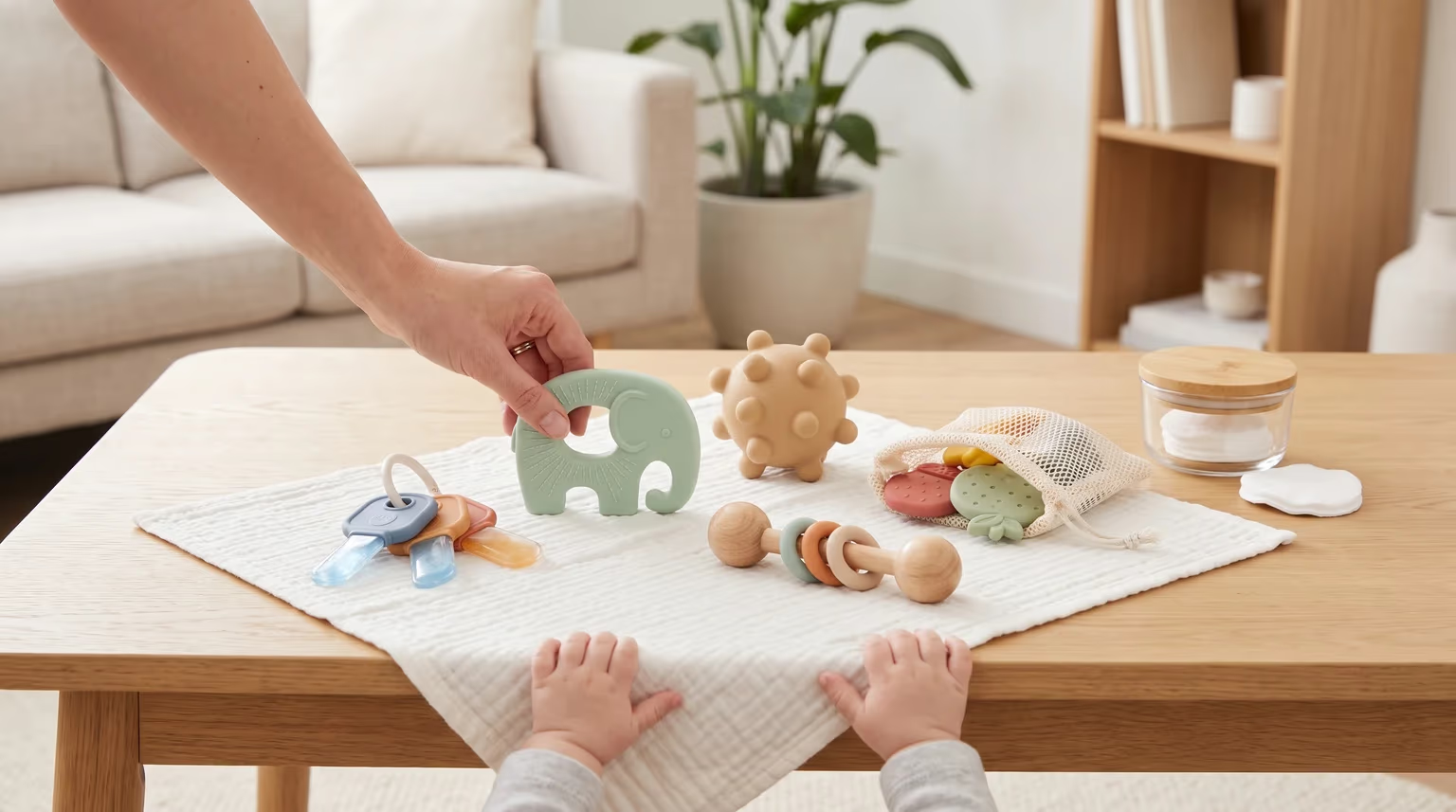
Teething usually begins at around 6 months, often with a baby who wants to gnaw on their fingers, toys and anything else they can reach. A teething toy gives them something safe to bite on instead, and one that has been cooled in the fridge may soothe sore gums even more.
There's no single best teether for every baby. Some prefer something cold, others something soft to squash, and what they need changes as the back teeth follow the front ones over the next couple of years. The details that matter when you buy are the age on the pack, how easy it is to hold and how it has to be cleaned.
Detail | |||||
|---|---|---|---|---|---|
| Best for | Best for Everyday chewing for most babies | Natural rubber from birth | Three fridge-safe teethers | Rattle play and a chilled chew | Babies still learning to grip |
| Age guidance | Age guidance 3 months+ | From birth | 3 months+ | 3 months+ | 0 to 6 months |
| Cleaning | Cleaning Dishwasher or steriliser | Wipe clean only | Warm soapy water, no sterilising | Wipe clean | Dishwasher, boiling or steriliser |
| Cooling | Cooling Fridge-friendly | Not a cooling teether | Fridge-safe | Water-filled, chill in the fridge | Fridge, not freezer |


What to look for in a baby teether
Once you've checked the age on the pack, match the shape to what your baby's hands and mouth can manage:
- Not grabbing yet: a mitten-style teething toy slips over the hand, so it stays within reach.
- Grabbing but still clumsy: a light teether with loops or handles is easiest to hold and bring to the mouth.
- Back teeth on the way, at around a year: a long, slim teether reaches the back gums more easily than a wide ring.
Whatever the shape, a good teething toy is one solid piece with nothing that can come loose. Small parts are a choking risk, and teethers with beads, tassels or glued-on pieces have been recalled in the UK for that reason. If your baby likes something cold, check that the maker says it can go in the fridge.
The best teething toys for babies
From a first teether for a newborn to something for the back gums, these five popular baby teethers cover the ages and textures most babies go through.
1. Matchstick Monkey Original Teething Toy

Matchstick Monkey is the teething toy we'd hand to most babies first. It's light, the looped arms give small hands something to grip, and the bumpy back of the head is shaped to reach the back gums, where the molars arrive later on.
Why did we choose this product?
It was the bestselling teether on Amazon UK when we checked, and owners explain why: babies can hold it and chew on their own without it constantly slipping away, and it's small enough for little mouths. The food-grade silicone goes in the dishwasher or a cold-water or steam steriliser, and it can be chilled in the fridge.
Keep in mind
Some 3- and 4-month-olds can't grip it well yet, so you may need to hold it for them at first. It's light enough to be flung across the room, so a spare saves a wash every time it hits the floor. The bumps are also sold as a teething gel applicator; read our gel advice in the teething section before using one.
Features that may help you
•Best for: everyday chewing, front and back gums
•Age guidance: 3 months+
•Format: handheld silicone teething toy, BPA-free
•Care: dishwasher, cold-water or steam steriliser; fridge-friendly
2. Sophie la Girafe Natural Rubber Teether

Sophie la Girafe is the natural rubber choice and is marked from birth. She is soft, light and squeaky, with ears, horns and legs to gnaw, so she can be a first toy before teething starts and a chew once it does.
Why did we choose this product?
Parents like how easily small hands grip her and that babies can chew on almost any part. If you'd rather avoid plastic and silicone, natural rubber gives a softer, bendier bite than the other picks, and she comes in a gift box.
Keep in mind
She costs more than the others and needs more care. Sophie can't be sterilised, boiled or put in the dishwasher, so wipe her with a damp cloth and mild soapy water. Some owners find she starts to split after a few months of chewing: as the maker advises, pull her gently in every direction before each use and replace her at the first sign of wear. Some 4-month-olds also find her a bit big.
Features that may help you
•Best for: natural rubber feel from birth
•Age guidance: 0+ months
•Format: natural rubber teething toy with food-grade paint
•Care: wipe clean only; no sterilising, boiling or dishwasher
3. Nuby 3-Step Teething Set

Nuby's 3-Step set gives you three teethers in one box, each with its own shape and texture for a different stage of teething. All three are fridge-safe, so one can chill while another goes in the changing bag.
Why did we choose this product?
Three teethers for less than many single teethers cost makes this the value pick. Owners say the first one is easy for a 3-month-old to hold, and some say they soothe babies who cry at harder chews.
Keep in mind
Nuby says these teethers can't be sterilised in any way, so wash them in warm soapy water and rinse them well. Some parents find them a little wide for a small mouth. Keep them in the fridge rather than the freezer.
Features that may help you
•Best for: three fridge-safe teethers to rotate
•Age guidance: 3 months+
•Format: set of 3 textured teethers
•Care: warm soapy water; not suitable for sterilising
4. Baby Einstein Teether-Pillar Rattle Teething Toy

Baby Einstein's Teether-pillar is part rattle, part teether: a caterpillar ring with a rattling body and water-filled teething pads that you can chill in the fridge.
Why did we choose this product?
It suits a baby who soon loses interest in a plain ring. Parents mention that the gentle rattle and bright colours keep babies busy while they chew, and the chilled pads give a cool, soft bite. If you're shopping for play more than teething, our guides to Montessori toys for babies and baby play mats and gyms go further.
Keep in mind
It's bigger and heavier than it looks, and some owners say it suits babies from about 4 months better than younger ones. Wipe it clean with a damp cloth and mild soap, and stop using it if a water-filled pad splits or leaks.
Features that may help you
•Best for: rattle play and a chilled chew
•Age guidance: 3 months+
•Format: water-filled rattle teething toy
•Care: wipe clean; chill in the fridge only
5. Infatot Silicone Teething Mitten

A teething mitt suits babies who want to chew but can't hold on to a teether yet. Infatot's mitten slips over the hand and has a grab bar inside, so it stays put instead of ending up on the floor.
Why did we choose this product?
Unlike fabric teething mitts, it's food-grade silicone all the way through, with open sides, so it can go in the dishwasher, a steam steriliser or a pan of boiling water. Owners say it stays on small hands and stops babies gnawing on their fists.
Keep in mind
Use it while you're with your baby. The maker says it can go in the freezer, but the NHS advises never freezing a teething ring, so chill it in the fridge instead.
Features that may help you
•Best for: younger babies still learning to grip
•Age guidance: 0 to 6 months
•Format: food-grade silicone teething mitten, BPA-free
•Care: dishwasher, boiling or steam steriliser
When do babies start teething?
Most babies start teething at around 6 months, but the range is wide: some start before 4 months, some after 12 months, and a few are born with a tooth already showing. A baby with no teeth at their first birthday can still be within that range. Most children have all their milk teeth by the time they're 2 to 3.
Which teeth come through first?
The NHS gives this rough order, although every baby is different:
- Front teeth (central incisors): usually first, at around 6 months
- Teeth either side of the front teeth (lateral incisors): around 8 months
- First back teeth (first molars): around 12 months
- Pointed teeth (canines): around 18 months
- Second molars: around 24 months
Bottom teeth often come through before the matching top ones, so the bottom front pair is usually first. Once the first molars are on their way, a slim teether such as Matchstick Monkey gets to the sore back gums more easily than a wide ring.
Teething symptoms and signs
Some teeth arrive with no pain at all, or with mild symptoms that last a few days. Otherwise, you might notice:
- a sore, red gum where the tooth is coming through
- more dribble than usual, and gnawing or chewing on everything
- one flushed cheek or a rash on the face
- ear rubbing
- a slightly raised temperature that stays below 38C
- more fretful days and poorer sleep than usual
Gently wiping away dribble can help stop a rash forming on your baby's face. There's no evidence that teething causes diarrhoea, so don't put loose or watery poo down to a new tooth, and get medical advice if you're worried.
Teething and fever: when to get help
Teething can make your baby slightly warmer, but a temperature of 38C or higher is a fever, not a teething symptom, so don't assume a new tooth is to blame. If you're worried about any of your baby's symptoms, call NHS 111 or contact your GP. If you don't have a thermometer yet, our guide to baby thermometers compares the main types.
How to soothe sore gums
Every baby is different, so you may need to try a few things:
- Give them something safe to chew. A teething ring or teether may ease the discomfort and take their mind off it. Some can be cooled in the fridge first, and the instructions say for how long. Never put one in the freezer, as a frozen teether could damage your baby's gums.
- Gently rub the sore gum with a clean finger. Comforting or playing with your baby can also distract them.
- From 6 months, if your baby has started weaning, offer raw fruit and vegetables or soft fruit such as melon to chew. Always stay with them while they eat in case they choke, and skip rusks and sugary foods, which can cause tooth decay.
- Use a sugar-free painkiller if they're in pain: paracetamol from 2 months or ibuprofen from 3 months. Follow the instructions on the pack, and ask a GP or pharmacist if you're not sure.
There's little evidence that teething gels work, so try a teething ring and sugar-free painkillers first. Teething gels for babies contain a mild local anaesthetic and are only sold in pharmacies, where the pharmacist can tell you whether one suits your baby. Don't use general or adult mouth gels on your baby's gums: they aren't suitable for children, and gels containing salicylates aren't for anyone under 16. The NHS doesn't recommend homeopathic teething products.
Brushing the first teeth
Start brushing as soon as the first tooth comes through, using a baby toothbrush and a tiny smear of fluoride toothpaste. Aim for twice a day, once just before bed and once at another time that suits your routine. It's easiest with your baby on your knee and their head resting against your chest. Register your baby with a dentist when their teeth start coming through: NHS dental treatment for children is free.
How to clean and look after teething toys
Cleaning instructions vary a lot, even within this shortlist:
- Matchstick Monkey and the Infatot mitten can go in the dishwasher or a steam steriliser, so they can share a cycle with the bottles if you use one of the baby bottle sterilisers we've compared.
- Sophie la Girafe must not be sterilised, boiled or put in the dishwasher: wipe the natural rubber with a damp cloth and mild soapy water.
- Nuby says its 3-Step teethers aren't suitable for any kind of sterilising, so wash them in warm soapy water and rinse them well. Baby Einstein says to wipe the Teether-pillar clean with a damp cloth and mild soap.
Wash a teether whenever it's been on the floor or shared, and check it each time you hand it over. Throw it away if you see cracks, splits, tears or leaking water, or if anything starts to come loose when you give it a gentle pull, because small pieces are a choking risk.
FAQs
References:
- NHS: Baby teething symptoms
- NHS: Tips for helping your teething baby
- NHS: Looking after your baby's teeth
- NHS: When to get urgent medical help for babies and children under 5
- MHRA: Oral lidocaine-containing products for infant teething
- MHRA: Oral salicylate gels not for use in those younger than 16
- Just One Norfolk (NHS): Teething and teething jewellery
- GOV.UK: Baby Teething Cotton Sunflower recall


