
Baby car seat safety: UK ratings, ADAC and fit checks
Check whether a baby or child car seat is safe in the UK: approval labels, R129/i-Size, ADAC and Plus Test evidence, fit, installation, recalls and second-hand risks.
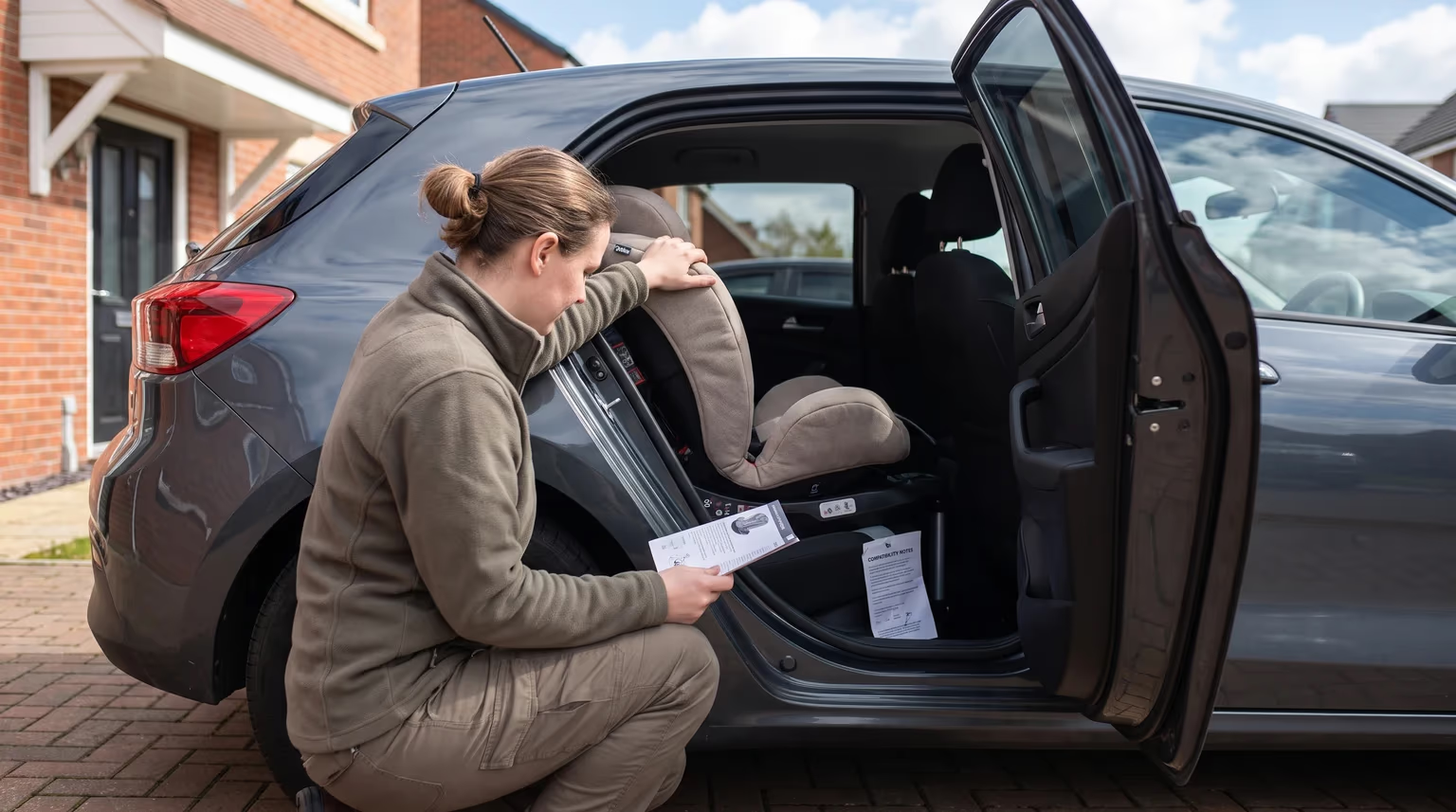
Choosing or re-checking a baby car seat can feel surprisingly confusing: one label says it is approved, a review site gives it a score, and another parent says it fitted their car perfectly. The safest answer is to combine those signals rather than trusting only one of them.
A car seat is not "really safe" just because it is legal, highly rated or expensive. It needs to fit your child now, fit your car and chosen seating position, be installed correctly for every journey, have a known safe history, and be clear of unresolved recalls.
Legal approval and independent safety evidence
In the UK, children normally need a child car seat until they are 12 years old or 135 cm tall, whichever comes first. GOV.UK explains the legal baseline, but that baseline is not the same as saying one seat is the safest choice for your child, your car and your daily use.
Start by finding the approval label. For UK use, look for an E mark and either R129/i-Size or ECE R44/R44.04/R44.03, then check the height or weight range printed on the seat. If the label is missing, unreadable or does not match the child, stop and get the manual or confirmation from the manufacturer before using it.

What R129 and i-Size tell you
R129, often called i-Size, is the newer standard. It is height-based and includes requirements such as side-impact testing, so it can be a useful indicator.
It still does not mean the seat automatically fits every car or every child. You still need to check the child height range, vehicle handbook, manufacturer fit list and installation method for the exact seating position.
What to check if you already own an R44 seat
Current UK guidance still recognises approved ECE R44 seats, although R129/i-Size is the newer standard. Do not assume every R44 seat must be thrown away immediately, but do not treat an older label as enough reassurance either.
For an R44 seat, be stricter about condition and fit: check the full label, age, instructions, harness, base, missing parts, current child size, car compatibility and any manufacturer or GOV.UK product-safety notices.
How to use car seat safety ratings without being misled
Car seat safety ratings are helpful because legal approval is a minimum requirement. Independent tests can look at crash performance, handling, misuse risk, ergonomics and materials in ways that help parents compare seats beyond the legal label.
The trap is treating a rating as a universal yes or no. A highly rated seat can still be the wrong choice if it does not fit your child, cannot be installed correctly in your car, or has an unknown second-hand history.
Check | Why it matters | Where to verify |
|---|---|---|
| UK approval label | Shows the seat meets a recognised legal baseline; it does not prove top independent-test performance | Seat label, manual, GOV.UK and NHS guidance |
| ADAC or Which? rating | Adds comparative safety, handling and misuse-risk evidence; it does not prove automatic child or car fit | ADAC test hub, public Which? safety alerts and the seat manual |
| Swedish Plus Test | Strong extra signal for eligible rear-facing seats; seats without it are not automatically unsafe | VTI Plus Test pages and current Plus Tested model list |
| Fit and installation check | Shows whether the seat works in real daily use; it does not replace independent test evidence | Vehicle handbook, manufacturer fit list and ChildCarSeats.org.uk fitting guidance |
ADAC car seat tests
ADAC is a major European child-seat test source and is useful for parents who want more than the minimum approval label. ADAC assesses areas such as safety, operation, ergonomics and pollutants. Its methodology also considers installation and misuse risk, which matters because many real-world safety problems come from how a seat is fitted or used.
ADAC scores are usually read with lower scores being better, but be careful when comparing older and newer results. ADAC says its child-seat test programme changed in 2025, so 2025 and later results should not be treated as directly comparable with older scores.
Which? safety ratings
Which? can be useful as a consumer-testing and safety-alert source, particularly when it publicly flags seats that perform poorly in its own tests. Use it as extra evidence, not as a replacement for the approval label, manual, vehicle compatibility list and installation check.
Swedish Plus Test
The Swedish Plus Test is a voluntary supplementary test run through VTI for rear-facing child restraint systems. It is demanding because it focuses on severe frontal impact and neck loads, which is especially relevant for babies and younger children travelling rear-facing.
Passing the Plus Test is a strong extra signal for the seats that are eligible for it. It is not legally required in the UK, and it does not apply to every type of car seat.
If your model is not listed
If you cannot find a model in ADAC, Which? or VTI lists, do not jump straight to "unsafe". It may simply not have been tested there, may be listed under a different name, or may not be eligible for that test.
Instead, check the approval number, manufacturer's manual, fit list, recall status, child height or weight range, and any independent evidence the manufacturer can provide. If a retailer or seller cannot provide clear documentation, walk away.
Check the seat fits your child now
A safe car seat is not just the right group or age range on paper. Your child must sit within the seat's stated range and the restraint must fit their body correctly.
For harnessed seats, check the manual for where the shoulder straps should sit, how tight the harness should be, which inserts are allowed, and when the head is too close to the top of the shell. For booster seats, the adult belt needs to sit low across the hips and across the shoulder, not the stomach or neck.
Baby seats and infant carriers
For babies, rear-facing should be the priority while the child fits the seat and the instructions allow it. A rear-facing infant carrier should support the baby's head and body, hold the harness snugly, and use only inserts supplied or approved for that seat.
Never use a rear-facing baby seat in the front passenger seat with an active airbag. If you are planning a long journey, remember that car seats are travel equipment, not a routine sleep space. Stop for breaks and take your baby out of the seat when it is safe to do so.
Toddler and multi-stage seats
Multi-stage seats, such as 0/1/2/3 or 1/2/3 designs, are not automatically unsafe. They do need extra checking because each mode can fit differently as the child grows.
Look at the exact model, not just the age range. Check how the seat installs rear-facing and forward-facing, whether each mode has independent test evidence, and whether the harness or belt routing stays clear and simple in your car.
Older children and high-backed boosters
For older children, the booster must position the adult belt correctly. The lap belt should sit low over the hips, the shoulder belt should cross the shoulder, and the child needs to be mature enough to stay correctly seated for the whole journey.
High-backed boosters can help with belt positioning and side support. If your child is moving into that stage, compare high-back booster seats after you have checked belt fit and your car's seating position.
Check car fit, installation and seat history
Even a strong car seat safety rating does not help if the seat is loose, incompatible or installed in the wrong mode. Before you buy or keep using a seat, check the vehicle handbook and the seat manufacturer's instructions for the exact car, seating position and installation method.
With Isofix, check that the connectors are fully engaged and any indicators show the correct status. If the seat uses a support leg, it must rest on an approved floor position. If it uses a top tether, it must route to the correct anchor point, not a luggage hook or improvised fixing.
With a seat-belt installation, follow the correct belt guides, remove slack, avoid twists, and make sure the buckle is not being pulled into the frame in a way the manual warns against. If the seat still moves too much or the belt route feels awkward, it may not be a safe fit for that car.

Installation red flags include:
- the seat rocks or slides after tightening;
- the belt is twisted, routed through the wrong guide or sitting on the wrong side of a lock-off;
- an Isofix indicator has not turned to the correct colour or position;
- a support leg rests on an unapproved underfloor storage area;
- the top tether is missing, loose or attached to the wrong point;
- a rear-facing seat is used in front of an active passenger airbag.
Be extra careful with second-hand, inherited or previously used seats
A second-hand car seat can look fine and still be a risky choice if you do not know its history. Avoid a used seat unless you know it has not been in a crash, has all labels and instructions, includes every original part, has no visible damage, and is clear of unresolved recalls.
This matters for bases as well as seats. Recalls can involve installation indicators, handles, harnesses, buckles, bases or other parts that are easy to miss when a seat is passed between families.
When to walk away from a used car seat
Walk away if the seller cannot confirm the crash history, if the label is missing, if the manual or base is absent, if there are frayed straps or cracks, if the seat has been stored badly, or if the model appears in a product-safety alert that has not been resolved.
For older or inherited seats, check the GOV.UK product safety alerts and the manufacturer's recall page before using the seat again.
A seven-step check before you buy or keep using a car seat
A baby or child car seat is safe enough to trust only when all the necessary checks hold together. Use this order before you buy, accept or keep using one:
1. Confirm that it has a UK-recognised approval label, such as an E mark with R129/i-Size or ECE R44/R44.04/R44.03, and that your child is within the stated height or weight range.
2. Check that the harness, headrest or vehicle seat belt fits your child correctly today, including their head position, recline and belt fit.
3. Check independent evidence such as ADAC, Which? or Plus Test results where available.
4. Read the manual and check the manufacturer's fit list for your car and the exact seating position you plan to use.
5. Test the installation in that position, making sure Isofix, the support leg, top tether or seat belt route is set up exactly as the manual says.
6. Inspect the seat's condition, age, history, labels and parts, and confirm that it has no crash damage, missing parts or unresolved recall.
7. Only then move on to comparing stage-specific seats or prices.
The useful mindset is simple: safety is a chain. A legal label, strong rating, correct child fit, compatible car installation and known condition all need to hold together.
If you are still choosing a newborn or infant carrier, use these checks first, then compare our best baby car seats from birth once you know which safety checks matter for your car and baby.
FAQ
References::
- GOV.UK: child car seats - the rules
- NHS: choosing a baby car seat
- ChildCarSeats.org.uk: buying child car seats checklist
- ChildCarSeats.org.uk: fitting child car seats
- Child Accident Prevention Trust: car safety
- The Lullaby Trust: car seats
- GOV.UK: product safety alerts, reports and recalls
- ADAC: child seat test hub
- ADAC: child seat test methodology
- VTI: the Plus Test
- VTI: Plus Tested models
- Which?: child car seat safety alerts