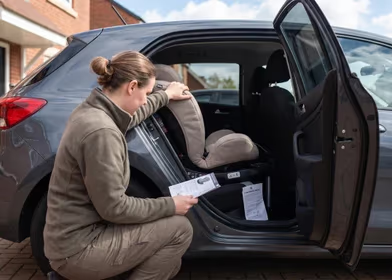
Car seat coats: can babies wear a coat in a car seat?
Not a padded one. Puffy coats and snowsuits squash flat in a crash and leave the car seat harness loose. Buckle up in thin layers, then add a coat or blanket on top.
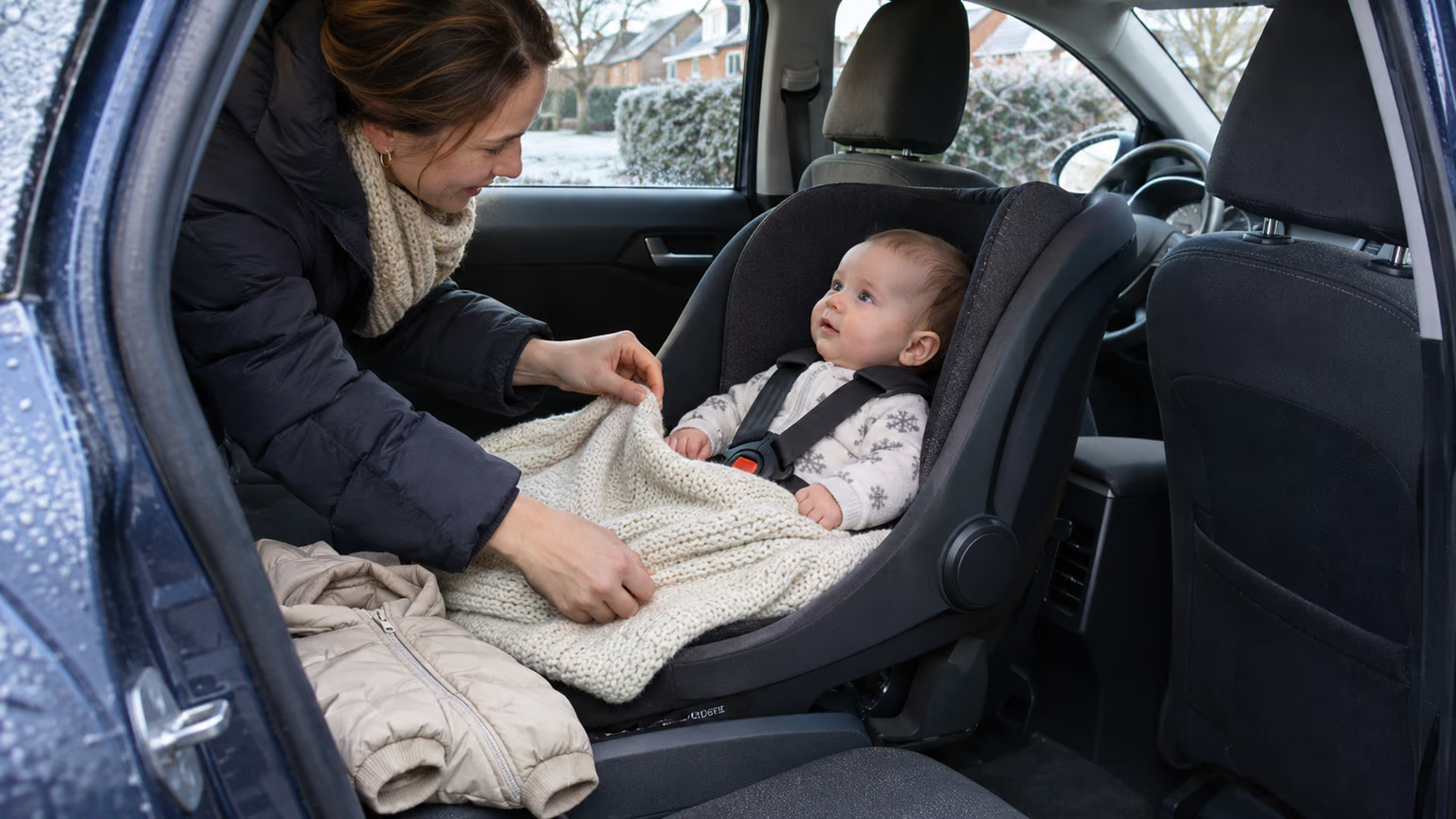
It’s a familiar winter scramble: your baby is zipped into a cosy pramsuit for the walk to the car, and taking it off again feels like the wrong thing to do. But anything thick or padded should come off before you do up the car seat harness, and that goes for toddlers in puffy coats too.
The problem shows up in a crash. RoSPA explains that the harness first has to squash a thick coat before it can hold your child, which makes the seat much less effective. Straps that felt snug when you buckled up can then have enough room in them for a child to slip through.
The car seat coat test: is the coat too bulky?
When you tighten a harness over a padded coat, you’re tightening it against the padding rather than your child, so it can feel right when it isn’t. This quick test, suggested by Safe Kids Worldwide, shows how much slack a coat is hiding. Try it at home with the car parked, not when you’re rushing out of the door.
- Coat on: sit your child in the car seat wearing the coat, buckle up and tighten the harness until it’s snug.
- Out, without loosening: undo the buckle, leave the straps at that length and lift your child out.
- Coat off, back in: take the coat off, put your child back in the seat and buckle up again without adjusting the straps.
- Check the gap: if the harness now feels loose, or you can pinch a fold of strap between your finger and thumb, the coat is too bulky to wear under the harness.
If the straps are just as snug without the coat, it’s thin enough to keep on. Either way, tighten the harness for what your child is actually wearing before you drive off.
Checking the straps on every journey
The coat test tells you about one coat. The harness itself needs a check every time you buckle up, because what your child is wearing changes how snugly it fits. Two quick checks cover it:
- One or two fingers: only one or two fingers should fit between the harness and your child’s chest.
- No pinch: if you can pinch the harness webbing between your fingers, it’s too loose and needs tightening.
Straps let out for a thicker outfit on an earlier trip will be too loose once your child is in thin layers, so tighten them again rather than assuming they’re still right. For the wider checks on fitting, seat position and strap height, see our guide to checking whether a baby car seat is really safe.
What your child can wear under the harness
Dress for the car in thin layers you can add or take off, rather than one thick outer layer. On a cold day that could be a vest or bodysuit, leggings or tights, a long-sleeved top and a thin cardigan or fleece jacket. Socks, booties and mittens are fine, as they don’t get in the way of the straps.
Leave out thick hoods and big collars. Bunched up behind the neck, they stop the shoulder straps sitting snugly, and on a baby’s small shoulders the straps can then slip off.
Snowsuits and pramsuits
A padded snowsuit or pramsuit is ideal in the pushchair but too thick for the car seat, so take it off before you strap your baby in. If you’ve been out with the pushchair, take the pramsuit off in the car, buckle up, then lay it over your baby like a blanket.
A thin fleece all-in-one is different: if it passes the coat test, it can stay on.
Toddlers and older children
Toddlers often want to keep their coat on, especially for a quick trip, but the rule is the same at every age and on every journey. Take a puffy coat off, buckle up, then let them wear it backwards over the straps, with their arms through the sleeves. For a short walk to the car, taking it off indoors and carrying it out can save an argument at the car door.
Once your child moves to a booster seat and the car’s own seat belt, a thick coat causes the same problem by holding the belt away from their body. Take it off so the belt can be pulled tight, with the lap belt low across the hips rather than the tummy and the diagonal belt on the shoulder, not the neck. Scarves come off too, as they push the belt away from the shoulder.
Keeping them warm once they’re buckled in
With the harness snug, add warmth over the top, where it can’t come between your child and the straps:
- A blanket: tuck it over your child and around their legs once the harness is done up. Never put it underneath them, and keep it clear of their face.
- Their coat, on backwards: once they’re buckled in, put their arms through the sleeves so the coat lies over the harness.
- A warm car: on a very cold day, warm the car up before you put your child in. This helps most with a seat that stays in the car, because the seat itself will be cold.
Keep a spare blanket in the car through the winter. It saves going back indoors and is useful if you break down.
If your baby travels in an infant carrier
An infant carrier makes cold mornings easier because it comes indoors with you. Keep it inside between trips so it isn’t freezing when your baby goes in. Strap your baby in indoors in thin layers, check the harness, then tuck a blanket over the top for the walk to the car. A hat is fine for that walk; take it off once you’re in the car.
With a seat that stays in the car, carry your baby out in their pramsuit or wrapped in a blanket, take it off in the car, then buckle up and lay it over them. If you’re still choosing between the two types, our pick of the best baby car seats from birth covers both.
Footmuffs, cosy toes and car seat covers
Car seats are crash-tested in the way they’re designed to be used. Which? warns that accessories the manufacturer hasn’t approved could make a seat less safe and may void the warranty. NHS hospital advice is not to buy separate inserts or add cushions, and not to put blankets or towels under your baby. Before you buy anything for winter, check where it sits:
- Footmuffs and liners that go under your baby, with the straps threaded through, change how the harness fits. Only use one that the seat’s manufacturer makes or approves for that seat. A pushchair footmuff is made for the pushchair, not the car seat.
- Covers that fit over the top of the seat, like a shower cap, can be fine if they have no layer behind or under your baby. Check that the seat’s manufacturer approves the cover for that seat, and keep your baby’s face uncovered.
- Clips and gadgets that join the shoulder straps, cover the buckle or change how the harness or seat belt is routed should be avoided, Which? says.
When the car warms up: avoid overheating
Young babies can’t control their temperature well, and getting too hot raises the risk of sudden infant death syndrome (SIDS). The Lullaby Trust advises taking hats and outdoor clothing such as coats and snowsuits off once your baby is in the car. Hats matter most, because babies release heat through their heads.
To check, feel your baby’s tummy or the back of their neck. If the skin feels clammy or sweaty, they’re too hot, so take a layer off. Warmth on top makes this easy: fold the blanket back or slip off the backwards coat once the car has warmed up, stopping somewhere safe if you’re driving alone.
It’s fine for a baby to nod off on the journey, but take them out of the seat when you arrive rather than leaving them to sleep in it. Our guide to whether a baby can sleep in a car seat covers longer drives and breaks.
More questions about coats and car seats
References:
- RoSPA Child Car Seats: FAQs
- RoSPA Child Car Seats: Using child car seats
- Which?: Why a puffy jacket could be putting your child in danger
- Milton Keynes University Hospital NHS Foundation Trust: Car seat information
- The Lullaby Trust: Car seats
- Children's National: Are coats and covers safe to use in car seats?
- American Academy of Pediatrics: Winter car seat safety tips