Can a baby sleep in a car seat?
Babies can fall asleep during car journeys. Take them out when you arrive, plan regular breaks and get individual advice if your baby has additional needs.
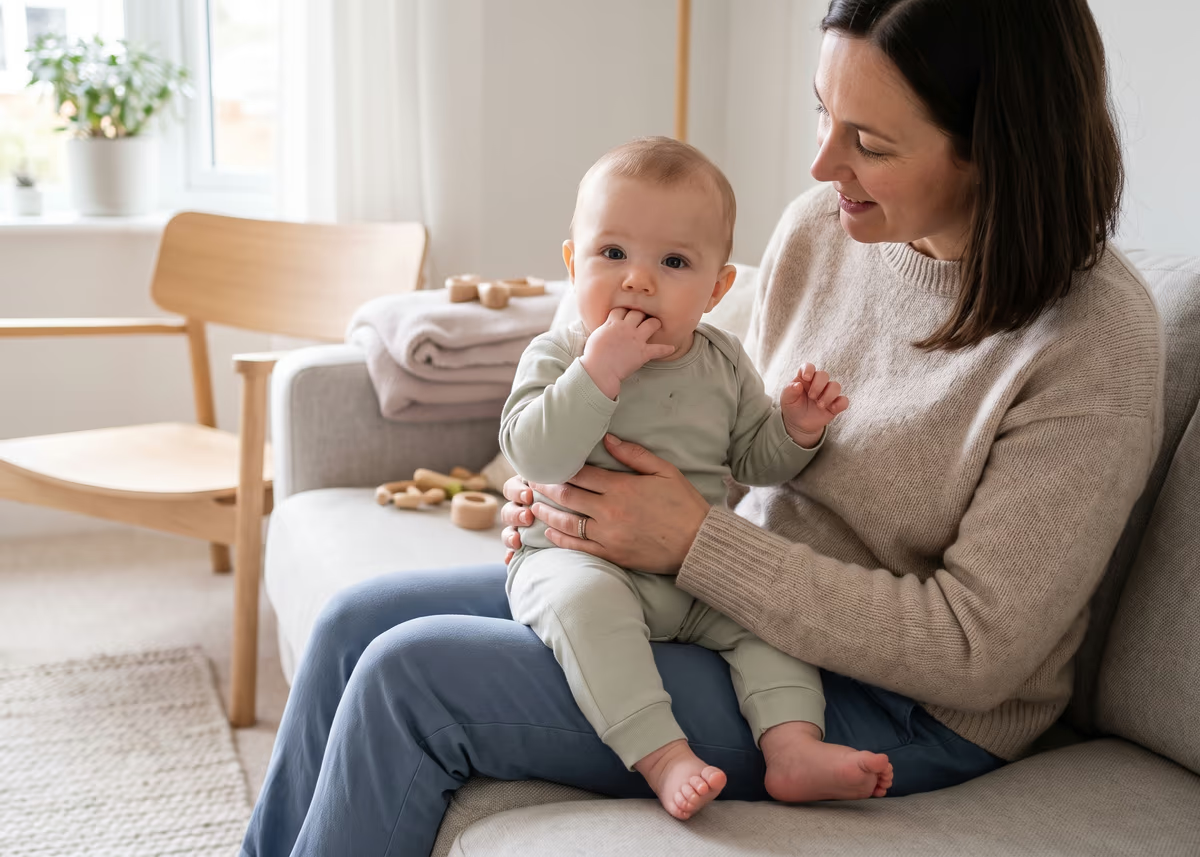
Yes, it is OK for a baby to fall asleep in a car seat while travelling. When you reach your destination, take them out and, if they are still sleeping, move them to a firm, flat sleep surface. That is the advice from the NHS.
Some young babies have difficulty breathing in a seated position. If your baby was born early, is very small or has a medical condition, their own team’s travel advice should guide the trip. A baby who slumps forwards needs you to stop safely and take them out.
While travelling: position, clothing and checks
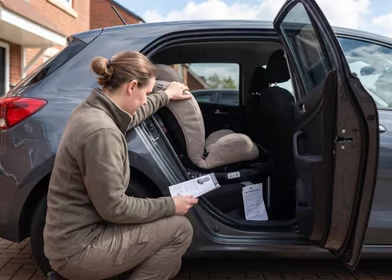
Use a rear-facing seat that suits your baby's size. Fit it and secure the harness according to the manufacturer's instructions, including any instructions for a newborn insert. Keep your baby properly strapped in throughout the drive, even while asleep.
Remove hats, coats and snowsuits once in the car. Check for overheating by feeling your baby's chest or the back of their neck, and remove a layer if they feel hot or sweaty. Bulky clothing can also stop the harness fitting closely enough, so check the fit on every journey.
If possible, have another adult sit beside your baby in the back. If you are driving alone, The Lullaby Trust suggests a mirror to help you see them. Keep your attention on driving and pull over safely if your baby needs attention.
If your baby slumps forward
A young baby's head can fall forwards in a seated position and restrict their airway. If your baby slumps, pull over safely straight away, take them out of the seat and hold them upright before continuing. This follows The Lullaby Trust's advice.
Check the seating position and harness against the instructions before setting off again. Do not improvise head supports or alter the seat to hold your baby in place. If they also have a worrying change in breathing, colour or responsiveness, seek help as described below.
On arrival: move the baby, even if it wakes them
A baby who has just fallen asleep can make unpacking the car seem like the easier first job. Make taking your baby out the first step on arrival. Put them on their back in a cot or Moses basket with a firm, flat mattress if they are going to carry on sleeping.
Keep that sleep space clear of pillows, toys and loose bedding. For the first six months, it should be in the same room as you for every sleep. If you are visiting family, arrange the sleep space before the visit.

What about a car seat clipped onto a pushchair?
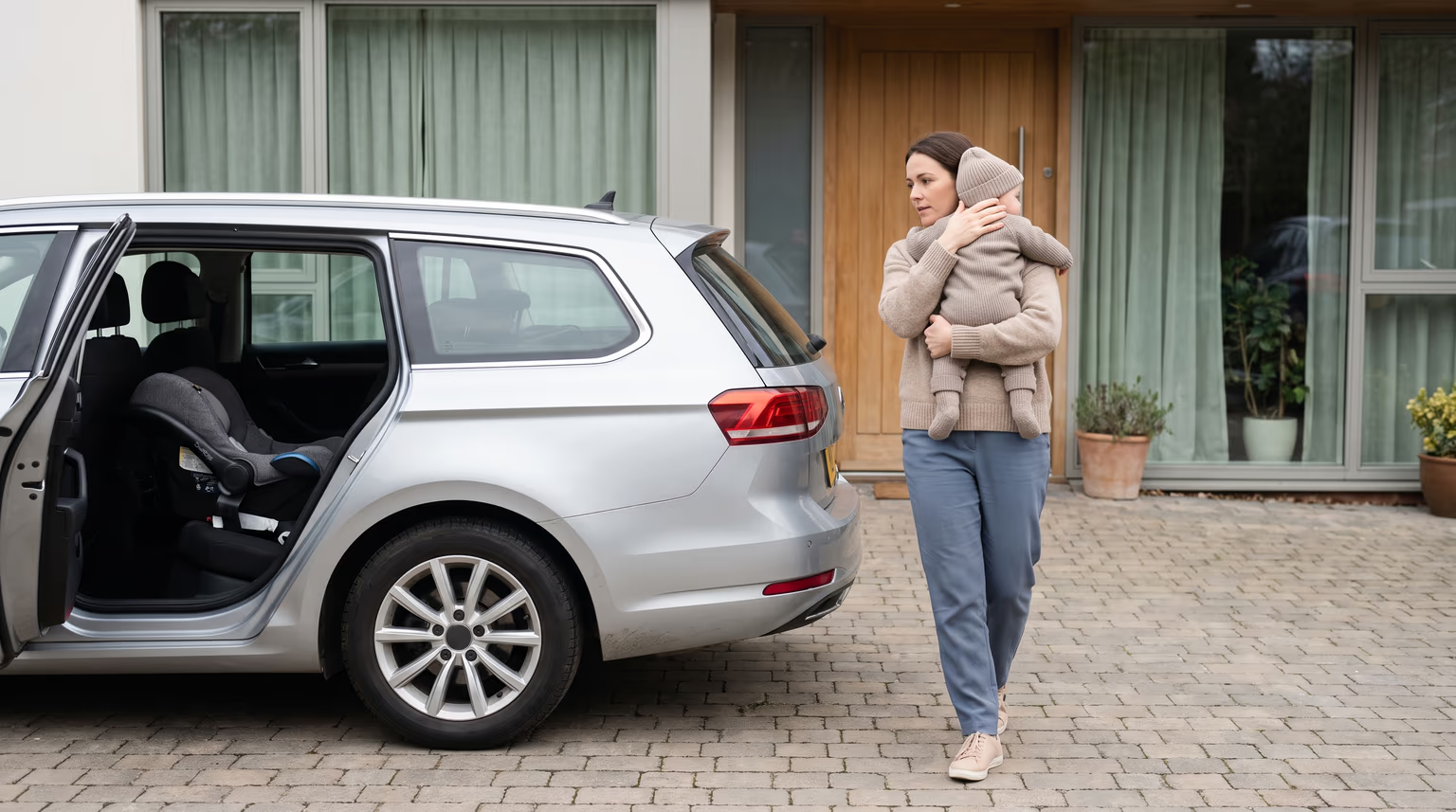
Moving the seat from the car to a pushchair frame still leaves your baby in the car seat. For a nap after the journey, use a suitable flat sleep space. If you plan to use a carrycot, check that the specific product is suitable for sleep and follow its instructions.
On longer journeys: make breaks time out of the seat
There is no single journey length that is safe for every baby. You may see two hours quoted in car-seat advice, but it is not a target or a guaranteed safe allowance. Hospital advice for some young or medically vulnerable babies can be much shorter. Follow your baby's clinical plan and the seat's instructions when arranging the trip.
For general journey planning, The Lullaby Trust advises avoiding long distances with young or premature babies and taking regular breaks when a long drive is necessary. Make each stop useful:
- Choose somewhere you can park safely and take your baby out of the seat. A parked car with the baby still strapped in does not give them that change of position.
- Allow time for your baby to stretch and move, with feeding or changing as needed, before strapping them back in.
- Leave room in the schedule for an earlier stop if your baby needs you. Do not press on to a planned stop if they slump or seem unwell.

When your baby needs an individual travel plan
Before a longer journey, ask your baby's neonatal or medical team for advice if they were born prematurely or with low birth weight, use home oxygen, have a heart condition, or have another condition that could affect their breathing or tolerance of the seat. If no specialist team is involved, speak to your health visitor or GP.
Ask practical questions: How long should each part of this journey be? How often should we stop, and for how long? Does our baby need any assessment before travelling? A plan made for your baby takes priority over a general time limit found online.
Some babies have a monitored car-seat assessment before leaving hospital. This is a clinical decision, not a test to try at home. Southampton's information covers babies born early, going home on oxygen or with conditions affecting how they cope in a seat. It does not mean every premature or small baby needs the same assessment.
When to get medical help
Act on how your baby is now, whether the concern starts during a journey or afterwards. These are general signs of illness, not a way to diagnose a problem caused by a car seat.
On brown or black skin, a colour change may be easier to notice on the palms or soles. Follow the call handler's instructions and do not drive yourself to A&E. The NHS urgent-help guidance also advises getting immediate help if you think something is seriously wrong, even if the sign is not listed here.
For other worries that your baby may be ill, seek urgent advice from your GP. In England, Scotland and Wales, you can also phone NHS 111. For a baby, call rather than using the 111 online symptom service. In Northern Ireland, contact your GP or the GP out-of-hours service when the surgery is closed.