The 5 best Montessori toys for babies
A quick shortlist of baby-safe Montessori-style toys, from first grasping and posting play to 12 months+ cause-and-effect and sorting picks.
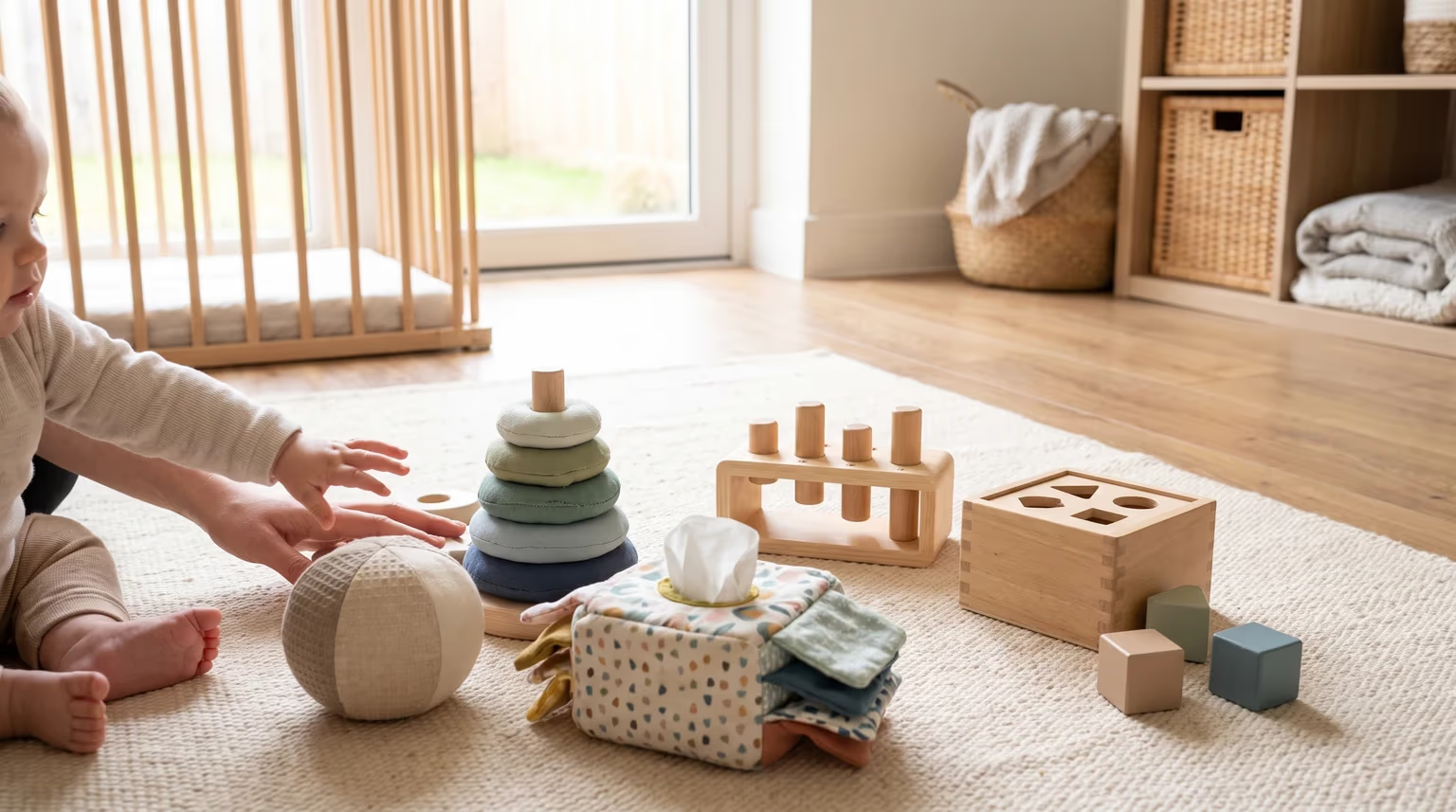
For babies, Montessori is most useful as a practical shopping filter: look for simple, hands-on toys that invite grasping, posting, stacking, dropping and sorting without noisy extras. Younger babies usually need easy-grip sensory toys they can explore safely; older babies can move towards cause-and-effect and first sorting once the age label fits.
Feature | |||||
|---|---|---|---|---|---|
| Best for | Best for First grasping and sensory play | Posting, pulling and tissue play | Manual cause-and-effect play | Soft stacking, nesting and teething | First shape sorting |
| Age fit | Age fit From birth | 6-12 months | 12 months+ | Baby-focused; follow the product age label | 12 months+ |
| Main action | Main action Hold, roll, pass hand to hand | Pull cloths, post, explore textures | Push pegs down and watch them pop up | Stack, nest, chew and grip | Match chunky shapes to openings |
| Standout | Standout Broad starter pick with an easy-grip design | Clear posting and pulling practice | Simple wooden play with very strong reviews | Softer than classic wooden stacking rings | Keeps first sorting clear and supervised |


What to check before choosing a Montessori toy for a baby
The safest choice is the toy your baby can actually use now. Check the age grading first, then look at size, loose parts, material quality, washing instructions and whether the play action is simple enough to repeat. For UK toys, CE or UKCA marking and clear English warnings are useful baseline checks, but you still need to supervise play and inspect favourite toys for wear.
- Check the toy is age-graded for your baby's current stage
- Avoid small parts, loose magnets, button batteries, long strings and weak stitching
- Choose one clear action at a time: grasp, post, pull, stack, drop or sort
- Prefer sturdy materials and surfaces you can clean easily
- Treat 12 months+ toys as older-baby or first-birthday picks, not newborn toys
The best Montessori toys for babies
These picks move from early grasping and sensory play through to older-baby posting, cause-and-effect and first sorting. The order is deliberate: the first options suit the widest baby age range, while the later picks are better once your baby is closer to 12 months.
1. Bright Starts Oball Easy Grasp sensory ball

The Oball is the easiest first recommendation for most parents because it suits the earliest stage of baby play: grasping, rolling, mouthing and passing from hand to hand. It is not a formal Montessori material, but it fits the Montessori-style idea of one simple action your baby can repeat.
Why did we choose this product?
Choose it if you want a low-fuss starter toy for a younger baby. The open ball design is easy for small hands to catch, and the product age information supports use from birth. It is also widely reviewed and popular, which makes its best-seller badge feel useful rather than just noisy.
Keep in mind
It is deliberately simple, so it will not feel like a big gift set or a long-lasting toddler activity. If you want natural wood or a quieter shelf-toy look, the Galt or KmmiFF picks may feel more Montessori in style, but they are for older babies.
Features that may help you
•Best for: first grasping and sensory play
•Age fit: from birth
•Play action: hold, roll, reach, pass between hands
•Strong point: very easy for small hands to grip
•Watch for: not a stacking, posting or sorting toy
2. hahaland baby tissue box posting toy

This is the best fit if your baby is ready for posting and pulling play. The tissue-box format gives babies a repeatable action: pull fabric pieces out, explore texture, then try to put them back in again.
Why did we choose this product?
It earns the second slot because it covers a different skill from the Oball and works well for the 6-12 month stage. For parents trying to avoid noisy electronic toys, this is a more hands-on way to encourage pulling, posting, texture exploration and early problem-solving.
Keep in mind
Fabric posting toys need regular checking. Look at seams, cloth pieces and any small attachments before play, especially if your baby is teething hard or sharing toys with an older sibling.
Features that may help you
•Best for: posting, pulling and texture play
•Age fit: 6-12 months
•Play action: pull cloths, post pieces, explore crinkles and textures
•Strong point: more interactive than a basic sensory ball
•Watch for: check fabric pieces and seams for wear
3. Galt wooden pop-up cause-and-effect toy

The Galt pop-up toy is the older-baby pick for simple cause-and-effect play. Babies press the wooden pegs down and watch them spring back up, which gives a clear action and response without batteries or lights.
Why did we choose this product?
Choose it around the first-birthday stage if you want a sturdy, classic toy that still feels purposeful. It is well reviewed and has a very clear role in the list: cause and effect, hand control and repeatable problem-solving.
Keep in mind
Do not buy it for a younger baby just because it looks simple. The product age information supports 12 months+, so it belongs with older-baby or first-birthday toys rather than the newborn or 6-month toy basket.
Features that may help you
•Best for: manual cause-and-effect play
•Age fit: 12 months+
•Play action: press pegs, release, repeat
•Strong point: simple wooden design with very strong reviews
•Watch for: not suitable as an early-baby starter toy
4. Moonkie soft stacking rings for babies

Moonkie's soft stacking rings are a gentler alternative to traditional wooden stacking toys. They suit parents who want stacking and nesting practice, but also want a softer feel for a baby who is still mouthing and gripping everything.
Why did we choose this product?
This pick gives the shortlist a useful middle ground: more structure than a ball, but less advanced than a sorter. The rings can be held, chewed, stacked, knocked down and nested, so they support several simple play actions without becoming a bulky activity centre.
Keep in mind
The exact lower age threshold is less clear than with the Oball, hahaland, Galt or KmmiFF picks. Follow the product label when it arrives, and choose a simpler grasping toy first if your baby is still at the earliest stage.
Features that may help you
•Best for: soft stacking, nesting and teething
•Age fit: baby-focused; follow the product label
•Play action: grip, stack, nest, chew and knock down
•Strong point: softer than many wooden stacking toys
•Watch for: less precise month guidance than the other picks
5. KmmiFF wooden first shape sorter

The KmmiFF sorter is the pick for babies who are ready for an early shape-matching challenge. It keeps sorting play controlled: chunky shapes, a clear task and a 12 months+ boundary, rather than a broad preschool learning set.
Why did we choose this product?
Choose it if your baby is close to the first-birthday stage and you want the next step after grasping, posting and stacking. It adds problem-solving and hand-eye coordination practice, but stays last in the list because it suits the oldest babies in this shortlist.
Keep in mind
This is not the right pick for a young baby. Treat it as a 12 months+ toy, check the shape pieces regularly, and keep play supervised so the sorting pieces stay with the toy rather than scattered around the room.
Features that may help you
•Best for: first shape sorting
•Age fit: 12 months+
•Play action: match, post and remove chunky shapes
•Strong point: a clearer first-sorter choice than padded toy bundles
•Watch for: best kept for babies near the first-birthday stage
How to use Montessori-inspired baby toys safely
Keep the play setup simple. One or two toys on a mat is often more useful than a full basket, because babies can repeat the same movement and notice what happens. Stay close, especially with toys that have fabric pieces, wooden pegs, shape-sorter parts or anything your baby likes to mouth.
Read the age warning before each toy comes out, and re-check it when a sibling or older child is nearby. RoSPA's toy-safety advice is especially relevant for under-threes: small parts, detachable pieces and worn toys can become a bigger risk than they looked on day one.
What Montessori-inspired should mean here
Most retail toys are Montessori-inspired rather than formal Montessori classroom materials. For this age, that is fine: the useful part is the simple, child-led action. A good Montessori-style baby toy lets your baby explore cause and effect, texture, weight, movement or shape without needing lights, music or adult-led instructions.
What to buy next as your baby gets older
When your child is firmly into toddler play, the right category may change. Older toddlers who want latches, switches and zips may be better served by busy boards for toddlers, while babies moving towards cruising may need a separate look at push-along baby walkers. Keep loose play toys out of the cot; if you want a sleep-space visual feature, compare dedicated cot mobiles for babies instead.