
How to choose a dehumidifier: buying and sizing guide
Choose the right dehumidifier size, type and features for condensation, indoor laundry and damp rooms, with running costs and safe placement in mind.
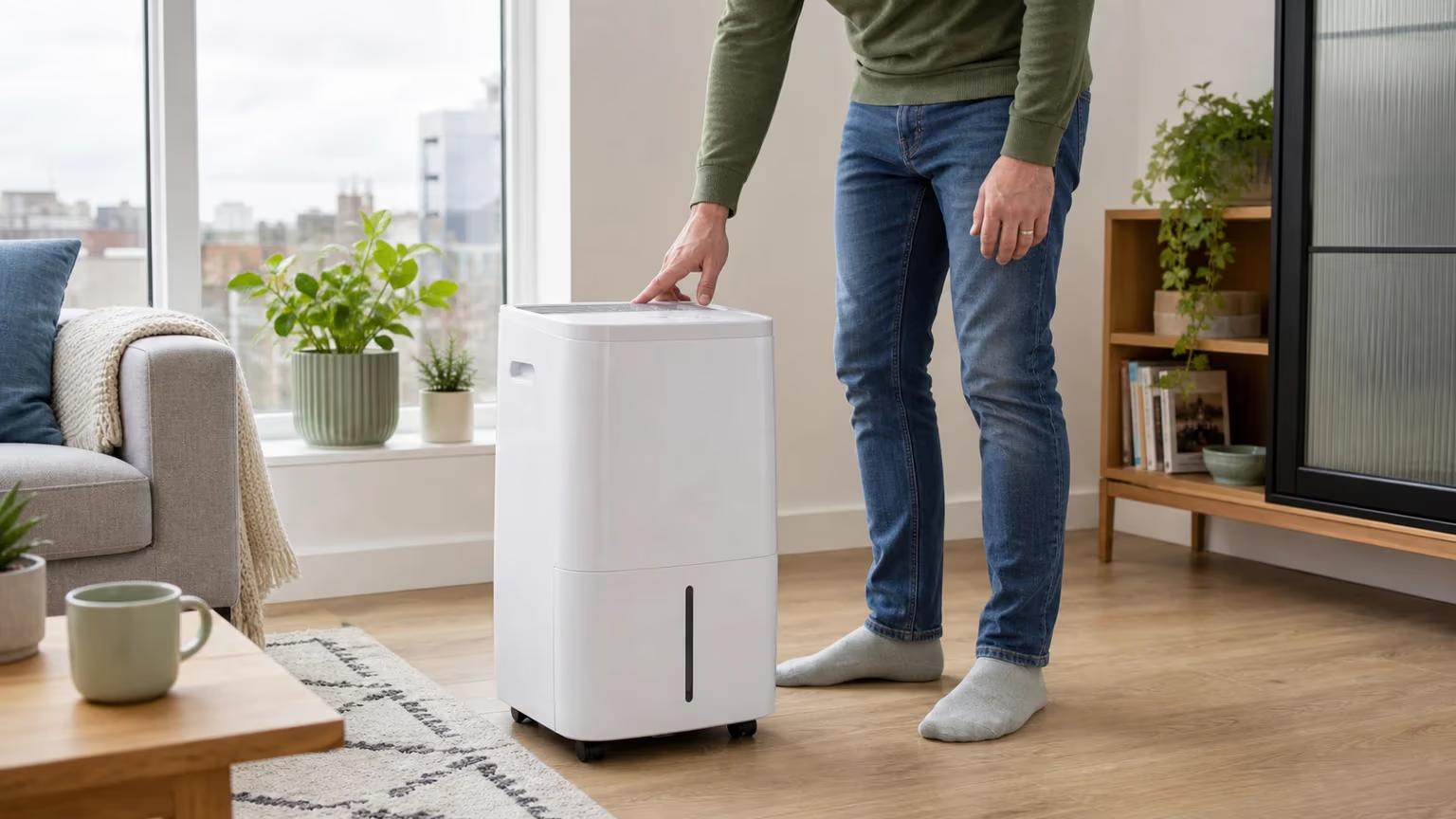
Choosing a dehumidifier is not just a matter of buying the biggest tank or the model with the loudest marketing claim. The right choice depends on what is making the room damp, how much moisture you need to remove, the room temperature, where the unit can sit and how often you are willing to empty it.
A dehumidifier can help with condensation, indoor laundry and humid rooms, but it cannot repair leaks, rising damp, penetrating damp or building defects, or solve poor ventilation by itself. Use this guide to narrow the size, type and features you need before you compare models.
Is a dehumidifier the right fix for your damp problem?
Choose a dehumidifier by starting with the moisture problem, then matching the extraction rate in litres/day to the room and workload. Check whether the model suits the room temperature, whether the tank or drainage setup is practical, how much it may cost to run, and where it can be placed safely in your home.
The short version is simple: if the problem is airborne moisture, a dehumidifier may help. If the problem is a leak, structural damp, persistent visible mould or a bathroom with poor extraction, the appliance can only be one part of the fix.
Good uses: condensation, laundry and humid rooms
A dehumidifier is usually worth considering when moisture is being produced inside the home and the room feels damp because the air is too humid. Common examples include condensation on windows, clothes drying indoors, a musty bedroom, bathroom steam spreading into nearby rooms or a cold corner where moisture keeps settling.
It can also help you understand the problem. A basic hygrometer, or a dehumidifier with a clear humidity display, shows whether relative humidity is regularly high. For many homes, a practical target is around 40-60% relative humidity, keeping it below 60% where possible to reduce mould risk.
When ventilation or repairs matter more
A dehumidifier does not fix the source of every damp problem. Leaks, roof or gutter faults, rising damp, penetrating damp, failed extractor fans, blocked vents, inadequate heating or insulation and persistent visible mould need proper action as well.
That does not mean the appliance is useless. It means the order matters: reduce the moisture source, ventilate kitchens and bathrooms sensibly, keep extractor fans and trickle vents working where fitted, repair leaks and use the dehumidifier to manage remaining excess moisture.
How to choose the right size and type
Use extraction rate, room conditions and workload together. Extraction rate is usually shown as litres/day, meaning how much water the unit can remove in 24 hours under test conditions. It is a comparison number, not a promise that the appliance will pull that exact amount from every room every day.
Real-world removal can be lower because room conditions vary. Temperature, humidity, airflow, open doors or windows, drying laundry, the number of people using the room and the ongoing source of moisture all change performance.
Use extraction rate, not tank size, to compare capacity
Extraction rate and tank capacity are different:
- Extraction rate tells you the unit's moisture-removal capacity in litres/day.
- Tank capacity tells you how much water the bucket holds before it needs emptying.
- A higher extraction rate does not automatically mean a proportionally larger tank.
- A larger tank reduces emptying frequency, while auto shut-off and continuous drainage can make a smaller tank more practical.
Choose by room and workload
Use this as a decision aid rather than a strict sizing table. Always check the manufacturer's room guidance and operating-temperature range before buying.
Situation | What to look for | Watch out for |
|---|---|---|
| Light condensation in one bedroom | A modest extraction rate, humidistat and low-noise mode may be enough | Do not buy by tank size alone |
| Indoor laundry or a regularly damp room | Higher extraction rate, laundry mode or continuous mode, practical tank emptying | Keep airflow clear and avoid spreading damp air around the home |
| Larger room or small flat | More extraction capacity, strong fan performance and easy portability | A single unit may not solve every room at once |
| Cooler utility room, garage or conservatory | Check operating temperature, defrost and whether desiccant is more suitable | Avoid a hard compressor-versus-desiccant rule without checking the model specs |
| Leaks, structural damp or persistent mould | Use repairs, ventilation and professional or housing advice as needed | Do not rely on a dehumidifier as the only fix |

Compressor or desiccant: which type should you choose?
Most portable domestic dehumidifiers are either compressor models, also called refrigerant models, or desiccant models. For a typical heated living room, bedroom or laundry room, a compressor model is often the familiar starting point if its extraction rate and features fit the job.
Cooler spaces need more care. Compressor models can lose performance or frost in colder rooms, so check the operating-temperature range, defrost feature and suitability for unheated areas. A desiccant model may be a better fit for some colder spaces, but it is not automatically the right answer for every home.
If you are comparing two models, do not look only at technology. Compare extraction rate, noise, wattage, tank setup, controls, drainage, weight and where the unit will actually sit.
Once you know the room, workload and features you need, compare current UK models in our best dehumidifiers roundup.
Features and running costs to compare
Humidistat, timer and laundry mode
A humidistat helps the dehumidifier cycle around a target humidity instead of running blindly. A timer can limit run time, while fan modes let you trade speed, noise and energy use.
Laundry mode or continuous mode can help when you have to dry clothes indoors, especially in a closed room with clear airflow around the unit. It should not be treated as a substitute for sensible ventilation, safe cable placement or reducing moisture first with an extra spin cycle.
Tank capacity, auto shut-off and continuous drainage
Tank capacity mainly affects how often you empty the bucket. A full-tank warning and auto shut-off matter because they stop the unit when the bucket is full.
Continuous drainage can reduce emptying, but only where the hose can run safely to a suitable drain. Avoid kinks, trip hazards, water near electrics and hoses that children can pull, as well as long hose runs across walkways.
Noise, lights and portability
For bedrooms, compare the product's dB(A) rating, fan speeds, night mode and indicator lights. Quieter settings may remove moisture more slowly, so think about when the unit will run and whether it can sit away from the bed without blocking airflow.
Handles, wheels, cable storage and a manageable weight matter if you plan to move the dehumidifier between rooms. Moving one unit around can work for light use, but it is less convenient when damp is persistent or multiple rooms need regular attention.
How much does a dehumidifier cost to run?
Estimate running cost from the appliance wattage, the hours you use it and your electricity unit rate. The useful formula is:
For example, a 300W dehumidifier used for 4 hours at 26.11p/kWh would cost about 31p for that run: 300 / 1000 x 4 x 26.11. That unit rate is a dated Ofgem average Direct Debit electricity figure for England, Scotland and Wales for 1 July to 30 September 2026, so use it only as an example. Your actual rate can differ by region, tariff and payment method.
Running costs also depend on settings. A humidistat, timer and realistic target humidity can prevent unnecessary running, while laundry mode or high fan settings may use more energy for short periods.
Safe placement and final buying checks
Placement for airflow and results
Put the dehumidifier on a stable surface or floor where air can move around it. Keep vents clear, avoid cramped corners, and follow the clearance distances in the manual. Many units work best with the doors and windows of the target room closed while they are running, but ventilation still matters for kitchens, bathrooms and ongoing moisture sources.
A hallway or landing can sometimes help with a wider area, but only if the unit has enough airflow, is not a trip hazard and the moisture source is not being ignored. If the problem is one damp bathroom, a cold bedroom wall or laundry in a spare room, targeted placement is usually more useful than hoping one machine will fix the whole home.
Bathrooms, cables and children
Do not run a plug-in dehumidifier in a bathroom unless the appliance instructions and the electrical setup make it suitable. Bathrooms carry a higher electrical-safety risk because of water, wet skin and socket restrictions. Never use an extension lead in a bathroom, and prioritise extractor fans and ventilation.
In a family home, place the unit away from cots, beds, play spaces, water and heat sources. Route cables and drainage hoses so children cannot pull them, chew them or trip over them. If you are already checking cords, sockets and appliances around your home, fold the dehumidifier into your wider baby-proofing your home checks.

Are dehumidifiers safe in a baby's room?
For a baby's room, the better question is whether the appliance can be used and placed safely in that specific room. Follow the manufacturer's instructions, keep the unit stable and out of reach, avoid trailing cables or hoses, keep it away from water and heat, and choose settings that make sense for noise and airflow.
Do not treat a dehumidifier as a guarantee of a healthier room. If there is visible mould, persistent damp, breathing symptoms, a vulnerable child or a repair problem in the home, seek appropriate health, housing or repair advice rather than relying on the appliance alone.
Mistakes to avoid when buying a dehumidifier
The most common mistakes are easy to make when you are faced with a lot of numbers:
- Buying by tank size instead of extraction rate.
- Choosing by square metres alone and ignoring damp severity, laundry and temperature.
- Forgetting that litres/day is measured under test conditions.
- Assuming a dehumidifier will fix leaks, structural damp or mould by itself.
- Ignoring running cost, noise, tank emptying and where the cable will run.
- Buying a compressor model for a colder space without checking operating temperature and defrost.
- Using continuous drainage where the hose creates a trip hazard or can be reached by children.
Dehumidifier buying guide: final checklist
Before you compare products, check that you can answer these questions:
- What is the moisture problem: condensation, laundry, damp room, musty smell, visible mould or a possible repair issue?
- Is a dehumidifier the right tool, or do ventilation and repairs need to come first?
- What room or workload are you buying for?
- What extraction rate in litres/day looks appropriate for that workload?
- Is the room usually heated, cold or unheated?
- Do you need a compressor or desiccant model, and what does the manual say about operating temperature?
- Can you empty the tank easily, or do you need safe continuous drainage?
- What will it cost to run using your own wattage, hours and p/kWh?
- Where can the unit sit safely with clear airflow, no water risk and no reachable cables or hoses?
FAQ
References::
- GOV.UK: Understanding and addressing the health risks of damp and mould in the home
- Centre for Sustainable Energy: Condensation, damp and mould
- Ofgem: Energy price cap unit rates and standing charges
- National Energy Action: How much do my appliances cost to use?
- Citizens Advice: Check how much your electrical appliances cost to use
- Citizens Advice: Save money using your electrical appliances
- Electrical Safety First: Bathroom electrical safety
- Child Accident Prevention Trust: Electrical safety
- ENERGY STAR: Dehumidifiers
- ENERGY STAR: Dehumidifier testing and capacity