The 5 best humidifiers for babies
These are the best humidifiers for babies if you want a quiet, easier-to-clean way to make a dry nursery more comfortable, with cool mist picks across budgets.
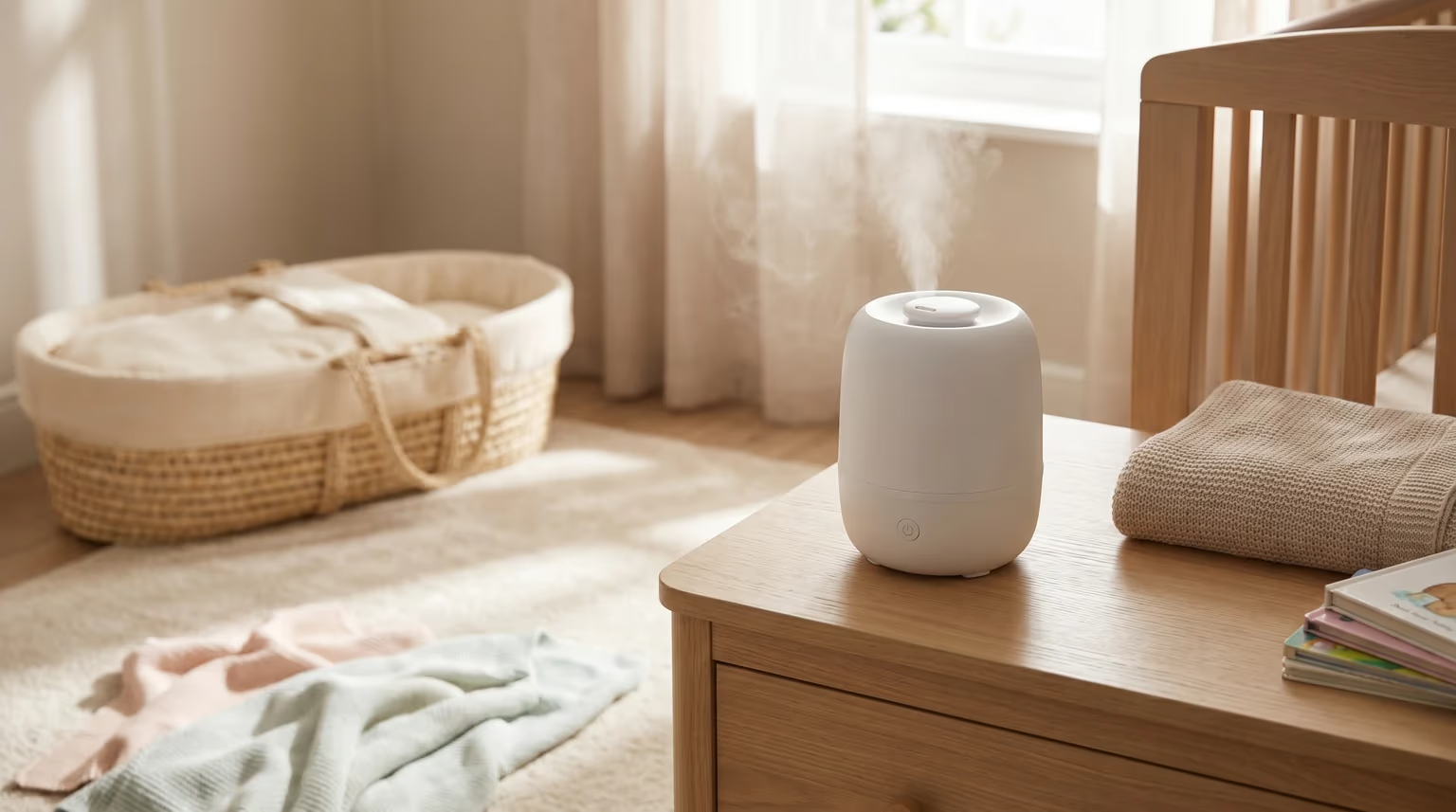
Choosing a humidifier for a baby's room is mostly about the unglamorous things: quiet running, easy cleaning, sensible humidity control and whether the tank size suits the room. For nursery use, cool mist, plain water, safe placement and avoiding condensation matter more than aroma extras or big health promises. Before comparing models, read whether a humidifier is useful for a baby.
Feature | |||||
|---|---|---|---|---|---|
| Best for | Best for Most parents wanting a sensor-led cool mist pick | Mainstream easy-fill value | Quiet nursery night use | Smaller rooms and tighter budgets | Premium nursery-specific setup |
| Type | Type Ultrasonic cool mist | Top-fill cool mist | Quiet cool mist | Compact cool mist | Nursery humidifier / premium system |
| Controls | Controls Sensor and ambient indicator | Simple controls and auto shut-off | Quiet night-friendly controls | Simple compact controls | Nursery-focused extras |
| Tank/runtime | Tank/runtime Sensor-led tank with up to 30h listed runtime | Up to 25h listed runtime | Larger 3.6L tank for night use | Compact 1.7L tank for smaller rooms | 2.5L tank with filter system |
| Cleaning and water note | Cleaning and water note Skip essential oils; clean regularly | Easy-fill/easy-clean angle | Quiet pick, still needs regular cleaning | More refills in larger rooms | Premium, but aroma/sleep claims need restraint |


How to choose a humidifier for your baby's room
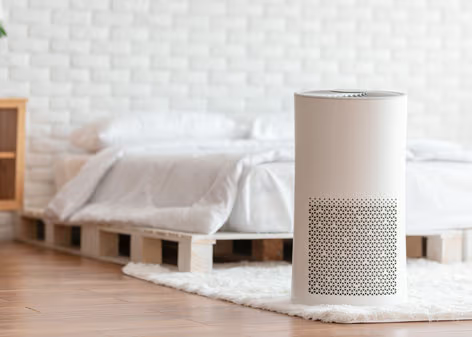
A good baby-room humidifier should be quiet, stable on a surface away from the cot and easy enough to empty, dry and clean properly. If your main worry is dust, pollen, smoke or smells rather than dry air, an air purifier for a nursery or bedroom is the more relevant product because a humidifier adds moisture rather than filtering particles.
- Prefer cool mist around babies and toddlers because it avoids hot water or steam burn risk.
- Look for easy tank access; daily emptying and regular cleaning are part of owning one.
- Use a built-in humidistat or a separate hygrometer so you do not over-humidify the room.
- Check lights, beeps and controls if the unit will run near naps or night feeds.
- Match tank size to the room; the biggest tank is not always best for a small nursery.
- In hard-water areas, expect more mineral residue or white dust from ultrasonic models unless you use low-mineral water or filters.
- Use plain water only unless a healthcare professional gives specific advice.
The best humidifiers for babies
These five picks cover the main nursery use cases: sensor-led control, easy-fill value, quieter night use, compact rooms and a premium nursery-specific setup. None of them removes the need for safe placement and regular cleaning.
1. Dreo sensor cool mist humidifier

The Dreo is the best overall pick because it combines quiet cool mist, sensor-led control and a popular, well-reviewed design in a format that makes sense for a baby's room. It is the one to choose if you want the humidifier to feel more controlled than a basic dial-only model.
Why did we choose this product?
The sensor and ambient indicator are useful nursery features because they make it easier to avoid guessing whether the room is too dry or already humid enough. The 360-degree nozzle and longer-runtime positioning also suit overnight use, provided the unit is placed safely away from the cot and bedding.
It is also a widely bought and well-reviewed model, which helps when you want a humidifier that does not feel like a niche gamble. That does not remove the cleaning work, but it does make the Dreo feel like the most convincing all-round baby-room humidifier for most parents.
Keep in mind
The listing includes essential-oil diffuser wording, but that should not be treated as a nursery benefit. Use plain water, clean it regularly and ignore the aroma feature for baby-room use unless a healthcare professional has given specific advice.
Features that may help you
•Best for: most parents wanting a sensor-led cool mist humidifier
•Type: ultrasonic cool mist humidifier
•Useful details: sensor, ambient indicator, 360-degree nozzle and listed 26dB noise level
•Nursery fit: strong option for parents who want more control than a basic compact humidifier
•Tradeoff: essential-oil wording should be ignored for baby-room use
2. Levoit easy-fill cool mist humidifier

The Levoit is the easiest mainstream recommendation for parents who want simple filling, easier cleaning and lots of buyer feedback more than smart-style features. It is a practical cool mist humidifier for a dry nursery or family bedroom.
Why did we choose this product?
Top-fill access is the main appeal here. A humidifier that is awkward to refill or wipe out quickly becomes the job everyone avoids, and the Levoit is built around the everyday routine of filling, emptying and cleaning without too much fuss.
It is also backed by a large number of buyer reviews, which is reassuring if you want a familiar mainstream choice rather than a specialist nursery gadget. Choose it if you want a well-known easy-clean cool mist pick and do not need the Dreo's sensor-led angle.
Keep in mind
It is less distinctive than the Dreo if you specifically want sensor feedback or a more controlled humidity display. The value case is really about easy ownership: simple top filling, auto shut-off and a design that should be easier to keep clean.
Features that may help you
•Best for: parents prioritising easy filling and cleaning
•Type: top-fill cool mist humidifier
•Useful details: listed 23dB noise level, auto shut-off and 360-degree nozzle
•Nursery fit: strong mainstream choice for regular use in a dry room
•Tradeoff: less sensor-led than the Dreo
3. Homvana quiet cool mist humidifier

The Homvana is the quiet nursery pick, with a listed 16dB noise level, cool mist and a night-friendly feature set. It is best suited to parents who care about sound and light disturbance as much as tank size.
Why did we choose this product?
This model makes sense if your baby's room is small to medium-sized and you want something that should feel unobtrusive during naps or night feeds. The 3.6L tank and quiet-use positioning give it a more serious nursery role than tiny desktop humidifiers.
The night-light feature may be handy for checks, but treat it as a secondary extra. If lighting is the real problem in the room, a dedicated baby night light will usually be a clearer buy than choosing a humidifier mainly for its glow.
Keep in mind
It has fewer buyer reviews than Dreo, Levoit and raydrop, so it is a more role-specific pick rather than the safest all-rounder. As with the other models, do not use the oil-diffuser wording as a reason to add fragrance to a baby's room.
Features that may help you
•Best for: quiet nursery night use
•Type: cool mist ultrasonic humidifier
•Useful details: listed 3.6L tank, listed 16dB noise level, night-light feature and 360-degree mist direction
•Nursery fit: good when lights and running noise are a big concern
•Tradeoff: fewer buyer reviews than the main Dreo and Levoit picks
4. raydrop compact cool mist humidifier

The raydrop is the compact value pick for smaller rooms, tight surfaces and parents who do not want a large appliance in the nursery. Its appeal is simple cool mist in a small footprint rather than extra controls.
Why did we choose this product?
The 1.7L-style format is easier to place on a stable shelf or chest of drawers than a bigger tank model, and the simple filterless design keeps the buying decision straightforward. It also has plenty of buyer feedback for a compact humidifier, which helps its value case.
Choose it for a smaller nursery, occasional use or a budget-conscious setup where you still want a real room humidifier rather than a novelty USB mist gadget.
Keep in mind
The smaller tank means more refilling if you run it for long periods or use it in a larger room. It also has a lower rating than the top Dreo and Homvana options, so it is best framed as a compact budget choice, not the most polished pick overall.
Features that may help you
•Best for: smaller nurseries and tighter budgets
•Type: compact cool mist ultrasonic humidifier
•Useful details: listed 1.7L tank, quiet operation, filterless design and auto shut-off
•Nursery fit: easier to place than larger tank models
•Tradeoff: smaller tank means more refills in bigger rooms
5. Canopy Nursery Humidifier 2.0

The Canopy is the premium nursery-specific pick: more expensive and more niche, but the clearest option here for parents who want a humidifier designed around a baby's room rather than a general bedroom appliance.
Why did we choose this product?
It stands out because it is explicitly positioned for nursery use, with a listed 2.5L tank, filter system and a more designed, all-in-one feel. If you want the product to look and behave like part of a premium nursery setup, this is the clearest nursery-specific option here.
It also includes sleep-light and white-noise style extras, but keep those in perspective. A humidifier should be bought for moisture control; if sound is the main need, a separate baby white noise machine is a cleaner decision.
Keep in mind
The higher price and fewer buyer reviews make this a specialist pick rather than the obvious choice for most parents. Be especially cautious with aroma, skin and sleep claims: for a baby's room, plain water, safe humidity and cleaning matter more than wellness-style extras.
Features that may help you
•Best for: premium nursery-specific setup
•Type: nursery humidifier / premium system
•Useful details: listed 2.5L tank, filter system, sleep-light and sound-style extras
•Nursery fit: designed most clearly around baby-room use
•Tradeoff: expensive, lower review count and aroma/sleep claims need restraint
How to use a humidifier safely in a baby's room
Keep humidity moderate and watch for condensation
Aim for comfortable, moderate humidity rather than trying to make the room feel damp. A separate hygrometer is useful if the humidifier does not measure humidity itself; as a practical rule, many indoor-air sources sit around the 40-50% middle ground, while the EPA and Mayo Clinic warn against letting rooms get too humid.
If you see wet windows, damp walls, musty smells or mould, turn the humidifier down or stop using it. GOV.UK guidance on damp and mould in the home treats excess moisture as a real health and housing problem, especially for children, and that is a sign you may need the opposite kind of help, such as one of the best dehumidifiers for homes.
Place it away from the cot and reachable cables
Put the humidifier on a stable surface, away from the cot, bedding, curtains and anything your baby or toddler can pull. Do not point mist straight at the mattress or wall, and keep cables routed as part of your wider baby-proofing checks.
Cool mist is the safer default around young children because it avoids hot water and steam. Warm-mist units and vapourisers may still appear in search results, but sources including HealthyChildren.org, Nationwide Children's Hospital and the EPA all flag burn risk around children.
Clean it more often than you think
The best humidifier is the one you will actually keep clean. Empty the tank, wipe it dry and refill with fresh water daily where you can; the EPA also recommends cleaning portable humidifiers every third day to reduce scale and microorganisms.
Hard tap water can leave mineral deposits and, with some ultrasonic cool-mist humidifiers, fine white dust. Low-mineral or distilled water can help, but the running cost and hassle are worth factoring in before choosing a model for everyday nursery use.
Skip essential oils, vapour rubs and fragrance
Aroma trays and diffuser wording can look tempting when a baby has a blocked nose, but they should not be treated as a nursery benefit. Mayo Clinic and Nationwide Children's both advise against putting essential oils or vapour rubs in humidifiers, and Poison Control notes that essential oils are not automatically harmless for children.
Use plain water, keep fragrance products out of reach and speak to a pharmacist, GP or NHS 111 if your baby has breathing difficulty, persistent symptoms, fever, asthma/allergy concerns or you are unsure what is safe.
Humidifier, air purifier or dehumidifier: which do you need?
A humidifier adds moisture when indoor air feels dry. An air purifier filters particles such as dust, pollen, smoke, pet dander and odours, but it does not add moisture. A dehumidifier removes moisture when there is damp, condensation or mould risk.
That distinction matters because the wrong product can make the room less comfortable. If the nursery feels dry and there is no condensation, a baby-room humidifier may help with comfort; if the issue is mould, wet windows or musty air, adding more moisture is not the right fix.