
Baby sleeping bags: safety, fit and TOG guide
A baby sleeping bag needs a secure neck and armhole fit, a suitable TOG and no extra bedding. Here's how to check it before sleep.
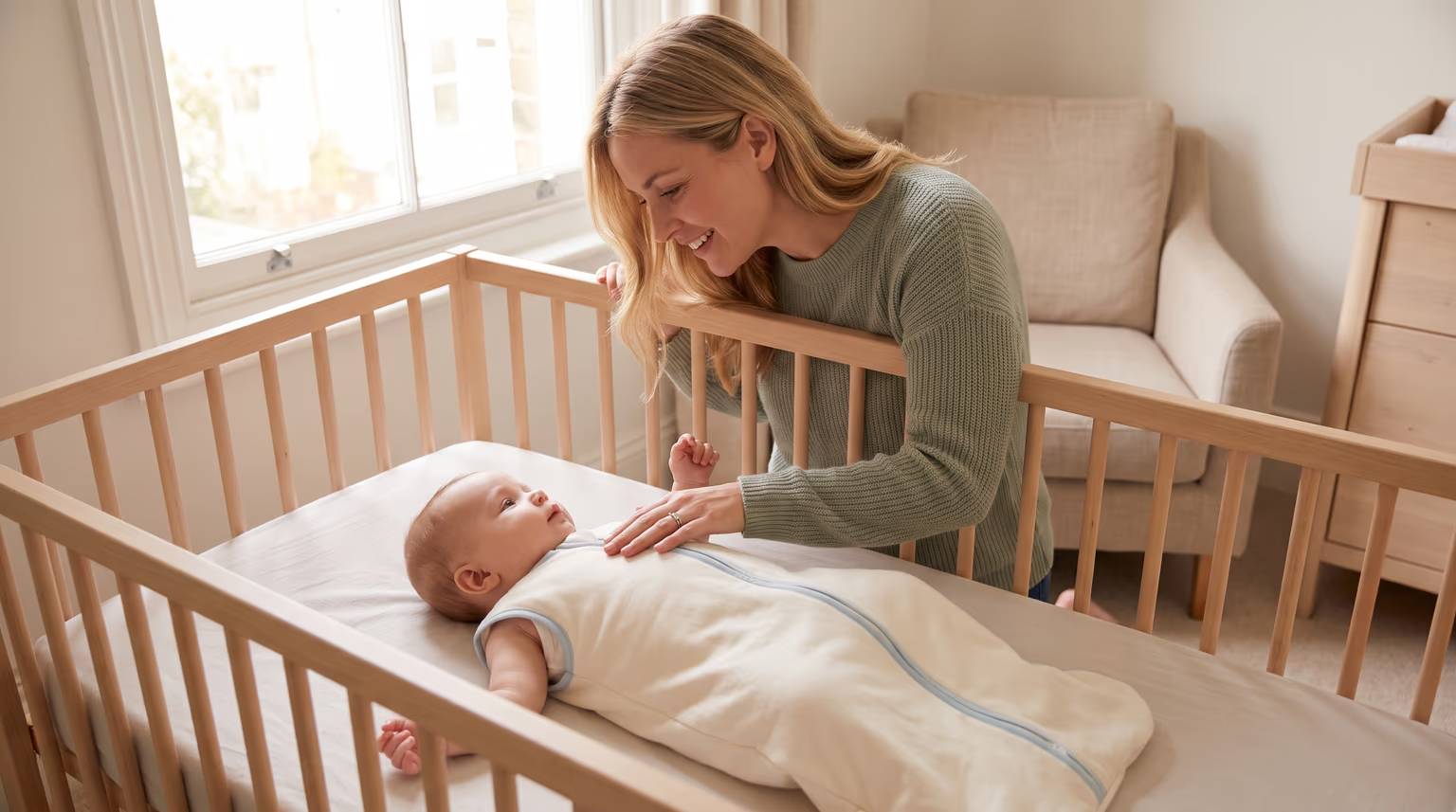
A well-fitting baby sleeping bag is a good option for safer sleep. It keeps bedding in place so your baby cannot wriggle underneath loose covers. Choose one made for cot sleep, with a secure fit around the neck and shoulders, well-fitting armholes and no hood.
The TOG rating tells you how warm the bag is. A lower TOG suits a warmer room; a higher TOG provides more insulation. Match the bag and clothing to the room where your baby will sleep, following the manufacturer's guide, then check how warm your baby feels.
Check the size and fit before the first sleep
Start with the minimum weight and size limits for that exact bag. Many bags are fitted by weight, so a “0–6 months” label alone does not tell you whether a small newborn can use one.

Before using it:
- Check that your baby's current weight and size fall within the manufacturer's limits.
- Fasten the zip and any poppers exactly as instructed, including any approved adjustment for a smaller baby.
- Check the neck and shoulders: your baby's head must not be able to slip down inside the bag.
- Check that the armholes fit securely, with the arms through them and no loose material that could cover the face.
- Confirm that the bag is intended for cot sleep and has no hood.
Do not use a bag that is too large, even if your baby will grow into it soon. Choose a smaller suitable size, or wait until your baby meets its minimum limits and it fits correctly. If the bag has become too small or your baby has outgrown its limits, replace it with a correctly fitting size. Do not leave fastenings open or alter the bag to make it fit; ask the manufacturer if the instructions are unclear.
The Office for Product Safety and Standards' October 2026 alert says not to buy or use bags intended for unsupervised cot sleep if they have a hood or no armholes. If you already have one, stop using it and contact the seller. The alert excludes pram footmuffs and products specifically designed for swaddling; a footmuff is not a cot sleeping bag.
For every nap and night, place your baby on their back in a clear, separate cot or Moses basket, on a firm, flat mattress. Keep their sleep space in the same room as you for at least the first six months. Leave out pillows, duvets, bumpers, toys, nests and sleep positioners.
What TOG sleeping bag should you use?
Check the actual room temperature with a room thermometer. The NHS gives these general ranges for commercial baby sleeping bags:
Room temperature | General NHS TOG guide |
|---|---|
| 16–20°C | 2.5 TOG |
| 20–24°C | 1.0 TOG |
| 24–27°C | 0.5 TOG |
Use the ranges as a starting point, then follow your bag's own TOG and clothing guide. Fabrics, clothing and babies vary, so the table is not a fixed outfit prescription. In particular, don't assume that every 2.5 TOG bag needs both a vest and a sleepsuit underneath.
The usual recommended room range is 16–20°C. If the room is warmer, choose lighter clothing and a lower-TOG bag as appropriate; in very hot weather a light vest or just a nappy may be enough without a bag. If your baby is otherwise well but their chest feels cold, add a clothing layer or choose a warmer bag. Recheck your baby after changing layers.
Avoid using the season alone to choose: a centrally heated bedroom in winter may be warmer than another room in spring. For managing the room itself, read about the ideal room temperature for a baby.
Sleeping bags, swaddles and rolling
An ordinary sleeping bag leaves the arms free. A swaddle wraps or holds the arms close to the body, so its stopping point is different: stop arms-in swaddling as soon as your baby shows signs of trying to roll. Do not wait for a completed roll or a particular birthday.
A correctly fitting, arms-free sleeping bag can be an alternative once swaddling stops. If using a convertible product, follow its instructions for arms-out use and recheck the fit. See how to swaddle a baby safely and when to stop for the swaddling-specific advice.
Keep putting your baby down on their back. If they roll before they can roll both ways independently, turn them back; once they can roll from back to front and back again themselves, you do not need to keep repositioning them. Keep the cot clear and do not add a positioner to prevent rolling.
The Lullaby Trust advises against weighted sleeping bags, swaddles and blankets for babies under one year, because of overheating, head-covering and breathing risks. Choose an unweighted sleeping bag.
Check warmth, and recognise when your baby needs help
Feel your baby's chest or the back of their neck. If the skin is hot or sweaty, remove a clothing layer. Cool hands and feet are common and, on their own, are not a reason to add more clothes.

If your baby seems unwell or you suspect a fever, use a digital thermometer in the armpit. Do not delay urgent help to take a reading or try a different TOG. Avoid wrapping an unwell baby in extra layers, stripping them or sponging them down to treat a fever.
When to get medical help
Get medical help immediately for a temperature of 38°C or above under three months, 39°C or above at three to six months, or below 36°C. In England, the NHS's baby-specific urgent-help guidance says to call 999 or go to A&E for these readings. Elsewhere, contact the appropriate local urgent service now; our baby fever guide explains the routes for each UK nation.
For other concerns, including suspected fever without a reading, poor feeding or fewer wet nappies, contact your GP or call 111 now. In Northern Ireland, use your GP or GP out-of-hours service. Follow any individual advice from your baby's clinical team.
Baby sleeping bag questions
References::
- NHS: safer sleep, sleeping bags and TOG ranges
- The Lullaby Trust: dressing your baby for sleep
- Office for Product Safety and Standards: baby sleeping bag safety alert
- The Lullaby Trust: swaddling and when to stop
- NHS: reducing the risk of SIDS, including rolling
- NHS: urgent medical help for babies and children under five
- NHS: checking a high temperature in children


