Is white noise safe for babies?
White noise needs low volume, distance from your baby and limited playing time. Learn how to set it up, handle overnight use and recognise hearing concerns.
White noise may help some babies sleep, but excessive noise can damage hearing. Risk depends on both the volume and how long it plays. If you use it, keep the volume low, place the source well away from your baby's head and use it for a short time. These precautions matter whether the sound comes from a dedicated machine, a phone app or a speaker.
White noise is optional. If your baby settles without it, there is no need to introduce it. Nor do you need to keep the house silent: the NHS advises letting babies become used to ordinary daytime household noise.
How loud should white noise be?
Use the lowest volume setting, rather than turning the sound up to cover every noise in the house. Turn down a nearby television or music first. The American Academy of Pediatrics advises keeping infant sleep machines as far from the baby as possible, with low volume and limited use.
Check the sound before putting your baby down. Listen from where their head will be, using the sound and setting you plan to play. If it sounds loud there, turn it down or switch it off. This helps you spot an obviously loud setup; your own hearing is not a precise sound-level measurement.
The volume shown on a machine or phone does not tell you how loud it is at the cot. Tests of sleep machines and apps found that output varied with the device, volume and distance. Some produced potentially hazardous levels at maximum volume close to the sound source.
Is there a safe decibel number?
There is no established home setting that guarantees safe all-night use for every baby. The hospital-nursery noise levels and adult workplace limits used as comparisons in some studies are not proven overnight limits for babies at home. A decibel reading also needs a measurement position and an exposure time to be meaningful.
The useful action is to reduce the sound reaching your baby and limit how long it plays. If your baby's audiology or neonatal team has given you specific instructions about sound exposure, follow those instructions.
Where should the machine go?
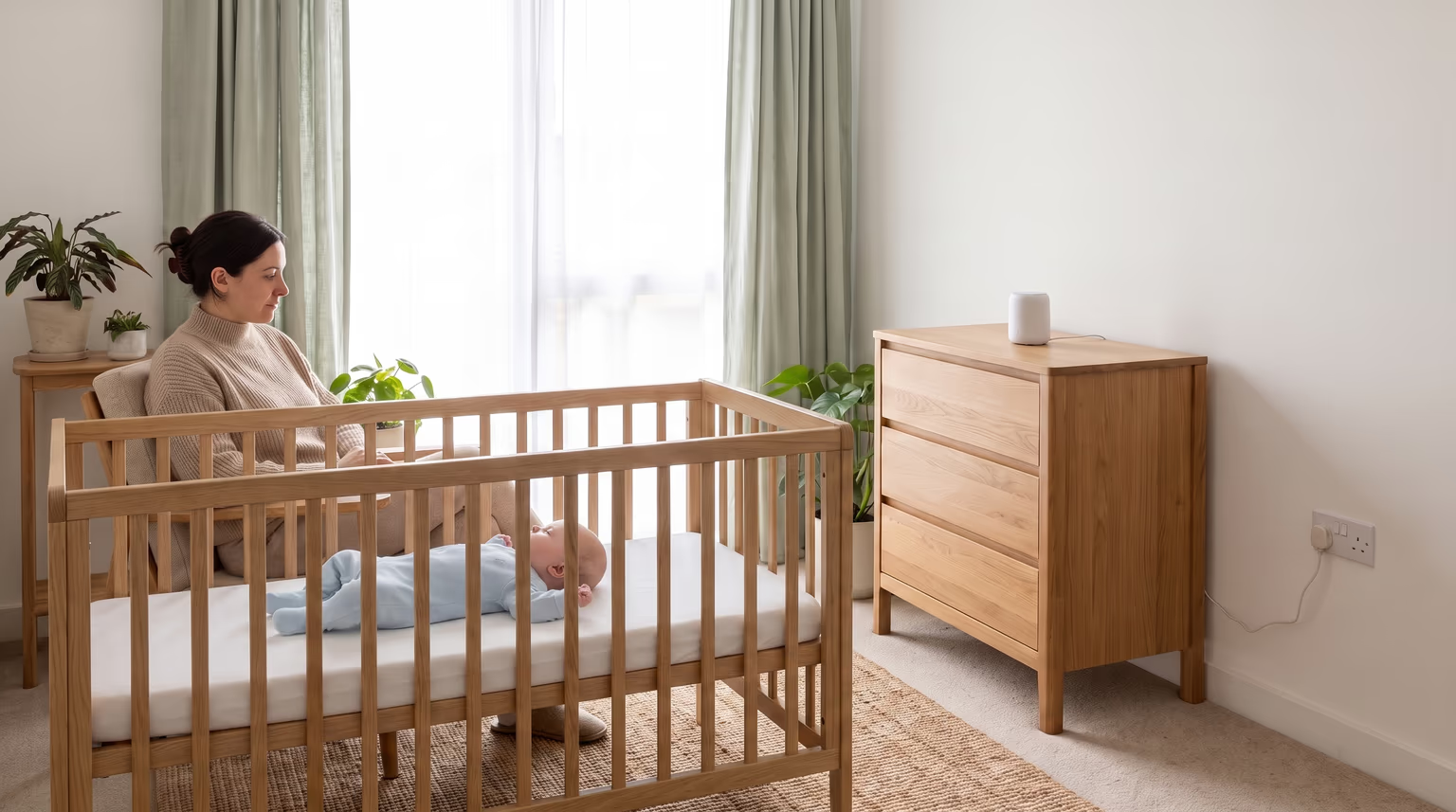
Place it as far from your baby's head as the room allows, on a stable surface outside the cot. Avoid attaching a sound machine to the cot rail or putting a phone beside your baby's head. Moving a loud device further away is not a reason to turn it up again.

Check the cable as well as the device. Keep the whole lead out of reach, with no loop hanging into or beside the cot where your baby could grasp it. Northern Ireland's Public Health Agency warns that reachable baby-monitor leads can cause strangulation; the same physical hazard applies to a powered sound machine.
Keep following NHS safer-sleep advice: put your baby on their back on a firm, flat mattress in a clear cot or Moses basket, in the same room as you for every sleep for at least the first six months.
Can white noise stay on all night?
Brief use is the more cautious choice. The American Academy of Pediatrics advises using infant sleep machines for a short time. Its technical report describes switching the machine off once the baby is asleep or using a timed shut-off to limit exposure.
If you use white noise for settling, make switching it off part of the routine. A timer can help you avoid leaving it running after you fall asleep, but there is no evidence-based number of minutes that suits every baby and device. Keep the volume low throughout.

Long-term safety of continuous overnight use has not been established. A review published in 2024 supports limiting intensity and duration, while finding that the best levels and timings for children still need research. This is a reason to shorten exposure, rather than to assume a quiet setting makes unlimited use safe.
Does it help sleep, and when should you stop?
White noise can be helpful for some families, but the results vary. A review of trials published in 2025 found improvements in some sleep measures in babies and young children, including fewer awakenings. It did not find a clear improvement in total night-time sleep. There is little reason to keep using it if you cannot see a benefit for your baby.
You can try settling without white noise whenever it suits your family. If you prefer a gradual change, try reducing the volume or shortening its use while keeping familiar parts of bedtime, such as a story or song. There is no fixed age when every baby needs to stop.
Babies have different patterns of sleep and waking, and those patterns change as they grow. A simple, calming bedtime routine can help with settling.
When to ask about your baby's hearing or sleep
Speak to your health visitor or GP if you are worried about your baby's hearing or notice a change in how they respond to everyday sounds. Ask even if they passed newborn hearing screening: the screen does not detect every type of hearing loss, and hearing difficulties can develop later.
Do not turn up the white noise or play loud sounds to test their hearing yourself. Tell the professional what you have noticed and, if relevant, how you use the sound machine. They can advise whether your baby needs an audiology assessment.
For ongoing problems with sleep or settling, ask your health visitor for support instead of increasing the volume or playing time. They can help you review the routine and your baby's needs. If your baby already has an audiology or neonatal care plan, ask that team about using white noise at home.
References::
- American Academy of Pediatrics: How noise affects children
- American Academy of Pediatrics: Preventing excessive noise exposure: technical report
- Hong and colleagues: Sound outputs of infant white-noise machines and apps (2021)
- De Jong and colleagues: Continuous white noise during sleep and childhood development (2024)
- Ding and colleagues: Review of white noise and sleep quality (2025)
- NHS: Newborn hearing screening
- NHS: Helping your baby to sleep
- NHS: Safer sleep and reducing the risk of SIDS
- Public Health Agency: Home safety for children under five