
Can a baby sleep in a nest or pod?
Babies should not sleep in a nest or pod, even for a short nap. Here is what to use instead and how to handle dozing or difficult settling.
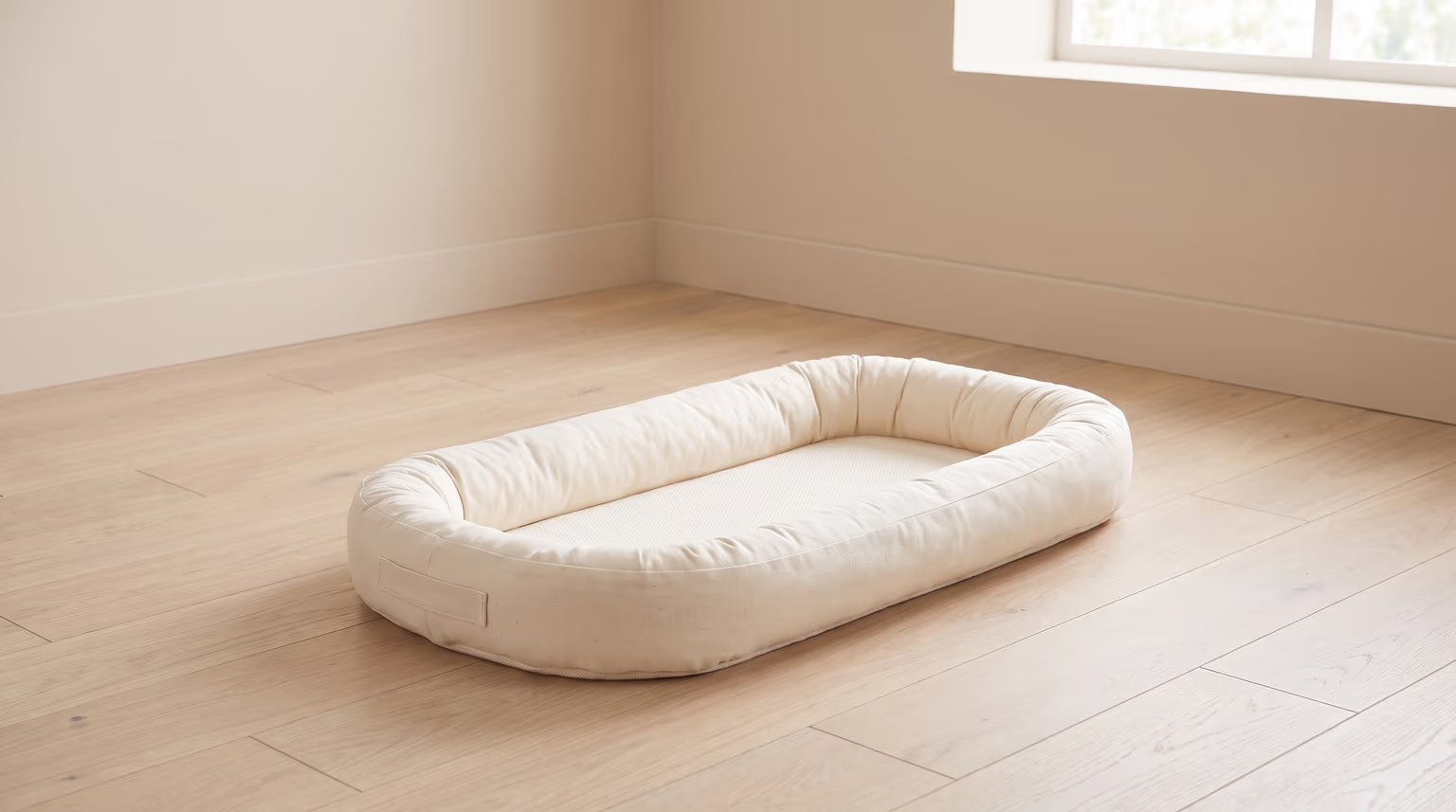
A nest’s padded sides can look inviting, especially when your baby wakes as soon as you put them down. For sleep, though, babies need a firm, flat surface with space around their face. The NHS advises against sleeping pods and nests, and The Lullaby Trust gives the same advice.
This applies to newborns, daytime naps and overnight sleep, including when an adult is watching. Set up a cot or Moses basket nearby so you have somewhere ready when your baby gets sleepy. Keep it in the same room as you for at least the first six months, day and night.
Why padded sides are a concern
Soft material close to a sleeping baby’s face can cover their nose and mouth if they press against it. It can also trap heat. The Lullaby Trust explains that raised, soft or padded sides can obstruct breathing, while the NHS links soft material around the head with overheating and a higher risk of sudden infant death syndrome (SIDS).
A pod with a flat centre still has those cushioned edges around the baby. Putting it inside a cot does not remove the soft sides. Use the cot’s mattress without a nest, pillow or padded insert on top, and keep toys and bumpers out too.
What to use instead of a baby nest
Choose a sleep space that fits your home and your baby’s stage. A cot, crib or Moses basket gives you a separate place to put your baby down. Follow its instructions for assembly, the mattress and when your baby has outgrown it.
The useful checks are straightforward:
- Use a firm, completely flat mattress with a waterproof cover, fitting the sleep space snugly.
- Put your baby down on their back.
- Use a well-fitted sleep bag, or a lightweight blanket tucked below the shoulders with your baby’s feet near the bottom of the cot. Keep other items out.
If you need help choosing the mattress, our cot mattress guide explains fit, firmness and condition. For bedding, see our baby sleeping-bag fit and TOG guide.

For visits, holidays or another room
A suitable travel cot is a practical portable alternative. Its mattress may feel much thinner than a cot mattress, but do not pad it with folded blankets or a quilt. The Lullaby Trust’s travel sleep guidance confirms that a thin travel-cot mattress can be suitable when it is firm, flat, in good condition and meets the relevant safety standards. Follow the travel cot’s instructions before considering a replacement mattress, as the wrong one can leave dangerous gaps.
For a family visit, check in advance that there is a suitable sleep space available, or take your own. A portable nest does not replace one.
If your baby settles better in a nest
It can be frustrating to move a sleeping baby and have them wake. The NHS explains that young babies may initially fall asleep only in someone’s arms or with a parent beside the cot. You can comfort and cuddle your baby, then try putting them down again. At night, keep lights low and voices quiet, and check whether they need a feed or nappy change.
If your baby nods off in a nest, move them to the sleep space you have prepared. Watching a nap does not make padded sides suitable for sleep, and there is no short-nap exception. Ask other carers to use the same arrangement.
Tiredness needs planning too. Put your baby back in their cot before you sleep, and avoid falling asleep with them on a sofa or armchair. If possible, ask a partner, friend or relative to help so you can rest. Your health visitor can help when settling difficulties or broken nights are becoming hard to manage.
How to interpret “breathable” or “supervised” labels
“Breathable” is not a reason to choose a padded nest for sleep. Focus on the recommended sleep surface: firm, flat and clear, with a waterproof mattress cover. A description such as “supervised use” means you need to understand the intended activity; being present does not turn an awake-use product into a sleep space.
Our baby nest and pod comparison covers products for supervised awake use. For naps and nights, choose the sleep spaces described above. If instructions or advertising leave you unsure whether an item is a nest or a cot, clarify that before using it for sleep.
When to get medical help or advice
If you have used a nest before, concentrate on changing the sleep setup now. If your baby seems unwell or something concerning has happened, seek help for that concern.
The current NHS urgent-help guidance for under-fives advises calling 999 or going to A&E immediately if your baby:
- is breathless or breathing very fast, including grunting or the tummy pulling in with breaths;
- has skin, lips or a tongue that look blue, grey, unusually pale or mottled;
- is unusually hard to wake, cannot be woken or has fainted.
Colour changes can be easier to see on the palms or soles in babies with brown or black skin. Do not wait for several signs to appear. If your baby stops breathing or is unresponsive, call 999 immediately.
For other worrying symptoms, contact your GP. If urgent advice cannot wait and your GP is unavailable, call 111 in England, Scotland or Wales. In Northern Ireland, contact your local GP out-of-hours service. When your baby is well and you need help with settling or the sleep arrangement, speak to your health visitor or midwife.


