How to swaddle a baby safely and when to stop
Swaddling is optional. If you use it, keep every sleep space clear, check the fit and warmth, and stop as soon as your baby shows signs of trying to roll.
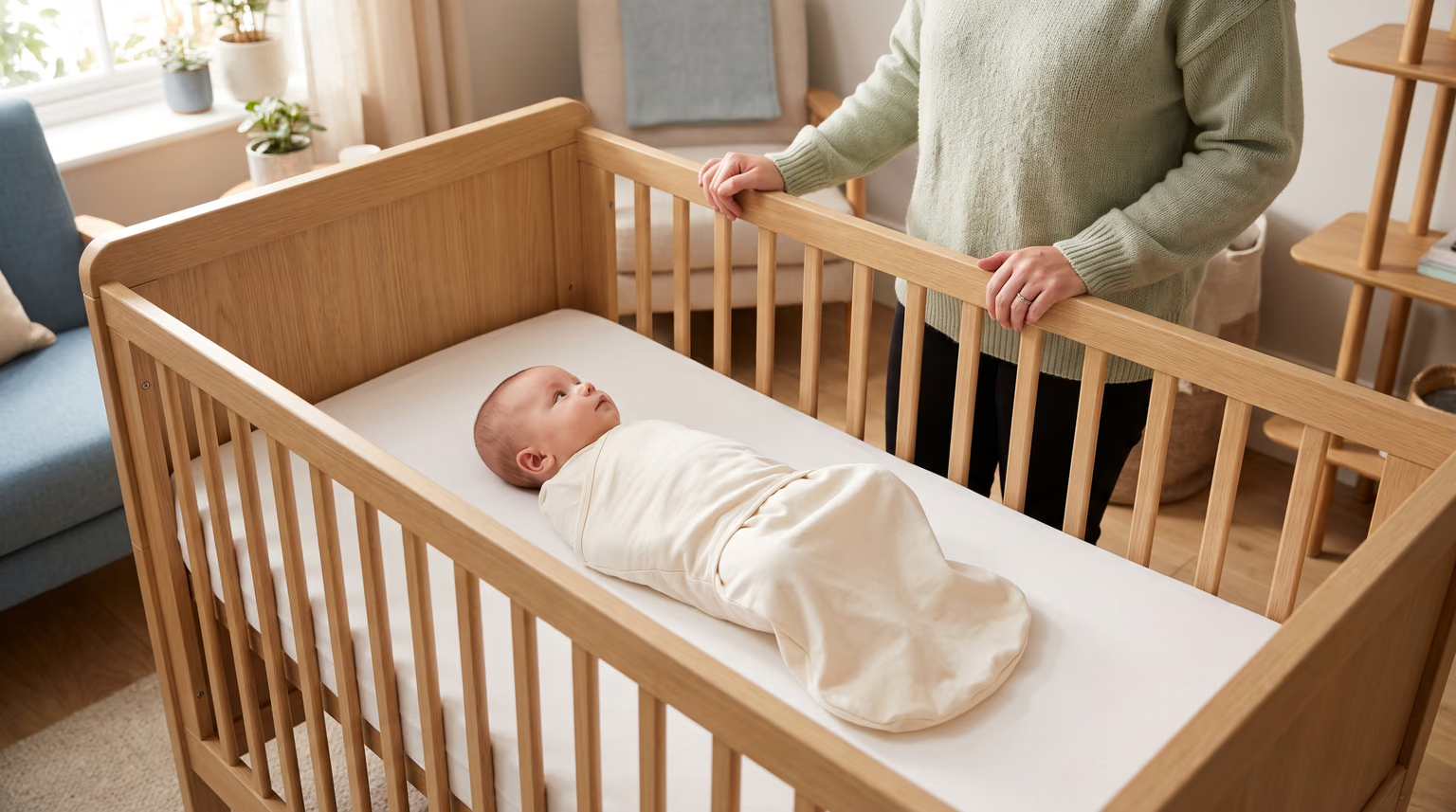
The usual safer-sleep setup is the starting point if you swaddle your baby. Swaddling does not reduce the risk of SIDS. Place your baby on their back for every sleep, on a firm, flat mattress in a clear, separate cot or Moses basket.
Use lightweight fabric below the shoulders and keep the head uncovered. The wrap should stay secure without restricting breathing or natural hip and leg movement. Check your baby's chest or the back of their neck, remove a layer if they are hot or sweaty, and do not use weighted infant sleep products.
The safer-sleep rules that still apply when swaddling
A swaddle does not make a different sleep position or sleep surface safer. If you choose to use one, the wider safer-sleep guidance remains the foundation for every nap and night-time sleep:
- Place your baby on their back for every sleep
- Use a firm, flat mattress in a clear cot or Moses basket
- Keep the sleep space separate and in the same room as you for at least the first six months
- Keep anything that could cover the face or head out of the sleep space
Do not swaddle while bed-sharing. The fabric must stay below the shoulders and away from the face, with no loose bedding placed over it.
How to check fit, clothing and temperature
Safe swaddling is about maintaining a few visible boundaries rather than passing one exact finger test, following a fixed fold count or choosing a particular product.
- Keep the fabric below the shoulders and the head fully uncovered
- Wrap securely enough that the fabric cannot come undone, while leaving room to breathe
- Allow the hips and knees to bend and the legs to move naturally
- Use lightweight material and minimal clothing, then check warmth at the chest or back of the neck
Keep the head and face clear
The wrap should sit securely below the shoulders without covering the chin, mouth or nose. If it loosens, your baby escapes it, or any fabric could reach the face, remove the loose fabric and resettle your baby on their back in the clear sleep space.
Leave room for breathing, hips and legs
Aim for secure but not tight. The wrap should leave room for your baby to breathe, and the lower section should allow the hips and knees to bend and the legs to move. Do not bind the legs straight down and together.
A photograph can show these visible principles, but it cannot certify a particular fit or technique.
What should a baby wear under a swaddle?
Use lightweight material and the minimum clothing needed for the conditions. A room temperature of about 16–20°C is useful context, preferably checked with a room thermometer, but it is not a universal clothing or TOG formula.
Feel your baby's chest or the back of their neck. If the skin is hot or sweaty, remove a layer. Cool hands or feet do not by themselves mean that more clothing is needed. Do not swaddle a baby who has an infection or fever.
Check the instructions for your swaddle
A blanket, wrap or swaddle bag may have instructions for its particular design. Follow them only where they remain consistent with back sleeping, a clear face and head, room to breathe, free hip and leg movement, temperature checks and the rolling-sign stop rule. Instructions do not establish that a product is approved or make different designs interchangeable.
When to stop swaddling
Stop when your baby shows the first signs of attempting to roll or turn over. Development varies, so a birthday or age range cannot replace this observable sign. Do not wait for a complete roll, rely on previous uneventful use, or continue because an adult or monitor is watching.

Once those signs appear, stop any swaddle that restricts the arms and return to the ordinary safer-sleep setup: on the back, on a firm, flat mattress, in a clear, separate sleep space. No single one-arm, arms-out, staged-night or transition-product method has been established for every baby after rolling signs.
When to ask for individual advice or get urgent help
This article gives general safer-sleep information, not individual medical advice. Changing a swaddle based on general guidance is not a substitute for advice that takes your baby's circumstances into account.
Ask about individual circumstances
Ask the baby's own team or an appropriate health professional when:
- swaddling was taught or prescribed in hospital for a medical reason
- your baby was born prematurely
- you know or suspect that your baby has a hip concern, or they are receiving prescribed harness care
- your baby has health, developmental, feeding, breathing or temperature-regulation concerns
Depending on the situation, the right person may be a midwife, health visitor, GP, paediatrician or your baby's neonatal or clinical team. Do not alter prescribed care or try to diagnose a hip or other health condition from this article.
When to contact a GP or NHS 111 urgently
Do not swaddle a baby with an infection or fever. Seek an urgent GP appointment or contact NHS 111 if you are worried that your baby is ill.
Call 999 for an emergency sign
Each sign can require emergency help on its own. Do not delay the call while checking or changing a wrap, and do not assume that swaddling caused the sign.