
What temperature should a baby bath be?
Aim for baby bath water that feels comfortably warm, around body temperature. About 37–38°C is a useful guide; mix the water and check it with your elbow.
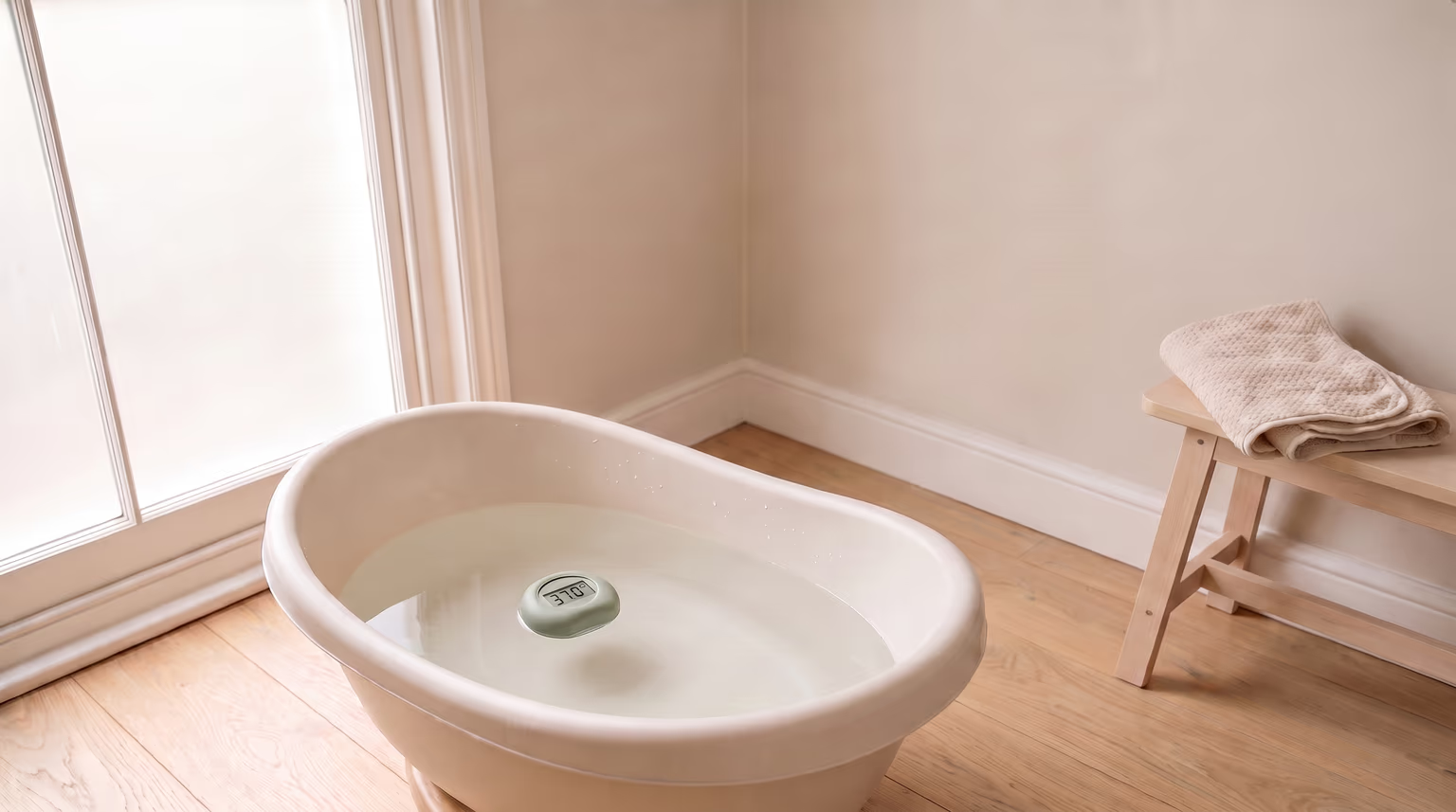
A baby's bath should feel comfortably warm, around body temperature. If you use a bath thermometer, about 37–38°C is a useful guide: the Scottish Government's Parent Club bath-time advice describes this as the range commonly indicated by bath thermometers.
The NHS recommends checking with your elbow before your baby goes in. Thoroughly mixed water should feel neither hot nor cold against your skin. You can use this check whether or not you own a thermometer.
How to prepare and check the bath
Have your towels, clean nappy and clothes within reach before you start. Warm the room so your baby is comfortable when undressed. Choose a time when they are not hungry or tired, and avoid bathing straight after a feed.
- Run cold water first, then add hot water while your baby stays out of the bath.
- Stop the taps and stir the water throughout the bath with your hand. This spreads the heat and clears hot patches.
- Dip your elbow into the mixed water just before lifting your baby in. It should feel gently warm.
- Keep your baby away from the taps: the metal can remain hot after the water stops running.
RoSPA's bath-time guidance explains why filling comes first: the temperature can change quickly while water is running.

If you use a bath thermometer
Use a thermometer designed for bath water and follow its instructions for placing it and taking a reading. Check after mixing, rather than measuring near the hot tap while the bath fills. Around 37–38°C gives you a useful starting point, and the elbow check confirms how the mixed water feels.
If the display looks right but the water feels hot, keep your baby out and adjust the water.
What if the water is too hot or starts to cool?
If the bath is too hot before your baby gets in, add cold water, mix it through and check again. If it feels cold, add a little hot water with your baby still out, then mix and recheck. Do the final check after any adjustment.
Once your baby is bathing, do not run hot water into the bath around them. If the water needs changing, lift your baby out first and keep them wrapped in a towel while you adjust it. It is also fine to finish the bath, dry them and get them dressed instead of trying to keep the water at a particular reading.
Keeping your baby comfortable and supported
Support your baby's head and shoulders as you lower them into the water, and keep their head above the surface. Leeds Community Healthcare NHS Trust advises keeping a hand on your child throughout the bath.
Stay beside your baby and give them your full attention. If you need to answer the door or leave the room, take your baby out, wrap them in a towel and take them with you. A bath seat or support still needs the same adult supervision.
Afterwards, dry your baby gently, including the skin folds, and empty the bath as soon as you have finished.
What to do if your baby is scalded
Lift your baby away from the hot water and start cooling the injured area immediately. Get medical advice promptly for a baby's burn or scald, even if it seems small.
- Cool the area under cool running water for 20 minutes.
- Remove clothing or a nappy near the injury, but leave anything stuck to the skin in place.
- Keep the rest of your baby warm with a towel or blanket while you cool the affected skin.
- After cooling, lay cling film loosely over the injury. Do not wrap it around a limb.
- Avoid ice, creams, oils and butter, and do not burst blisters.
These steps follow NHS burns and scalds advice and its child first-aid guidance.
Call 999 immediately if your baby has trouble breathing, is unresponsive or will not wake. A very large or deep scald, or one affecting the face, genitals or bottom, also needs 999 or A&E. Do not delay emergency help to finish cooling.
For urgent advice when those emergency signs are absent:
- England and Wales: call 111. For a baby, use the telephone service rather than 111 online.
- Scotland: contact your GP during opening hours, or NHS 24 on 111 if the GP is closed or you think your baby needs A&E but it is not a life-threatening emergency.
- Northern Ireland: contact your GP or the local GP out-of-hours service when the surgery is closed.


