How long should you sterilise baby bottles?
Sterilise bottles and teats until your baby is at least 12 months old. Cold-water, boiling and steam methods each have their own timing and handling rules.
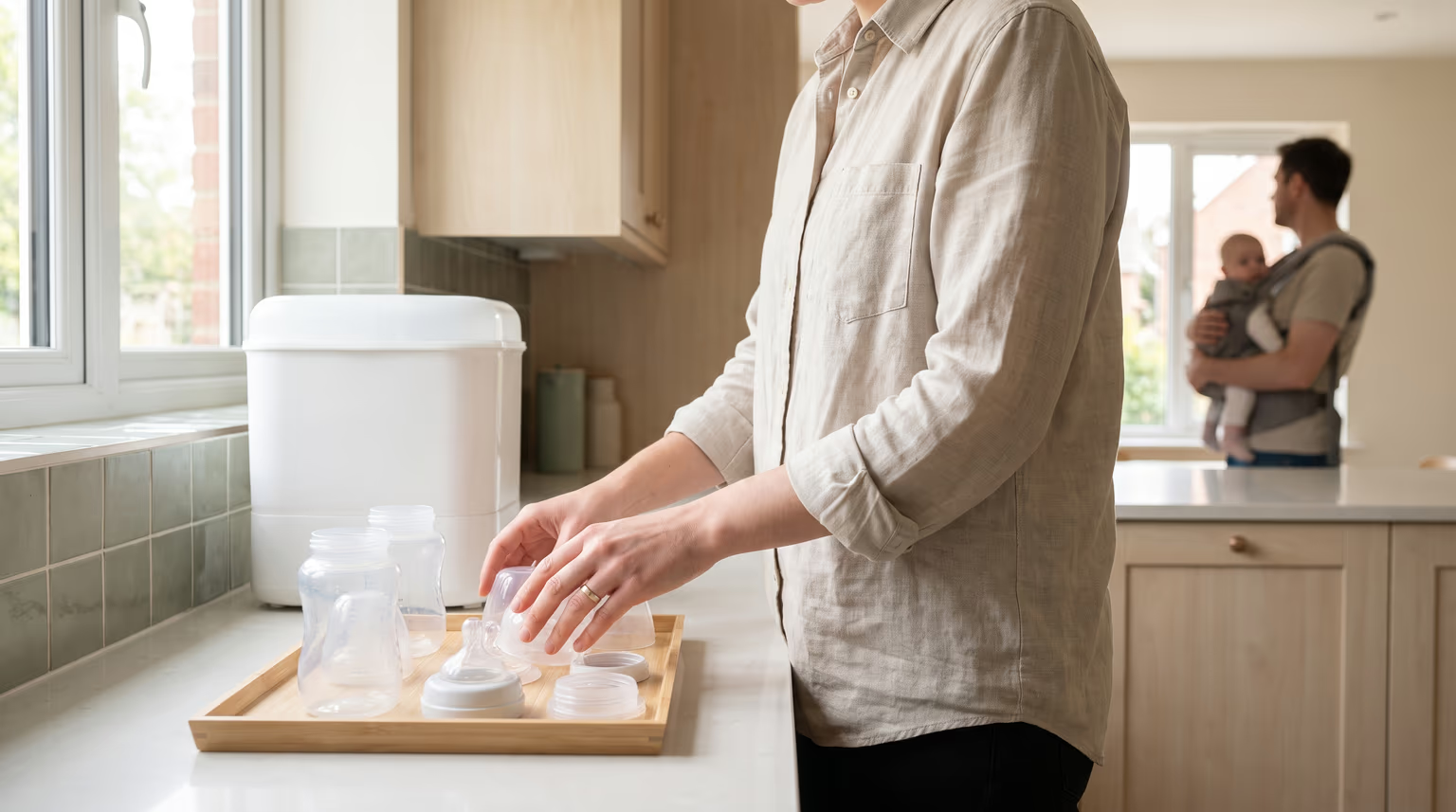
The NHS recommendation covers bottles used for expressed breast milk as well as formula. Keep the routine going when your baby starts solids, even if you are making fewer bottles. Cleaning and sterilising feeding equipment helps protect against infections such as diarrhoea and vomiting.
For the time each session takes, allow for washing first, the full sterilising process and safe handling afterwards. A quick rinse or a few minutes in hot water is not a substitute for completing the chosen method.
How long does each sterilising method take?
These are the NHS timings for sterilising feeding equipment. Check that your bottles, teats and other parts are suitable for the method before starting.
Method | Time needed | What to check |
|---|---|---|
| Cold-water solution | At least 30 minutes | Every part stays submerged, with no trapped air |
| Boiling | At least 10 minutes boiling | Items are safe to boil and stay under water |
| Electric or microwave steam | The full cycle in your model’s instructions | Correct loading, water amount and cooling instructions |
Cold-water sterilising
Mix the solution exactly as its instructions specify and replace it every 24 hours. Lower the cleaned parts into it, let any trapped air escape and use the container’s floating cover or plunger to keep everything below the surface. Count the soaking time once the equipment is fully submerged.
When you take a bottle out, shake off excess solution. If rinsing, use cooled boiled water from the kettle, not tap water, as advised in the NHS feed-preparation steps.
Boiling
Use a pan large enough to keep all the parts under water throughout the boil. Set a timer for the required boiling time, stay with the pan and keep your baby away from it. Merely pouring boiling water over a bottle does not give it the sustained boiling this method requires.
Check bottles and teats for cracks, tears or other damage. Teats can deteriorate faster with repeated boiling, so replace damaged parts.
Electric and microwave steam
Follow the instructions for your particular steriliser, including loading, water quantity and any microwave power setting. Position bottle and teat openings downwards. Complete the cycle and follow the cooling instructions before opening or handling hot equipment.

A clean-first routine after each feed
Washing removes milk residue; sterilising comes afterwards. Begin cleaning as soon as you can after a feed, rather than leaving used bottles for the next time your baby is hungry.
- Prepare the area. Wash your hands with soap and water, and clean the work surface.
- Separate the parts. Take the bottle apart, including its teat, retaining ring, cap and any removable valves, following the bottle’s instructions.
- Wash thoroughly. Use hot, soapy water and a clean bottle brush kept for feeding equipment. Clean inside the teat with a teat brush and work around places where milk collects.
- Rinse. Use clean, cold running water to remove the washing water before sterilising.
- Sterilise. Complete one suitable method for all the washed parts.

Can the dishwasher do the job?
A dishwasher can do the washing stage, but it does not replace sterilising, according to the NHS. Put dishwasher-safe bottles, lids and teats facing downwards. Wash teats by hand if needed to get them thoroughly clean, then sterilise the equipment.
Keeping bottles ready for the next feed
Leave bottles and teats in the steriliser or covered pan until needed, within the equipment’s storage instructions. When removing them, wash and dry your hands or use sterile tongs. Assemble bottles on a clean, disinfected surface or the upturned steriliser lid, and fit the teats and lids promptly.
Keep the teat and cap off the worktop while making up a feed. For how long equipment may remain in a closed steriliser, use the instructions for that model. The 24-hour rule for changing cold-water solution is a separate instruction; it is not a general storage time for every sterilised bottle.
If a clean teat drops onto the floor, clean and sterilise it again before use. Preparing several bottles together can fit your day, but each used bottle needs the cleaning and sterilising routine again before another feed.
Common questions about age and feeding equipment
Formula preparation and when to get advice
Making up formula safely
Powdered formula can contain bacteria even in an unopened pack. Use a sterilised bottle and follow the separate NHS instructions for making up a feed: prepare feeds one at a time, use water that is at least 70°C when mixed with the powder, then cool the feed before giving it to your baby. Use the correct water and powder amounts on the packaging.
When your baby has an individual care plan
If your baby is premature, unwell or receiving specialist care, ask the team caring for them about the feeding-equipment routine. Follow any individual instructions they have given you and check with them before changing those instructions. Your health visitor can also help with everyday sterilising questions.
If your baby seems unwell
If your baby is not feeding or you are worried about symptoms, seek prompt medical advice. For urgent advice, call 111 in England, Scotland or Wales. In Northern Ireland, contact your GP, or the GP out-of-hours service when the surgery is closed.
If your baby has difficulty breathing or is hard to wake, call 999 or go to A&E. Do not delay getting help while you change the sterilising routine.