The 5 best sippy cups for babies and toddlers in 2026
Five sippy cups from first sips at 6 months to toddler days out, with free-flow, straw, open and 360 cups compared on valves, leaks and cleaning.
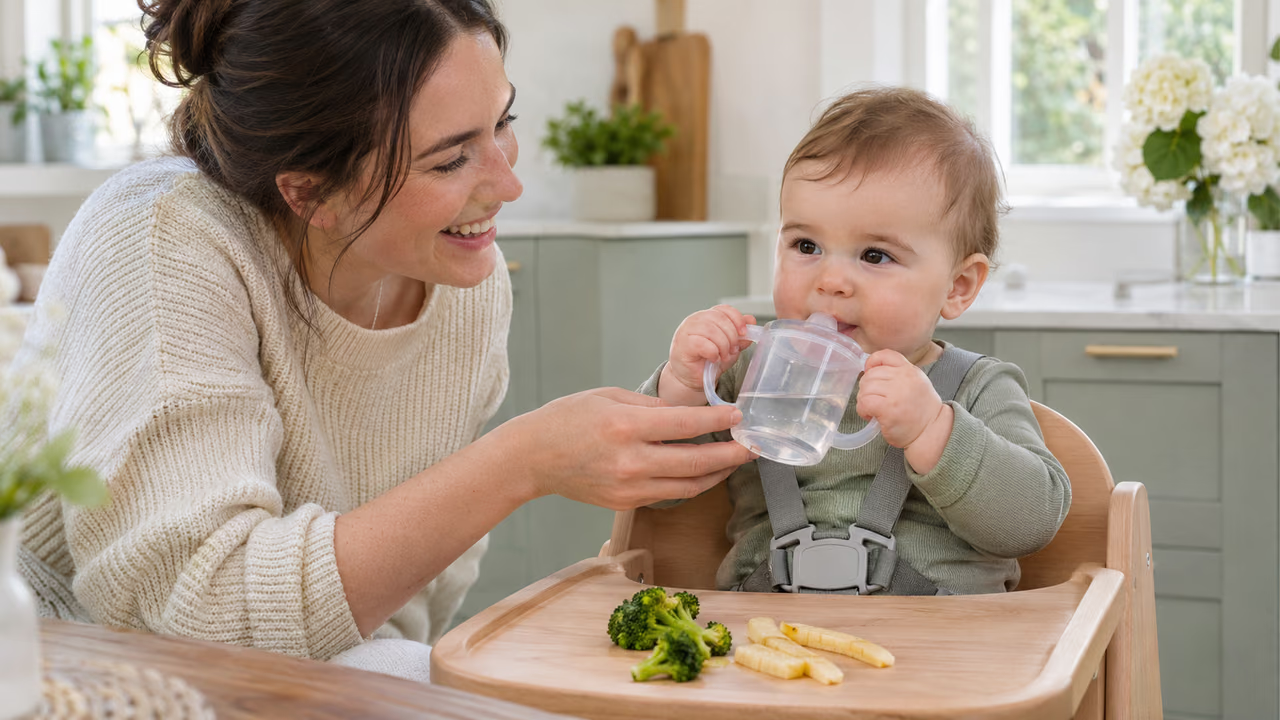
Most babies get their first sippy cup when they start weaning. From around 6 months, the NHS advice is to offer sips of water from a cup with meals, using an open cup or a free-flow cup without a valve, which helps your baby learn to sip and is better for their teeth. That's why the type of cup matters more than the brand: a non-spill cup with a valve makes them suck instead, much as they would from a bottle.
That no longer means choosing between good habits and a dry changing bag. Several free-flow cups now have a lid or spout that closes, so water flows freely while your baby drinks and stays in once you shut it. Valved cups still earn a place on car journeys and in nursery bags, once your child can already drink from a cup. Whichever you buy, the aim is to move on to an open cup as soon as your child is ready.
Product | |||||
|---|---|---|---|---|---|
| Best for | Best for Most babies from 6 months | Value, then an open cup | Learning to drink from a rim | Days out, once they can drink from a cup | Toddlers at nursery |
| How it flows | How it flows Valve-free weighted straw | Valve-free flip-down spout | Open, slanted rim | 360° rim with a valve | Hard spout with a valve |
| Age on the pack | Age on the pack 6 months+ | 4 months+ | 3 months+ | 6 months+ | 12 months+ |
| Size | Size 200 ml | 190 ml, pack of 3 | 200 ml | 207 ml, pack of 2 | 300 ml |
| In the changing bag | In the changing bag Leak-proof with the lid shut | Spout down; a few owners get drips | Not for the bag: it's open | Seals itself | Leak-proof, with a spout cap |
Which sippy cup at 6 months, 1 year and beyond
- Around 6 months: first sips with meals. Bring it in when you start weaning, with a little water at each meal. Some packs say 3 or 4 months+, but the NHS advice is to introduce a cup from around 6 months. Choose an open cup, a free-flow beaker or a straw cup without a valve, help your baby hold it and expect spills at first.
- 6 to 12 months: practice at the table, a sealed cup for outings. Keep the open or free-flow cup for meals. When you go out, shut the lid of a free-flow cup or take a 360 cup. Some babies only work out a 360 cup's press-and-sip nearer their first birthday.
- From 12 months: off the bottle and on to an open cup. The NHS advice is to discourage bottle feeding from age 1 and to move from a lidded beaker to an open cup as soon as your child is ready. A bigger toddler cup with a tough spout helps at nursery, but keep the open cup going at home.
The 5 best sippy cups
The list starts with the cup that suits most babies from 6 months, then a free-flow beaker three-pack, an open cup for the table, a 360 cup for days out and a toddler cup for nursery.
1. TUM TUM Tippy Up Sippy Cup

The cup we'd start most babies on at 6 months. The short straw has no valve, so water comes up with an easy sip, and a weight on its end swings to wherever the water is, so your baby can drink at any angle.
Why did we choose this product?
Flip the lid shut and it squashes the straw flat, which stops the flow. That's how it stays leak-proof in a changing bag without a valve, and when it's open, your baby gets the free-flow drinking the NHS recommends. It has two handles and a measure on the side, so you can see how much your baby has drunk.
It's the best-selling sippy cup on Amazon UK at the moment. Several parents who had tried other cups say this is the one their baby finally took to, that it survives being thrown from the high chair, and that the plain straw is easy to keep clean.
Keep in mind
With the lid open, the water in the straw drips out if the cup turns upside down. One owner found that screwing the lid on very tightly makes water spurt out when the lid flips open. It's for cold drinks only, and TUM TUM recommends washing it by hand, although it can go in the dishwasher. A 300 ml size is there for older toddlers.
Features that may help you
•Valve-free weighted straw
•Age on the pack: 6 months+
•200 ml, also sold in 300 ml
•Leak-proof with the lid shut
•Cold drinks only
•Dishwasher safe; hand washing recommended
2. Tommee Tippee First Cup, 3 pack

Three free-flow beakers in one pack, the lowest cost per cup on this list. The one-piece spout has no valve, so your baby sips rather than sucks, and it flips down between drinks.
Why did we choose this product?
This is the kind of cup the NHS describes: a beaker with a free-flow lid. When your baby is ready to move on, take the lid off and the same cup becomes an open cup with handles, the next step the NHS suggests. With three in the pack, you can keep one in the changing bag, one at the grandparents' and one in the dishwasher. There are just two parts to wash, and Tommee Tippee says they can go in the dishwasher or a steriliser.
Parents like how easy the curved handles are for small hands. Some babies need a few goes to learn to tip the cup and sip without a straw.
Keep in mind
It only stops leaking with the spout flipped down, and a few owners get drips even then when it's shaken about in a bag. Babies soon learn to flip the spout up themselves. The pack says 4 months+, but wait until around 6 months, when you start weaning.
Features that may help you
•Valve-free flip-down spout
•Age on the pack: 4 months+
•190 ml, pack of 3
•Lid comes off for open-cup drinking
•Dishwasher and steriliser safe
3. Doidy open training cup

An open cup made for babies learning to drink from a rim. The cup is slanted, so your baby can see the water coming and doesn't have to tip their head back to reach it.
Why did we choose this product?
It's a single piece of plastic with two handles, made in the UK, so there's no valve, spout or straw to clean, and it goes in the dishwasher. An open cup is exactly what the NHS advice points to, and this one is a small, cheap way to start.
Some parents say their 6-month-old drank from it with a little help on the first try. Another baby spent a few weeks lapping at the water before it clicked, and one parent found the slant stopped their 2-year-old spilling drinks down their front.
Keep in mind
It has no lid, so it stays at the table. Hold it with your baby at first and pour in only a little water: one parent found the water tipped out too fast, and another's baby got some up their nose. The pack says 3 months+, but the NHS advice is to start with a cup from around 6 months.
Features that may help you
•Open cup with a slanted rim
•Age on the pack: 3 months+
•200 ml
•One piece, dishwasher safe
•Made in the UK
4. Munchkin Miracle 360 Cup, 2 pack

The one for days out, once your baby has learned to drink from a cup. There's no spout: your baby drinks from anywhere around the rim, like an ordinary cup, and a silicone seal closes the moment they stop.
Why did we choose this product?
Knock it over and it doesn't spill, which makes it handy for car journeys and picnics. Parents say it survives being thrown from the high chair and is easy for small hands to lift. The three parts pull apart for washing and go on the top rack of the dishwasher.
Munchkin's seal is a valve, though: your baby has to press their lips on the rim and suck a little to get water through. That makes it a travel cup rather than the main way to learn, so pair it with an open or free-flow cup at meals.
Keep in mind
Some babies can't work out the press-and-sip at 6 months: one parent found it only clicked nearer their first birthday, while others say their baby worked it out straight away. Water does come out if the cup is thrown hard or left face down on a cushion, and one owner noticed the silicone picking up a dishwasher-detergent taste.
Features that may help you
•360° rim with a self-sealing valve
•Age on the pack: 6 months+
•207 ml, pack of 2
•Doesn't spill if knocked over
•Three parts, top-rack dishwasher safe
5. NUK Kiddy Cup, 300 ml

A toddler cup for nursery and days out, from 12 months. It holds 300 ml, and the hard spout is made to stand up to biting.
Why did we choose this product?
A cap covers the spout and stays attached to the cup, so it doesn't get lost, and a clip fixes the cup to a bag or your child's clothes. It's slim enough for bag pockets, and the clear plastic shows how much is left. The leak-proof vent inside pops out for cleaning.
It's one of the most bought toddler cups on Amazon UK. Parents say it doesn't leak, fits easily in a bag and copes with being dropped and chewed.
Keep in mind
The vent is a valve, so your toddler sucks to drink, as with a bottle. Use it for water or milk on the go, and keep practising with an open cup at home. It has no handles. Clean the small silicone flap in the vent carefully: one owner found mould trapped under it, and tore the flap on an earlier cup while cleaning it, after which that cup no longer sealed.
Features that may help you
•Hard spout with a valve
•Age on the pack: 12 months+
•300 ml
•Spout cap and clip
•Dishwasher safe
What to put in a sippy cup
From around 6 months, water is the drink to offer in a cup, a few sips with each meal. Breast milk or first infant formula stays your baby's main drink until 12 months. The NHS guidance for what goes in the cup is short:
- Water with meals from around 6 months. Tap water doesn't need boiling once your baby is over 6 months.
- Breast milk or formula can go in a cup too. In a bottle or trainer cup, the NHS says to stick to breast milk, formula or water, with nothing added, not even cereal or baby rice.
- Cows' milk can be the main drink from 12 months, whole or semi-skimmed. Skimmed and 1% milk aren't suitable as a main drink for under-5s.
- Fruit juice isn't needed before 12 months. If you do give it, dilute one part juice to 10 parts water and keep it to mealtimes.
- Squash, flavoured milk, juice drinks and fizzy drinks aren't suitable. They can cause tooth decay even when diluted.
Check the cup can take what you put in it: the TUM TUM straw cup is for cold drinks only.
Keeping sippy cups clean
Seals, vents and straws are where sippy cups go wrong: milk or water trapped under a silicone flap can turn mouldy. One NUK owner found mould trapped under the vent's flap even with the dishwasher, and needed tweezers to get it out.
- Take the lid, seal or vent and straw off every time you wash the cup, and let the parts dry before you put it back together.
- Rinse milk out straight away. TUM TUM suggests soaking its cup after milk and giving it a more thorough clean.
- Use a thin brush for straws and spouts. A valve-free straw like the TUM TUM's is a plain tube, so it's quick to clear.
- Follow the care label. Doidy, Munchkin, NUK and Tommee Tippee say their cups are dishwasher safe; TUM TUM recommends washing by hand. Silicone parts can pick up a detergent taste, so rinse them well.
- A torn seal or vent stops a non-spill cup sealing, so replace the part or the cup.