The 5 best baby nasal aspirators in 2026
The best baby nasal aspirators clear mucus gently when a blocked nose disrupts feeds or sleep. Compare manual, bulb-style and electric picks by cleaning, comfort and suction.
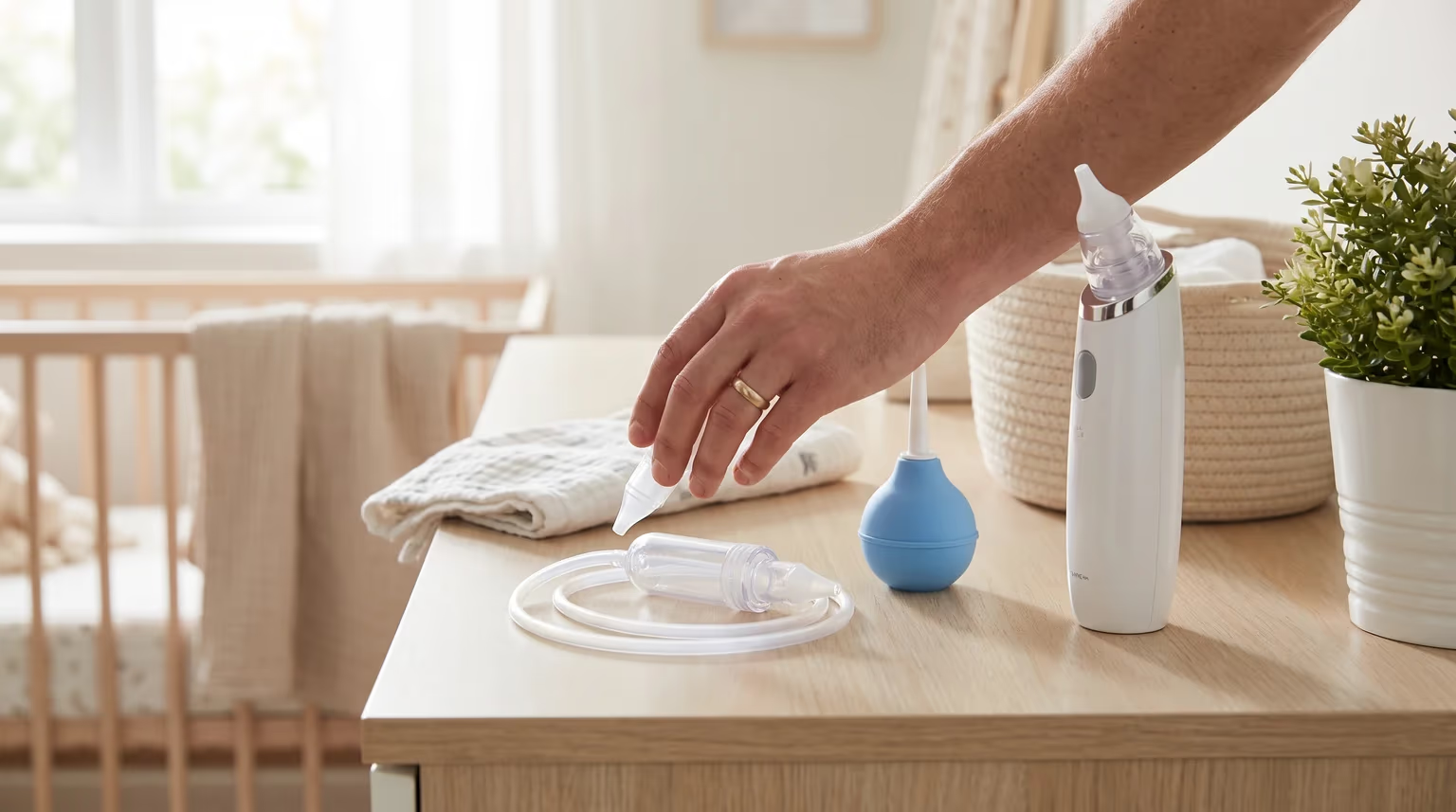
A baby nasal aspirator is useful only if you can use it gently, clean it properly and stop before your baby gets irritated. For step-by-step safety advice and signs to seek help, read how to use a baby nasal aspirator safely. This guide stays focused on choosing the right product style, with the medical bit kept simple: follow the manufacturer's instructions, keep everything hygienic and seek NHS advice if your baby seems seriously unwell.
Comparison | |||||
|---|---|---|---|---|---|
| Best for | Best for Best overall | Best electric | Best compact manual | Best bulb-style | Best premium electric |
| Type | Type Mouth-suction/manual | Handheld electric | Compact mouth-suction | Silicone bulb | Powered tabletop electric |
| Cleaning note | Cleaning note Fresh filter each session; tube and mouthpiece are dishwasher safe. | Self-clean cycle, then wash the cup and tips. | Wash the reusable filter and dry it fully. | Comes apart in two; sterilise after each use. | Wash only the nose piece; no dishwasher or steriliser. |


What to look for in a baby nasal aspirator
The best choice is not the one that sounds strongest; it is the one you can control calmly when your baby is wriggly, tired or already fed up with having a blocked nose. Prioritise a small, soft tip, easy cleaning and suction that feels manageable rather than dramatic.
Gentle suction and a baby-sized tip
Babies' nostrils are small, so a neat tip and shallow, gentle use matter more than force. With a newborn, a tip that rests at the nostril opening is enough. Mouth-suction models give you direct control, while electric models make the process more hands-off but need a setting that still feels gentle.
Cleaning, filters and drying
Anything that collects mucus needs cleaning after use. Look for parts that come apart clearly, dry without awkward trapped moisture and use replacement hygiene filters where the design needs them.
Manual, bulb-style or electric
- Manual mouth-suction models suit parents who want maximum control
- Bulb-style aspirators are simple and portable, but thorough rinsing and drying are essential
- Electric aspirators are convenient for frequent use, though noise, power and extra parts matter
- Clear chambers make it easier to see when cleaning is needed
- A compact case or simple storage setup helps if you keep one in a changing bag
The best baby nasal aspirators: our top 5
These picks cover the main ways parents use nasal aspirators for babies: controlled manual suction, compact manual use, simple bulb-style suction and powered electric convenience.
1. Frida Baby NoseFrida mouth-suction nasal aspirator

NoseFrida is the easiest first pick for most parents because it combines strong UK availability with a familiar mouth-suction design. It suits parents who want controlled manual suction rather than a powered device, and the wide tip rests against the nostril instead of going inside it.
Why did we choose this product?
Choose it if you want manual suction control with a clear hygiene barrier. You set the pull with your own breath, while a single-use filter sits between the mucus tube and your mouthpiece. Owners often mention how easy it is to put together and to swap the filter.
Keep in mind
The filter routine is part of the product, not an optional extra: Frida says to use a fresh filter every session and no more than six sessions in 24 hours. Some owners find snot fiddly to clean out of the tube, and if buying refills sounds like a chore, a washable-filter or bulb-style option may feel less fussy.
Features that may help you
•Best for: controlled manual suction
•Type: mouth-suction baby nasal aspirator
•Good fit if: you want a simple manual option that does not go inside the nostril
•Cleaning: fresh filter each session; the tube, mouthpiece and cap are top-rack dishwasher safe
•Tradeoff: ongoing filter refills, and mouth suction can be slower with a wriggly baby
2. GROWNSY electric baby nasal aspirator

The GROWNSY electric baby nasal aspirator is the best fit if you want powered suction in a handheld format. It has five suction levels and three soft silicone tips, so you can start gently with a newborn and move up a size as your baby grows.
Why did we choose this product?
Its main advantage is convenience: it charges on a USB-C base, has a self-clean button that flushes the inside after each session, and plays lights and lullabies to distract a fussy baby. Owners mostly praise the suction and how long a charge lasts, and it does the work for you if mouth suction puts you off.
Keep in mind
Electric convenience comes with more parts to manage. The self-clean cycle does not replace washing the mucus cup and tips in warm soapy water after every use, and GROWNSY says to charge it fully and unplug it before you start. Owners find the suction strong and a little loud, so begin on the lowest level; a couple also report units that stopped working after a few months.
Features that may help you
•Best for: parents who want a handheld electric option
•Type: rechargeable electric baby nasal aspirator
•Good fit if: you prefer adjustable powered suction with a gentle starting level
•Cleaning: run the self-clean cycle, then wash the cup and tips and let them dry
•Tradeoff: needs charging from a standard 5 V USB plug, and some babies dislike the motor noise
3. Snufflebabe baby nasal aspirator

Snufflebabe is a compact manual baby nasal aspirator for parents who want something familiar, simple and easy to tuck away. Like NoseFrida, you control the suction by mouth and the nozzle rests at the nostril, but the filters are washable, so there are no refills to buy.
Why did we choose this product?
This is the value-minded manual pick: small enough for a changing bag, suitable from birth and supplied with two reusable filters. It makes most sense if you want a no-drama backup rather than a powered aspirator.
Keep in mind
Owners say the washable filter can clog during a big clear-out, so you may need to wipe it mid-session, and it works best when the filter is completely dry. Some also find it needs quite a strong pull.
Features that may help you
•Best for: compact manual use
•Type: mouth-suction baby nasal aspirator with washable filters
•Good fit if: you want a simple, value-friendly option with no refills to buy
•Cleaning: hand wash the filter and parts in warm soapy water, then let them dry fully
•Tradeoff: the filter can clog mid-session, and it can take quite a strong pull
4. Haakaa silicone bulb-style nasal aspirator

Haakaa is the bulb-style pick for parents who want the simplest possible format: squeeze, release gently and clean it well afterwards. The soft, see-through silicone body gives it a more modern feel than a traditional rubber bulb syringe, and you can see how much has come out.
Why did we choose this product?
Choose it if you like low-tech baby kit and want something quiet, compact and easy to understand. It comes with two tips: a small arc tip for babies up to 12 months and a cone tip for children from 12 months. Owners of newborns say it works well after a few saline drops.
Keep in mind
Bulb-style aspirators live or die by cleaning. This one pulls apart into two pieces, so you can wash the inside properly, and Haakaa says to clean and sterilise it after each use, either in a steam steriliser or by boiling it for 2 to 3 minutes. It also takes a little practice to get a seal on a wriggly baby.
Features that may help you
•Best for: simple bulb-style suction
•Type: silicone bulb-style nasal aspirator
•Good fit if: you want a quiet, low-tech option from the newborn weeks onwards
•Cleaning: pull it apart, wash, then sterilise and dry after every use
•Tradeoff: less precise suction control than mouth-suction or electric designs
5. Nosiboo Pro electric nasal aspirator

Nosiboo Pro is the premium electric nasal aspirator for parents who want a more substantial powered unit rather than a small handheld gadget. It plugs into the mains and sits on a table, with a dial to set the suction.
Why did we choose this product?
The appeal is consistency and a dedicated design: it is built around powered nasal suction for repeated use at home and comes with a newborn nose tip as well as a standard one. Nosiboo suggests a low setting for newborns and higher settings for toddlers and preschoolers.
Keep in mind
It is a higher-cost, bulkier choice that stays at home, so it will be overkill for many families, and owners describe it as loud. Only the nose piece needs washing after use, and it must not go in a dishwasher or steriliser. Nosiboo specifies 230 V mains, so check yours arrives with a UK plug lead before first use.
Features that may help you
•Best for: premium powered suction at home
•Type: plug-in tabletop electric nasal aspirator
•Good fit if: you want a dedicated higher-end electric unit
•Cleaning: wash the nose piece under running water; no dishwasher or steriliser
•Tradeoff: bulkier, louder and more expensive than the other styles
Manual vs electric nasal aspirators for babies
Manual and electric baby nasal aspirators both make sense; the better option depends on your comfort level and how often you expect to use it. A manual model can be very effective for occasional blocked noses, while electric suction may feel easier when you want repeatable settings and less effort.
Choose manual if you want control and simple storage
Mouth-suction models such as NoseFrida and Snufflebabe let you control the suction yourself and pack down easily. NoseFrida needs a fresh filter every time, while Snufflebabe's filters are washable, so factor in the ongoing hygiene routine rather than looking only at the device.
Choose electric if you want convenience and adjustable suction
Electric options such as GROWNSY and Nosiboo Pro suit parents who want powered suction and less manual effort. GROWNSY runs on a rechargeable battery, while Nosiboo Pro plugs into the mains. Check the lowest setting, noise level and cleaning steps before choosing one for a younger baby.
Choose bulb-style only if cleaning feels manageable
Bulb-style aspirators are straightforward, quiet and easy to store, but they are only a good fit if you can rinse and dry them properly. Choose one that comes apart, like Haakaa's two-piece bulb, because a one-piece bulb is very hard to clean inside.
Cleaning, hygiene and blocked-nose context
For something that touches your baby's nose, the boring details matter most. Wash your hands, keep the tip clean, follow the instructions for that exact aspirator and replace filters or parts when the manufacturer says to.
Clean it after every use
Rinse or wash the parts that touch mucus, then let them dry fully before storage. If the design uses disposable filters, keep spares nearby so you are not tempted to reuse one past the recommended point.
Use gentle suction and follow the instructions
An aspirator can help remove mucus from the nose, but it does not treat the illness behind a cold, bronchiolitis or allergy symptoms. Use it gently, avoid pushing tips in too far and stop if your baby seems distressed or irritated.
If the snot is dried or sticky, saline nose drops can help loosen it first, which means less suction is needed. A pharmacist, GP or health visitor can advise on them. Stick to plain saline: children under 6 should not have over-the-counter decongestants unless a GP or pharmacist advises it.
What else may help at night
Some parents also look at room-air kit when dry air seems to make nights harder. A baby humidifier can be worth comparing as adjacent comfort kit, but it should not be treated as a cure for illness or a replacement for medical advice.