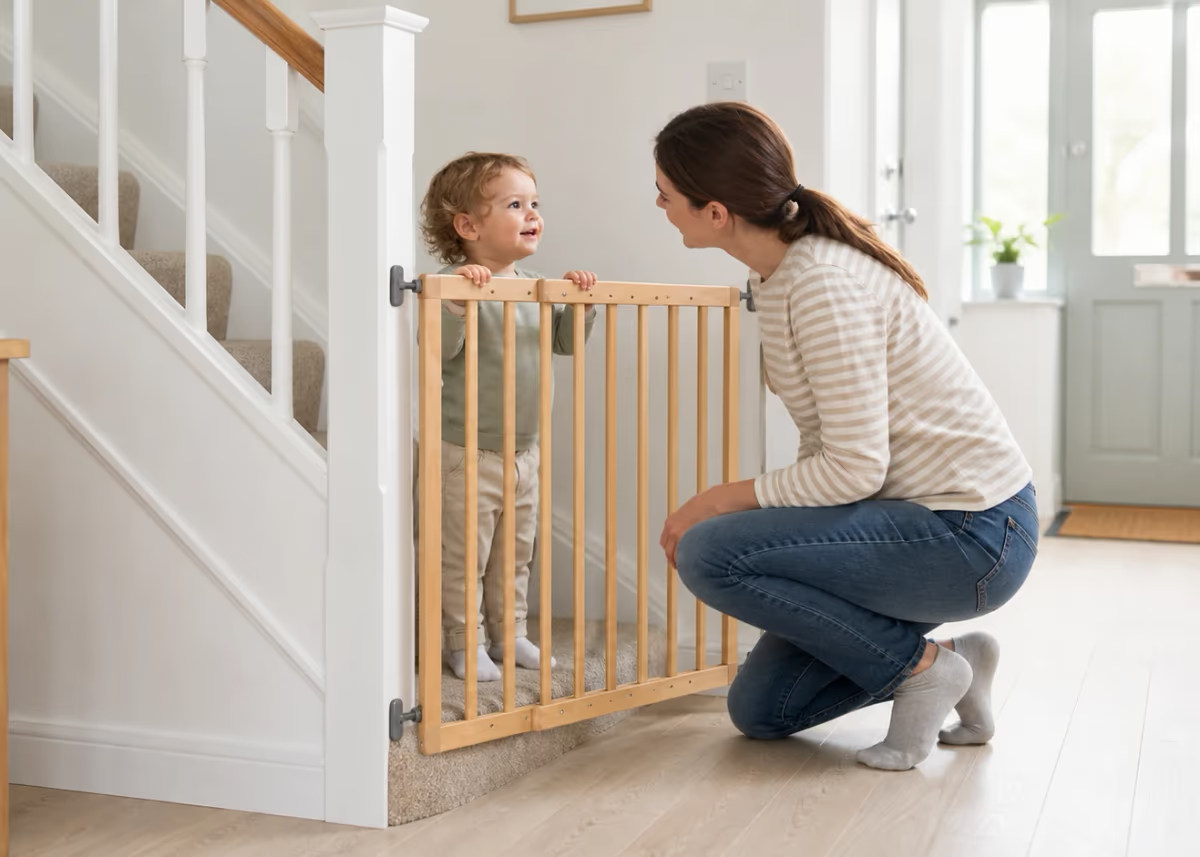
The best learning towers for toddlers in 2026
Four learning towers that bring your toddler up to the worktop or sink, from height-adjustable wooden frames to a slim one that folds away.
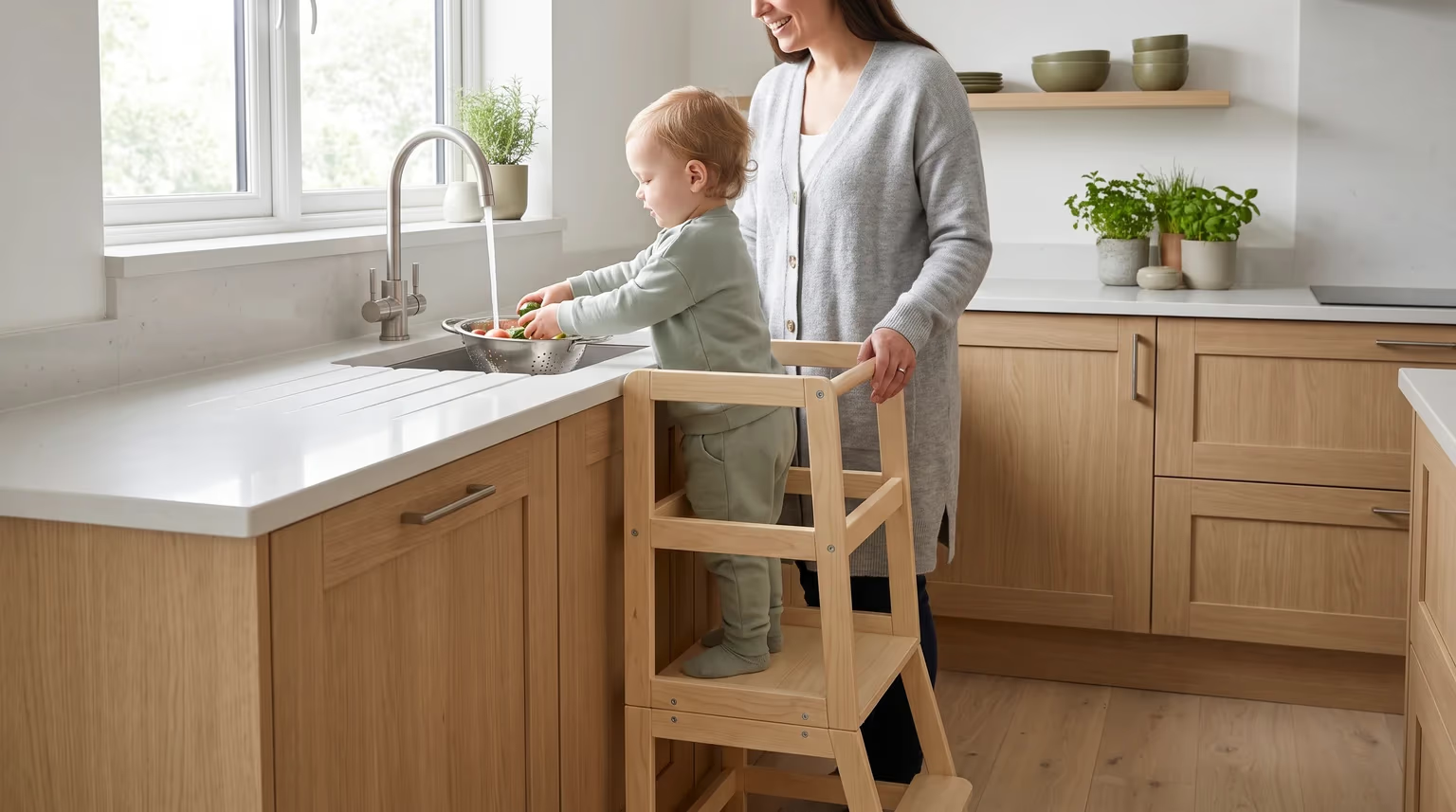
A learning tower, also sold as a toddler tower or kitchen helper tower, is a guarded standing platform that brings a toddler up to worktop height for simple jobs such as washing fruit, stirring a bowl well away from the hob or reaching the bathroom sink. The best learning tower is the one that stays put on your floor: a steady base with anti-tip feet, rails around your child, a platform set at the right height and a footprint that suits your kitchen.
We've removed the Boon Pivot foldable toddler tower from this list. A GOV.UK product safety report published in July 2026 found it can become unstable and tip over during use, trapping or injuring a child. If you have one, stop using it and email TOMY at response@tomy.com for a free repair kit; there's more on this in the safety section below.
Criteria | ||||
|---|---|---|---|---|
| Best for | Best for Most families | Longest use | Younger toddlers | Folding away |
| Listed age and weight | Listed age and weight 1 to 6 years, up to 40 kg | 18 months to 7 years, up to 50 kg | From 12 months | Listed for toddlers |
| Platform heights | Platform heights 3 (foot plate held by screws) | 3 | 3 | 1 fixed height |
| Stability features | Stability features Anti-tip feet, beech frame | Anti-tilt base, heaviest frame here | Anti-tip feet, non-slip pads | Anti-tip feet |
| Sides and back | Sides and back Open frame with top rails | Side panels, removable back bar | Side panels, two back bars | A-frame sides, removable top bar |


What to check before choosing a learning tower
Start with your child, not the features. Learning towers are made for one child who can walk and stand steadily on their own, and your toddler needs to be happy staying beside you for the whole activity. If they're still unsteady or keep trying to climb out, wait a few weeks or keep sessions very short.
- A wide, steady base with anti-tip feet matters more than Montessori wording or a pretty finish.
- Look for rails on every side. For a very young or wriggly toddler, side panels or a bar across the back stop them leaning or stepping out backwards.
- Check the platform height against your worktop or sink so your toddler doesn't have to lean over the rail to reach.
- Foldable towers save space, but they depend on their hinges, locks and feet to stay steady, so they need checking every time.
- For a small kitchen, measure the floor space the tower needs when open and, for a foldable one, where it will be stored.
The best learning towers for toddlers
Four towers for different kitchens and toddlers, starting with the one we'd suggest to most families.
1. hauck Learn N Explore toddler learning tower

The hauck Learn N Explore is the learning tower we'd suggest to most families. Owners consistently describe the beechwood frame as sturdy and quick to put together, and it's made for children from about 1 year, once they can stand unaided, up to 6 years and 40 kg.
Why did we choose this product?
Choose it for a steady, no-fuss tower from an established nursery brand. The foot plate moves between three heights as your child grows, curved anti-tip feet sit at the base, and it's sold and dispatched by Amazon. It also matches hauck's wooden high chairs if you already have one.
Keep in mind
The frame is more open than the panelled KiddyMoon and Bey&Co towers: the sides and back are open between the top rail and the platform, which makes climbing in easy, and one owner added a safety net across the back. Changing the height means undoing two screws, and the fixed frame doesn't fold, so measure your floor space first.
Features that may help you
•Best for: most families wanting a sturdy, adjustable tower
•Listed age and weight: 1 to 6 years, up to 40 kg
•Practical details: beechwood frame, foot plate with three heights, anti-tip feet, sold by Amazon
•Keep in mind: open sides and back; height changes mean undoing two screws
2. KiddyMoon adjustable toddler learning tower

KiddyMoon is the one to choose if you want a learning tower your child can keep using the longest. It's listed for children from 18 months to 7 years and up to 50 kg, and owners repeatedly call it very sturdy.
Why did we choose this product?
Side panels and a front panel keep your toddler well enclosed, and a removable bar closes the back once they're in. The platform has three height settings, the base is designed not to tilt, and at 9.5 kg it's the heaviest frame in this list. Several colours share the same listing.
Keep in mind
It's the most expensive tower here and comes from a third-party seller rather than Amazon, so check the delivery charge at checkout. Some owners say their toddler soon learned to lift out the back bar, and a few mention paint peeling after cleaning. It's made from engineered wood rather than solid wood, and it needs assembling, so tighten every fixing before your toddler climbs in.
Features that may help you
•Best for: growing toddlers and the longest use
•Listed age and weight: 18 months to 7 years, up to 50 kg
•Practical details: three platform heights, side panels, removable back bar, anti-tilt base
•Keep in mind: highest price here; sold by a third-party seller
3. Bey&Co wooden toddler learning tower

Bey&Co suits younger toddlers who need more protection at the back. Along with panelled sides, it has two bars across the back, the lower one removable, and owners single out that extra bar as a reason they chose it.
Why did we choose this product?
It's listed from 12 months, once your child can stand without help and climb a step, and the platform has three heights so you can match it to your worktop as they grow. Anti-tip feet and non-slip pads come in the box, it's sold by Amazon, and owners praise the company's quick help with missing or wrong parts.
Keep in mind
Most owners find it sturdy, but a few found it unsteady, so fit the anti-tip feet and non-slip pads and check the bolts once it's built. It's a fixed frame, so measure your floor space before buying.
Features that may help you
•Best for: younger toddlers and a closed-in back
•Listed age: from 12 months
•Practical details: three platform heights, two back bars, anti-tip feet, non-slip pads
•Keep in mind: fixed frame; check the feet and bolts after assembly
4. Goodevas slim foldable wooden learning tower

Goodevas is the pick when the tower has to fold away between uses. It's the only foldable learning tower here, and owners like how thin it folds, slim enough to slide between the fridge and the wall.
Why did we choose this product?
It arrives almost ready to use, as you only fit the anti-tip feet, and the plywood frame measures 45 x 47 x 88 cm when open. That makes it practical for small kitchens, rented homes or a grandparent's house where a permanent tower would be in the way.
Keep in mind
Owners are more mixed about its stability than about the other three. One found the anti-tip feet worked loose over time, and another's 16-month-old found the steps hard to get down and fell backwards out of it, so check it's fully open, keep the feet tight and stay close as your child gets in and out. There's one fixed platform height, uncoated wood can stain, and Amazon lists it as non-returnable unless it arrives damaged or faulty. Stock varies by colour, so the colours on offer may differ from the one pictured.
Features that may help you
•Best for: folding away in small kitchens
•Listed size: 45 x 47 x 88 cm open
•Practical details: folds flat, anti-tip feet, one fixed platform height, arrives almost assembled
•Keep in mind: re-tighten the feet regularly; non-returnable unless faulty
How to use a learning tower safely in the kitchen
A learning tower makes it easier to include your toddler, but it doesn't make the kitchen safe by itself. RoSPA says the most serious home accidents to young children happen in the kitchen and on the stairs, and falls were the kitchen accident parents in its research had most often experienced. Home baby-proofing basics, child safety locks for cupboards and drawers and baby gates and stair gates still matter around the same space.
Keep it away from the hob, kettle and windows
Put the tower beside a clear stretch of worktop or the sink, never next to the cooking. The Child Accident Prevention Trust (CAPT) says around half of children's burns happen in the kitchen and that toddlers can reach higher than you expect, so keep hot pans, the kettle and its cord, hot drinks, knives and cleaning products well back, and cook on the back rings of the hob.
Windows need the same thought. RoSPA and CAPT both warn against leaving anything a child could climb on below a window, so don't leave the tower standing there, and if your sink sits under one, keep it shut or fitted with a restrictor while your toddler is up at the sink.
Check it's steady before every use
Tipping over is the risk behind the Boon Pivot report, so make a quick check part of the routine:
- Stand the tower on a flat, level floor, away from steps and stairs.
- Make sure the anti-tip feet are fitted, and re-tighten bolts, screws and feet regularly.
- On a foldable tower, check it's fully open and locked before your toddler climbs in.
- Stop using it if any part is cracked, loose or missing.
- Before you buy, search GOV.UK's product safety alerts, reports and recalls for the brand and model.
Stay within arm's reach
Toddlers are top-heavy and overbalance easily, as CAPT explains, so stay beside your toddler for the whole activity, especially while they climb in and out. Lift them down when they're tired, upset or trying to climb on the rails, and don't leave them in the tower while you step away.
Learning tower, step stool or high chair?
These overlap in the way shops describe them, but they do different jobs. A learning tower is for supervised standing at a worktop or sink; an ordinary step stool is simpler and more open; a high chair is for seated meals.
Learning tower vs step stool
A step stool can be fine for an older child washing their hands, but it has no frame around them. For toddlers who still wobble, lean or climb sideways, the rails around a toddler learning tower are the whole point.
Learning tower vs high chair
A high chair keeps a baby or toddler seated for meals; a learning tower lets a mobile toddler stand and join in while you're beside them. If your main need is weaning or strapped-in mealtimes, a high chair for babies and toddlers is the better buy.
When Montessori wording matters
Montessori-style language tells you a tower is designed around independence and joining in, but it isn't a safety standard. Treat "Montessori learning tower" as a description of the idea, then judge the frame, platform, stability, cleaning and fit like any other tower.
Learning tower FAQs
References:
- GOV.UK: Product Safety Report on the Boon Pivot toddler tower (2607-0146)
- TOMY: Boon Pivot toddler tower safety repair kit
- RoSPA: Preventing accidents to children
- RoSPA: Kitchen safety for new parents
- Child Accident Prevention Trust: Burns and scalds
- Child Accident Prevention Trust: Preventing falls
- GOV.UK: Product safety alerts, reports and recalls